

“`markdown
Battery Energy Storage Trends in 2025
By Vineet Mittal
June 12, 2025
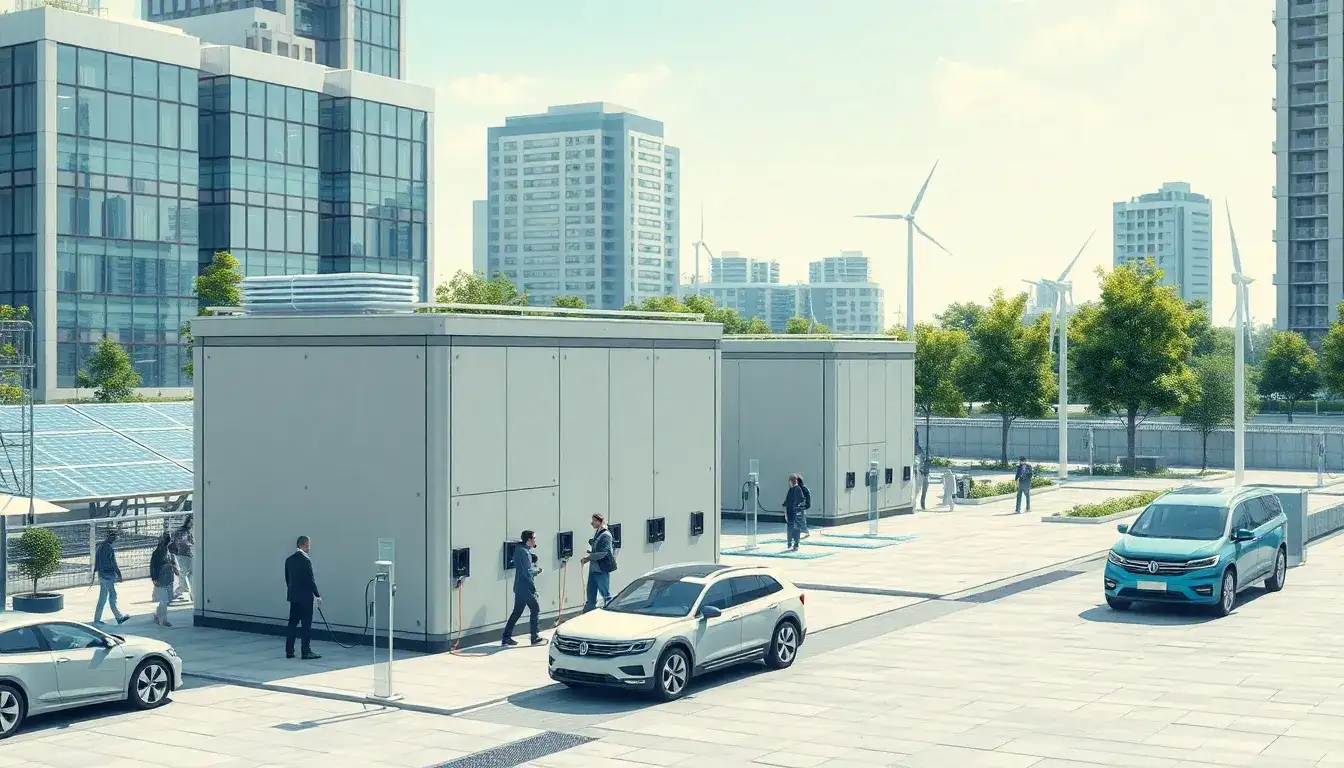
As the world moves towards renewable energy, Battery Energy Storage Systems (BESS) have become essential for facilitating the global energy transition. In 2025, advancements in energy storage technology focus on enhancing energy reliability, stabilizing renewable sources, and reducing the carbon footprint of power grids.
India, propelled by its ambitious goals for renewable energy and electrification, is witnessing a significant increase in demand for advanced battery storage technologies. Industry leaders like Avaada, pioneers in clean energy, are investing in cutting-edge BESS to secure the country’s energy future. This blog examines the key trends anticipated to shape BESS in 2025 and how companies like Avaada are influencing the future of sustainable energy storage.
### Why Battery Energy Storage Systems Matter
Before exploring the trends, it is important to understand the significance of BESS. Battery storage enables:
– Integration of intermittent renewables like solar and wind
– Grid stability and frequency regulation
– Peak load shifting and energy arbitrage
– Backup power for critical infrastructure
– Support for electric vehicle (EV) adoption
With India’s target of achieving 500 GW of non-fossil energy capacity by 2030, BESS is vital for ensuring a continuous supply of clean energy.
### Top Trends in Battery Energy Storage Systems for 2025
1. **Emergence of Utility-Scale BESS Projects**
Large-scale battery projects are gaining traction globally, and India is no exception. By 2025, we expect a rapid increase in utility-scale energy storage facilities located near solar and wind farms. These large storage plants will provide grid operators with the tools needed to respond effectively to fluctuating supply and demand. Avaada is already conceptualizing major integrated renewable-plus-storage projects to enhance grid reliability and ensure a 24/7 supply of clean power.
2. **Hybrid Renewable + Storage Solutions**
The trend towards hybrid systems that combine solar, wind, and battery storage is set to grow in 2025. Such hybrid solutions maximize energy utilization and improve dispatchability. They help to:
– Optimize the use of renewable energy
– Reduce the curtailment of renewable energy
– Enhance land use efficiency
– Provide a firm and scheduleable power supply
Avaada’s commitment to hybrid energy projects positions it at the forefront of this trend.
3. **Lithium-Ion Supremacy with Future Contenders**
While lithium-ion batteries will continue to dominate the BESS market in 2025 due to their maturity and declining costs, other battery chemistries are emerging as competitors:
– **Sodium-ion batteries**: More affordable and environmentally friendly
– **Flow batteries**: Suitable for long-duration storage
– **Solid-state batteries**: Offering increased energy density and safety
As India expands its renewable energy capacity, selecting the right battery chemistry for various applications will be critical.
4. **Energy Storage as a Service (ESaaS)**
More energy providers are adopting Energy Storage as a Service (ESaaS) models, allowing customers to access battery storage without the need for heavy upfront investments. Instead, they can opt for subscription or performance-based arrangements. This model:
– Democratizes access to advanced storage solutions
– Simplifies options for small-scale industries and commercial clients
– Encourages distributed energy systems
5. **Artificial Intelligence and Smart Battery Management Systems (BMS)**
Effective battery management is essential for ensuring system longevity, safety, and performance. It includes real-time monitoring, cell balancing, and thermal management to prevent failures and optimize lifecycle costs. In 2025, we anticipate a rise in the adoption of AI-powered Battery Management Systems that offer real-time monitoring, predictive maintenance, and smart load optimization. Smart BMS will:
– Prevent thermal runaway and degradation
– Maximize charge-discharge cycles
– Enhance lifecycle value
These intelligent systems will be crucial for managing India’s expanding fleet of BESS, both at grid-scale and in distributed deployments.
6. **Government Policy & Storage Mandates**
The Indian government is proactively promoting storage deployment through various policies, including:
– The National Energy Storage Mission
– Production-Linked Incentive (PLI) schemes for battery manufacturing
– Storage bidding mandates in renewable energy auctions
These policies create a favorable environment for rapid BESS adoption. With policy alignment and increasing demand, companies like Avaada are bridging the gap to provide compliant, scalable, and bankable solutions.
### Avaada: Driving Energy Storage Innovation
Avaada, a leader in India’s renewable energy landscape, is taking significant strides in the battery energy storage sector. With a growing pipeline of solar, wind, hybrid, and green hydrogen projects, Avaada is well-positioned to integrate innovative storage solutions into its operations. Their focus on hybrid renewables, strategic partnerships with battery technology firms, and commitment to ESG and sustainability make them a top choice among Indian energy storage companies.
### Conclusion
The year 2025 is set to be transformative for battery energy storage systems in India and worldwide. As technologies advance, business models evolve, and policies align, the BESS industry is transitioning from a niche solution to a fundamental component of the energy framework. With increasing renewable penetration, it is innovators like Avaada that will lead the way towards sustainability, reliability, and carbon neutrality.
“`
Original article by NenPower, If reposted, please credit the source: https://nenpower.com/blog/trends-shaping-the-future-of-battery-energy-storage-systems-in-2025/

