

From “Planned Power Generation” to “Market Pricing”: All New Energy Project Power is Now Market-Driven
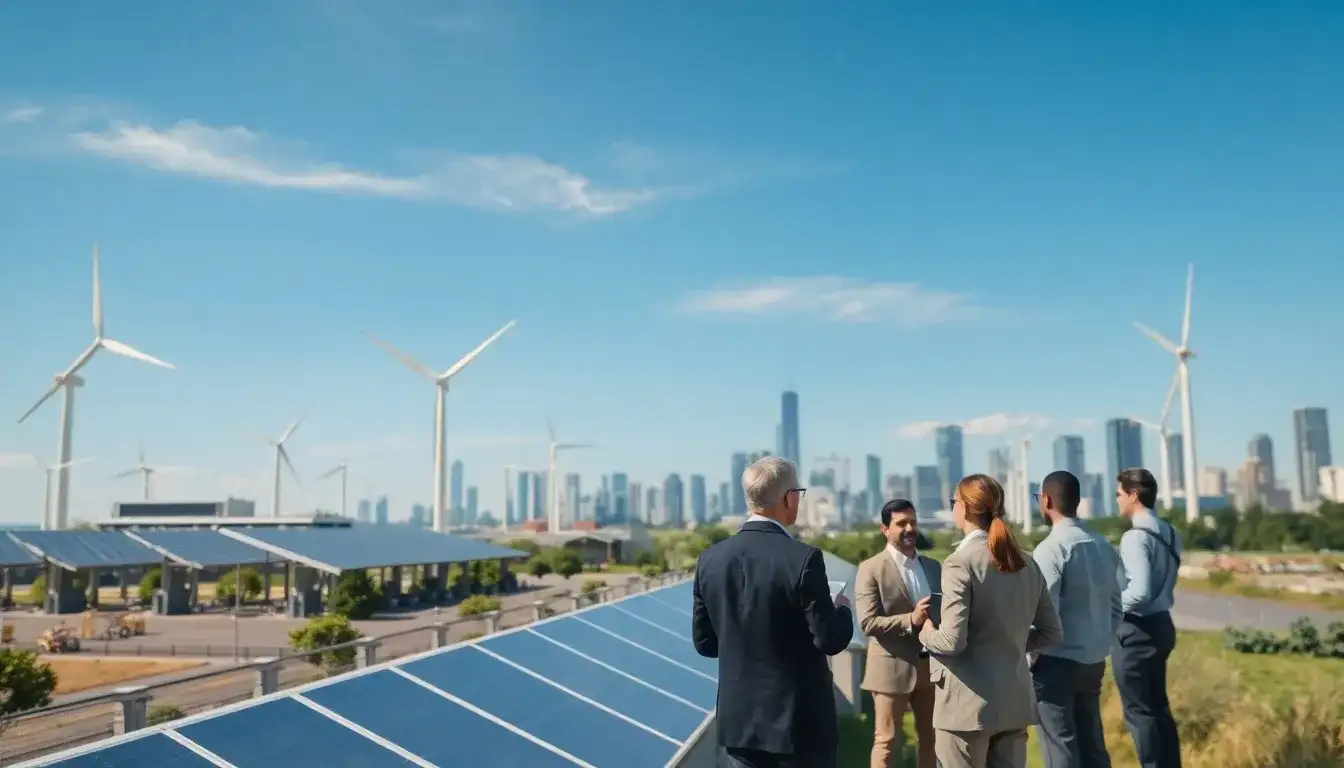
In the vast mountains and deserts, white wind turbines and sprawling solar panels are tirelessly “chasing the wind and sun,” injecting green electricity into the grid. On the large screen at the Beijing Power Trading Center, the curves representing wind and solar power are rapidly climbing. Across various provincial power trading systems, electricity transactions are in full swing. Power generation, sales, and storage companies, electricity users, and even virtual power plants are entering the market, with supply information being posted and retail electricity packages made available immediately. Electricity traders are quickly typing on their keyboards to facilitate power order matching.
As of June 1, all electricity generated from new energy projects (wind and solar power) is required to enter the electricity market, with grid connection prices determined through market transactions. This transformation stems from a policy jointly issued by the National Development and Reform Commission and the National Energy Administration at the beginning of this year, titled “Notice on Deepening the Market-Oriented Reform of New Energy Grid Connection Pricing to Promote High-Quality Development of New Energy.” This policy not only enhances market efficiency but also signifies a paradigm shift in energy governance. By constructing a multi-tier market system comprising “medium-long term + spot + ancillary services,” China is exploring a path that ensures energy security while promoting low-carbon transformation.
Achievements in New Energy Development
According to data released by the National Bureau of Statistics, China’s total power generation exceeded 10 trillion kilowatt-hours in 2024, marking a year-on-year growth of 6.7%. The generation of wind and solar power saw significant growth in 2024, with wind power generation increasing from 885.87 billion kilowatt-hours in 2023 to 997.04 billion kilowatt-hours, raising its share from 9.4% to 9.9%, a year-on-year increase of 12.5%. Solar power generation surged from 584.15 billion kilowatt-hours in 2023 to 839.04 billion kilowatt-hours, with its share increasing dramatically from 6.2% to 8.3%, a year-on-year growth of 43.6%. This shows that, in terms of scale, the total generation of wind and solar power reached 1.83 trillion kilowatt-hours in 2024, injecting new vitality into the electricity market. Notably, all new energy generated electricity is set to enter the market, with prices formed through spot trading and medium-long term contracts, effectively ending reliance on the “quantity and price guarantee” policy. Companies can independently choose to report their quantities and prices to participate in competition or accept the unified clearing price established by the market.
Currently, the initial establishment of a market price mechanism that can fluctuate is in progress. China is gradually liberalizing prices in competitive segments, completing the market-oriented reform of coal-fired power grid connection pricing, and promoting the comprehensive participation of new energy in the electricity market, thereby establishing a sustainable pricing settlement mechanism for new energy. Wu Dijia, Deputy General Manager of Guangzhou Nanchao Co., Ltd., stated, “The current market price mechanism, which can both rise and fall, is taking shape.”
The previously unified purchasing and selling situation is gradually being broken, with power equipment manufacturing companies further separating their operations and introducing market competition into the power sales segment. By now, the number of registered trading participants has grown from 42,000 in 2016 to 816,000. According to the latest data from the National Energy Administration, the volume of market-based electricity transactions has increased from 1.1 trillion kilowatt-hours in 2016 to 6.2 trillion kilowatt-hours in 2024, raising its proportion of total electricity consumption from 17% to 63%. In 2024, the volume of market-based transactions across provinces and regions reached 1.4 trillion kilowatt-hours, an increase of over ten times compared to 2016.
Zheng Yaxian, Deputy Director of the Electricity Market Department at the Electric Power Automation Institute of the China Electric Power Research Institute, emphasized that the new regulations implemented on June 1 represent a critical step in power market reform, signaling that market reform is entering a deeper phase. As new energy develops rapidly, the balance of the power system faces dual challenges: ensuring the absorption of new energy and maintaining supply security for grid operation. Adhering to the goal of total absorption incurs significant economic costs. Therefore, allowing new energy to participate in market competition with quantity-price guarantees and optimizing concentration is a superior choice from a societal perspective, and the benefits will be more apparent as the proportion of new energy increases.
Leveraging “Invisible Hands” to Optimize “Source-Grid-Load-Storage” Advantages
As the scale of new energy continues to expand, effectively matching the growing electricity demand has become one of the key operational aspects of the new power system. Establishing a flexible pricing mechanism to guide various entities in optimizing generation and consumption behaviors, thus achieving dynamic matching of both supply and demand load curves, will significantly enhance the system’s adjustment capabilities. In November 2024, the “National Unified Power Market Development Planning Blue Book” will be released, clearly outlining the “roadmap” and “timetable” for developing a unified national power market. By 2025, the preliminary establishment of a unified national power market is expected, with basic trading rules and technical standards unified. By 2029, a fully unified national power market is to be achieved, promoting the unification of market basic institutional rules, equitable regulation, and high-standard connectivity of market facilities. By 2035, the unified national power market will be perfected.
The rapid advancement of power marketization is reshaping the logic of energy investment. Power generation companies are no longer reliant on government subsidies; instead, they achieve sustainable profits through market participation. Currently, the factors influencing the power supply and demand relationship have become more evident. The new power system has essentially completed its grid infrastructure, possesses sufficient generation capacity, and has developed large-scale storage capabilities, awaiting only an “invisible hand” to coordinate these resources effectively.
New energy is not facing a sudden “test” in power market trading, as a “dual-track” trading model has already been established. This model includes both a portion of electricity purchased at government-set prices and a portion that is absorbed through electricity spot markets and green electricity transactions. The electricity market, acting as an “invisible hand,” has become a crucial means for optimizing the allocation of national electricity resources. The continuous increase in the proportion of market-based electricity transactions will fully unleash the advantages of the new power system’s “source-grid-load-storage”: time-of-use pricing guides new energy to generate power at optimal times to match varying electricity loads, while node pricing optimizes storage layout; medium-long term contracts and spot markets manage risks in a layered manner, and virtual power plants aggregate distributed resources to provide ancillary services; digital technologies enable second-level responses, ultimately achieving a self-organizing and adaptive flexible interaction ecosystem of source, grid, load, and storage.
Restoring the Attributes of Electricity as a Commodity
Currently, China’s electricity market encompasses various trading methods, including medium-long term, spot, ancillary services, and green certificates. It primarily operates on a “medium-long term + spot” dual-track model, gradually restoring the commodity attributes of electricity. Medium-long term trading is akin to pre-contracting for power, locking in long-term quantities and prices to mitigate price volatility risks, while spot trading involves real-time transactions with prices fluctuating according to supply and demand.
As a commodity, how to rationally reflect prices is a focal point following the entry of new energy into the market. This concern not only impacts the sustainable large-scale growth of new energy but also raises questions about who will bear the increased costs. Lin Boqiang, Director of the China Energy Policy Research Institute at Xiamen University, stated, “In an ideal market environment, if green certificates, green electricity, and carbon trading markets are well-established, new energy can compete in the electricity market while also obtaining green compensation from green electricity and certificates. This model is theoretically viable.”
Taking the Guangdong electricity market retail platform as an example: the platform functions like an online electricity shopping mall, where power sales companies act as sellers and create storefronts; retail users serve as buyers who can easily compare stores and packages through their mobile phones; and electricity trading institutions operate as platform operators, standardizing package parameters, monitoring market data, and ensuring orderly market operations.
For users, purchasing electricity through the market provides greater choice and autonomy over the price and source of electricity. They can also establish retail service relationships with power sales companies to enjoy more specialized electricity services. However, for power generation or sales companies, entering market-based transactions introduces price uncertainty for new energy. A representative from Yunnan Energy Investment Co., Ltd. revealed that “in 2024, the total volume of market-based transactions accounted for 93.26% of our total grid-connected electricity. Although the market price of transactions has slightly decreased year-on-year due to a rapid increase in domestic new energy installations, the contradiction will improve in the medium to long term as storage projects come online and system adjustment capabilities enhance.”
In response, Cai Zilin, Chief Analyst of the High-end Equipment Industry at Wanlian Securities, analyzed that “after the comprehensive market-based pricing of new energy grid-connected electricity, industry competition will intensify, leading to differentiated performance among companies. Those with low per-kilowatt costs and strong adjustment capabilities will have a competitive advantage, helping them further solidify their market position through market competition. However, the inherent intermittency and volatility of new energy generation pose greater challenges for power generation/sales companies within the pricing mechanism of the electricity market, raising higher demands for power forecasting, smart control, and coordinated sourcing capabilities.”
Regarding the mechanism for suggesting price difference settlements outside the market, Zheng Yaxian mentioned that there would initially be protective mechanisms in place, with such mechanisms gradually diminishing over time. Ultimately, signing bilateral contracts will become a more mainstream approach. Under the new circumstances, small and medium-sized new energy enterprises need to closely monitor policy trends, focus on ancillary service market mechanisms, and leverage their personnel and institutional flexibility to gain competitive advantages through deep resource optimization.
“In the long run, market-based pricing will drive enterprises to comprehensively upgrade their technological innovations, operational models, and trading strategies through price signaling, effectively enhancing the adaptability and market competitiveness of new energy, and better realizing its role and value within the new power system,” Cai Zilin noted.
As the process of gradually implementing market-based electricity trading unfolds, the synergistic effect of technological innovation and market mechanisms becomes particularly evident. Technological support is crucial for the successful implementation of reforms. The State Grid Corporation of China’s high-proportion renewable energy grid operation control system possesses three key functions: simulation analysis, economic dispatch, and fault defense, acting as the “intelligent hub” and “safety guard” of the power system to ensure grid safety. In response to the price fluctuations brought about by the comprehensive market entry of new energy, Langxin Technology Group Co., Ltd. utilizes AI prediction models to accurately grasp energy supply and demand trends. The “virtual power plant” system developed by Guangdong Power Grid aggregates distributed resources such as solar PV and storage to participate in spot trading.
Yang Kun, Executive Vice Chairman of the China Electricity Council, stated the need to continue deepening electricity market reforms, further standardizing trading rules and technical standards, continuously improving and connecting market mechanisms, eliminating market barriers, and fostering a diverse competitive electricity ecosystem to achieve optimal allocation and sharing of electricity resources. As the low-carbon transition of energy deepens, the electricity market mechanism adapting to the energy structure transition awaits further refinement. Electricity market reform is not only an inevitable choice for the energy revolution but also a key leap in China’s economic transformation. When the “invisible hand” of the market truly begins to work, it will bring about not only more efficient resource allocation but also a clean, low-carbon, safe, and efficient modern energy system.
Original article by NenPower, If reposted, please credit the source: https://nenpower.com/blog/transitioning-to-market-pricing-all-new-energy-project-power-generation-now-enters-the-market/

