

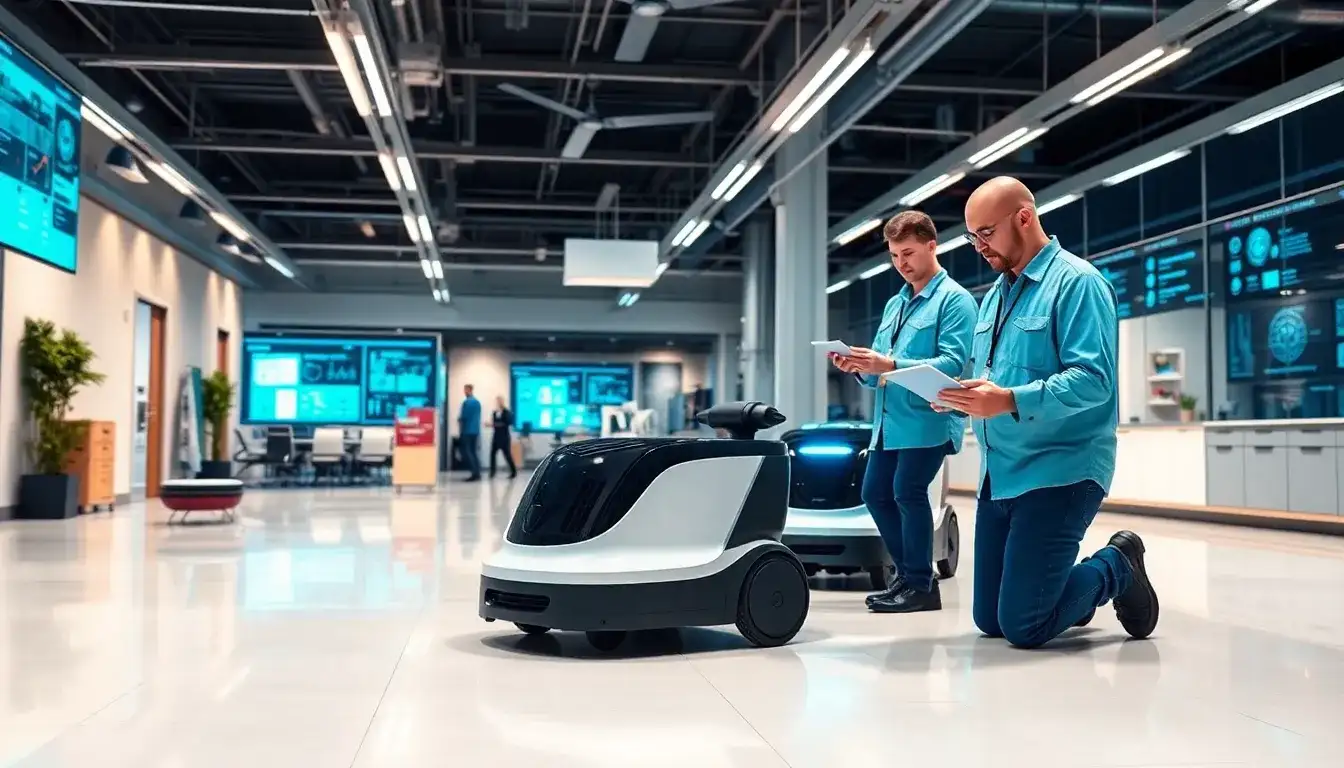
Can Cleaning Companies Implement AI Technology? The Shift from Traditional to Intelligent Operations
Latest Update | Author: Administrator | Date: February 2, 2026 | 55 views
Introduction: The Digital Revolution Facing the Cleaning Industry
The question, “Can cleaning companies use AI?” is a common reaction among industry professionals when they first hear about AI technology. Many perceive the cleaning industry as a labor-intensive sector with relatively low technical barriers. However, with the rapid development of artificial intelligence, the cleaning industry is undergoing a quiet revolution.
According to market research reports, the global smart cleaning market is expected to reach $30 billion by 2030, with a compound annual growth rate exceeding 15%. This figure indicates that more cleaning companies are beginning to recognize that AI technology is not just the domain of tech companies; it is a tool that can significantly enhance operational efficiency, reduce costs, and improve service quality.
Why Should the Cleaning Industry Pay Attention to AI?
The cleaning industry currently faces several significant challenges:
- Labor Shortages: Young people are less willing to take cleaning jobs, making recruitment difficult.
- Rising Costs: Labor costs and the prices of cleaning supplies continue to climb.
- Quality Control Issues: Manual inspections are time-consuming and prone to oversight.
- Increased Customer Expectations: Customers demand faster and more professional service.
- Intensifying Competition: The market is highly competitive, necessitating a differentiation strategy.
AI technology can help address these challenges. This article will delve into how cleaning companies can adopt AI technology, from basic concepts to practical applications, cost assessments, and future trends, providing a comprehensive guide.
What is AI Technology? Key Knowledge for the Cleaning Industry
Before discussing how cleaning companies can implement AI technology, we need to understand what AI is and which AI technologies are relevant to the cleaning industry.
Core Concepts of AI Technology
Artificial Intelligence (AI) refers to technology that enables machines to simulate human intelligence. For cleaning companies, AI technology primarily encompasses the following areas:
| Type of AI Technology | Brief Description | Application in Cleaning Industry |
|---|---|---|
| Machine Learning | Enables computers to learn patterns from data | Predict cleaning needs, optimize scheduling |
| Computer Vision | Allows computers to “see” and interpret images | Soil detection, quality inspection |
| Natural Language Processing | Enables computers to understand human language | Customer service chatbots, voice dispatching |
| Robotics | Autonomous robots powered by AI | Vacuum cleaning robots, cleaning machines |
| Predictive Analytics | Uses historical data to forecast future outcomes | Predictive maintenance, demand forecasting |
Importantly, implementing AI technology is not merely about a binary choice of “to switch to robots or not.” AI technology exists on a spectrum, allowing cleaning companies to select the appropriate technological level based on their needs and budget:
- Basic Application: Use off-the-shelf AI tools (e.g., smart scheduling software).
- Intermediate Application: Purchase AI-equipped cleaning equipment (e.g., smart vacuums).
- Advanced Application: Develop customized AI systems (e.g., tailored dispatch systems).
- Full Integration: Achieve comprehensive AI integration from front to back.
For most small to medium-sized cleaning companies, starting with basic and intermediate applications is the most practical choice.
Seven Scenarios Where Cleaning Companies Can Apply AI Technology
Let’s explore specific scenarios where AI technology can play a role in the daily operations of cleaning companies:
Scenario 1: Intelligent Scheduling and Dispatching
Traditional dispatch methods rely on human experience, often leading to inefficient routes and wasted resources. AI technology can:
- Automatically optimize routes based on location and traffic conditions.
- Consider employee skills and customer preferences for optimal matching.
- Predict cleaning times to avoid scheduling conflicts.
- Dynamically adjust schedules in response to unexpected situations.
Expected Benefits: Save 20-30% in travel time and improve labor usage efficiency by 15-25%.
Scenario 2: Cleaning Robots and Automated Equipment
This is the most straightforward application of AI technology. Modern cleaning robots are not merely “moving brooms” but are equipped with:
- Environmental Awareness: Use lasers and cameras to identify obstacles.
- Path Planning: Automatically calculate the most efficient cleaning routes.
- Learning Capabilities: Remember environmental features and improve over time.
- Remote Monitoring: Managers can monitor cleaning progress in real time.
These robots are suitable for large and typically structured spaces, such as offices, shopping centers, airports, and hospitals.
Scenario 3: Image Recognition and Quality Inspection
Manual inspections of cleaning quality are time-consuming and subjective. AI technology’s computer vision can:
- Automatically check whether floors, windows, and restrooms are clean.
- Identify missed cleaning areas.
- Document before-and-after cleaning comparison photos.
- Generate quality reports for clients.
Real-World Example: A large cleaning company utilized a mobile app combined with AI image recognition, where photos uploaded after each cleaning point allowed the system to automatically determine compliance with standards, resulting in a 40% increase in customer satisfaction.
Scenario 4: Customer Service Chatbots and Demand Forecasting
Using AI technology with natural language processing, cleaning companies can:
- Provide 24/7 online customer service to respond to inquiries immediately.
- Automatically receive and categorize customer repair requests.
- Analyze customer conversations to identify potential needs.
- Forecast which clients might require additional services.
Scenario 5: Predictive Maintenance
AI technology can analyze usage data from cleaning equipment to predict when maintenance or part replacements are needed:
- Extend equipment lifespan.
- Avoid sudden failures that could disrupt service.
- Reduce repair costs.
- Optimize parts inventory management.
Scenario 6: Supplies and Consumables Management
AI technology can track the usage of cleaning supplies and automatically predict restocking needs:
- Avoid shortages or overstocking of consumables.
- Optimize purchasing timing to reduce costs.
- Track usage across different areas and items.
- Identify abnormal usage patterns (potential waste or damage).
Scenario 7: Employee Training and Performance Management
AI technology can assist in human resources management:
- Provide real-time training guidance through augmented reality (AR).
- Analyze employee cleaning efficiency and offer personalized improvement suggestions.
- Enable fair and objective performance evaluations.
- Predict employee turnover risk for proactive management.
Note: “Implementing AI technology is not about replacing human roles but allowing humans to add greater value. Machines handle repetitive, physically demanding tasks, while humans focus on tasks requiring judgment and interpersonal interaction.” — CEO of a renowned cleaning company.
Five Benefits of Implementing AI Technology
Why are more cleaning companies willing to invest in AI technology? The tangible benefits are indeed impressive.
Benefit 1: Significant Reduction in Operating Costs
Although the initial investment may be high, over the long term, AI technology can significantly reduce costs:
| Cost Item | Traditional Method | AI Implementation | Expected Savings |
|---|---|---|---|
| Labor Costs | Requires a large workforce | Machines handle repetitive tasks | 20-40% |
| Transportation Costs | Poor route planning | AI optimizes routes | 15-30% |
| Supplies Waste | Estimation based on experience | Precise usage calculations | 10-25% |
| Customer Complaint Handling | Manual processing is slow | AI provides instant responses | 30-50% |
| Equipment Maintenance | Fix when broken | Predictive maintenance | 25-40% |
Benefit 2: Enhanced Service Quality and Consistency
AI technology does not face emotional or fatigue issues that may affect performance:
- Standardized Operations: Each cleaning follows the best practices.
- Zero Oversights: Robots do not “forget” to clean any corner.
- Immediate Quality Monitoring: Issues are detected and corrected instantly.
- Traceability: Complete records of every cleaning detail.
After a chain hotel implemented an AI cleaning inspection system, customer satisfaction increased from 82% to 94%, and check-out cleaning time reduced from 45 minutes to 30 minutes.
Benefit 3: Improved Employee Satisfaction and Retention Rates
This may come as a surprise, but evidence shows that AI technology can actually enhance employee happiness:
- Reduces repetitive, physically demanding work.
- Provides better tools and support.
- Increases job satisfaction by allowing focus on skilled tasks.
- Ensures fair and transparent performance evaluations.
- Improves scheduling and working conditions.
“After implementing the smart scheduling system, employees no longer needed to travel long distances every day, resulting in more regular working hours, and turnover rate dropped from 35% to 18%.” — Owner of a regional cleaning company.
Benefit 4: Increased Competitiveness and Brand Image
Implementing AI technology allows cleaning companies to stand out:
- Technological Image: No longer perceived as a “traditional industry” but as an “innovative enterprise.”
- Attracting Major Clients: Corporate clients prefer suppliers with technological capabilities.
- Media Coverage: Innovative applications are likely to receive free exposure.
- Price Advantage: Increased efficiency allows for more competitive pricing.
Benefit 5: Data-Driven Decision Making
The vast data generated by AI technology enables managers to make more informed decisions:
- Which services are the most profitable?
- Which customers deserve more resources?
- Which employees need training?
- What direction should future development take?
- How can operational processes be optimized?
These insights would be nearly impossible to obtain without the support of AI technology.
Challenges Faced: Costs, Technical Barriers, and Employee Adaptation
Despite the numerous benefits of implementing AI technology, cleaning companies will also encounter several practical challenges. Understanding these challenges is essential for better preparation and response.
Challenge 1: Initial Investment Costs
This is the most direct barrier. Here’s a look at the actual cost structure:
| Company Size | Recommended Investment | Estimated Costs | Payback Period |
|---|---|---|---|
| Small Cleaning Companies (5-20 people) | Management software + basic equipment | $5,000 – $20,000 | 12-18 months |
| Medium Cleaning Companies (20-100 people) | Complete systems + multiple robots | $50,000 – $200,000 | 18-24 months |
| Large Cleaning Companies (100+ people) | Full AI integration + custom development | $200,000 – $1,000,000+ | 24-36 months |
Strategies to Lower Costs:
- Phased Implementation: Avoid investing everything at once; start with the most critical items.
- Leasing Options: Many AI technology suppliers offer leasing options to reduce initial burdens.
- Government Subsidies: Many countries offer digital transformation grants.
- Collaborative Models: Partner with AI vendors for trial use and pay only if successful.
- Cloud Services: Utilize SaaS models with monthly payments.
Challenge 2: Complexity of Technical Integration
Cleaning companies often lack dedicated IT teams, making the implementation and maintenance of AI technology challenging:
- Integration between different systems.
- Adjustments to existing processes.
- Data security and privacy concerns.
- Response to system failures.
Solutions:
- Select vendors that provide comprehensive technical support.
- Look for solutions designed specifically for the cleaning industry.
- Develop internal “AI champions.”
- Collaborate with consulting firms.
- Join industry associations to learn from the experiences of other companies.
Challenge 3: Employee Resistance and Adaptation Issues
Many cleaning personnel worry that AI technology will replace their jobs or that they will struggle with new technology. Common employee concerns include:
- “Will I be replaced by robots?”
- “I don’t know how to use these tech products.”
- “The old methods worked well; why change?”
- “Doesn’t the boss trust our work?”
Effective Communication Strategies:
- Transparent Communication: Clearly explain the purpose and benefits of implementing AI technology.
- Participatory Decision-Making: Involve employees in the selection and testing process.
- Comprehensive Training: Provide ample time and resources for learning.
- Showcase Success Stories: Demonstrate actual benefits to employees.
- Emphasize Complementarity: AI handles repetitive work while humans focus on tasks requiring judgment.
Challenge 4: Choosing the Right Technology
With so many AI technology products on the market, how can cleaning companies choose the most suitable one? Here are evaluation criteria:
- Practicality: Does it genuinely solve the company’s pain points?
- Usability: Can employees quickly adapt to it?
- Scalability: Can it keep pace as the business grows?
- Integration: Can it integrate with existing systems?
- Return on Investment: How long until costs are recouped?
- Technical Support: What is the vendor’s service quality?
- Local Support: Is there a local technical team available?
Challenge 5: Legal and Liability Issues
As AI technology is applied in the cleaning industry, various legal and liability questions arise:
- Who is liable if a robot causes damage?
- How is customer data privacy protected?
- What are the fairness and transparency implications of AI decisions?
- How do labor laws apply?
Cleaning companies should consult legal experts to ensure that the use of AI technology complies with local regulations.
Global Success Stories of AI Implementation in Cleaning Companies
Let’s examine some real success stories to understand how cleaning companies of various sizes have implemented AI technology.
Case 1: Daiwa House, Japan
Background: One of Japan’s largest building cleaning service companies faced severe labor shortages.
Implemented AI Technologies:
- 30 commercial cleaning robots (for office buildings).
- AI image recognition system (for quality inspection).
- Smart scheduling system (to optimize personnel deployment).
Results: Cleaning efficiency increased by 35%, labor costs reduced by 28%, and customer satisfaction improved by 22%.
Case 2: Cleanly, USA
Background: A medium-sized company providing residential cleaning services with approximately 150 employees serving the New York area.
Implemented AI Technologies:
- Customer app integrated with an AI chatbot.
- Intelligent dispatch and route optimization system.
- Dynamic pricing algorithm.
Results: Customer bookings increased by 45%, customer service costs reduced by 40%, daily service counts rose by 30%, and revenue grew by 52%.
Case 3: Singapore Airport Cleaning Team
Background: The outsourced cleaning team at Changi Airport needed to maintain high cleaning standards 24/7.
Implemented AI Technologies:
- 50 autonomous vacuum cleaning robots.
- UV disinfection robots (for restrooms).
- IoT sensors for monitoring (garbage overflow, restroom usage).
- Central monitoring system (for real-time scheduling).
Results: Nighttime cleaning personnel reduced by 60%, immediate cleaning responsiveness improved (sensors triggered immediate action), and passenger satisfaction reached 98%, earning the “World’s Cleanest Airport” award.
Case 4: Small Cleaning Company in Taiwan’s Smart Transformation
Background: A residential cleaning company in Taipei with only 8 employees.
Implemented AI Technologies:
- Cloud scheduling management system (monthly fee of $100).
- LINE chatbot (for automatic responses to common questions).
- Two home-grade vacuum robots (for testing).
Results: Scheduling time reduced from 2 hours to 20 minutes, customer response time decreased from an average of 4 hours to immediate, and new customer inquiries increased by 25% (via chatbot consultations), allowing the owner to focus more on business development.
Case 5: AI Revolution in Hospital Cleaning
Background: A large medical center’s cleaning contractor faced strict hygiene standards and infection control requirements.
Implemented AI Technologies:
- UV-C disinfection robots (for operating rooms and ICUs).
- RFID tracking system (to ensure timely cleaning of each area).
- AI image recognition (to check cleanliness of high-touch surfaces).
- Predictive analytics (to identify high-risk areas).
Results: Hospital-acquired infection rates reduced by 32%, cleaning compliance rate improved from 87% to 99.2%, and audit pass rate reached 100%. The hospital renewed the contract and expanded the service scope.
Key Takeaways from These Cases:
- Clear Objectives: Successful companies clearly define the problems they aim to solve.
- Appropriate Investment: Choose an AI technology that fits the scale and needs.
- Gradual Implementation: Start with small pilot projects, then scale up based on proven effectiveness.
- Employee Involvement: Involve the team in the selection and testing processes.
- Continuous Optimization: Regularly review and adjust processes for ongoing improvement.
Practical Guide: How Cleaning Companies Can Start Implementing AI Technology
Theoretical discussions are important, but let’s move on to the practical stage. If you decide to implement AI technology, where should you start? Here’s a complete action guide.
Phase 1: Assessment and Planning (1-2 Months)
Step 1: Current Situation Diagnosis
Before investing in any AI technology, assess your current situation:
- List the main pain points in your operations.
- Calculate operational costs (labor, transportation, supplies, customer service, etc.).
- Analyze the main reasons for customer complaints.
- Evaluate employees’ technical skills and adaptability.
- Review existing information systems and equipment.
Step 2: Set Goals
Clearly define what you want to achieve through AI technology:
- Efficiency Improvement: Reduce scheduling time from 2 hours to 30 minutes.
- Cost Reduction: Decrease transportation costs by 20%.
- Quality Improvement: Reduce customer complaints by 50%.
- Business Growth: Increase daily service volume by 30%.
Step 3: Budget Planning
Determine how much you can invest in AI technology:
- Initial investment: hardware, software, installation costs.
- Ongoing costs: subscription fees, maintenance, upgrades.
- Training costs: employee training, consulting fees.
- Opportunity costs: potential business impacts during implementation.
Step 4: Technology Selection
Based on your goals and budget, choose appropriate AI technology solutions:
- Research leading products in the market.
- Request demos or trials from suppliers.
- Visit other cleaning companies that have implemented AI.
- Evaluate product applicability and return on investment.
- Compare proposals from at least three suppliers.
Phase 2: Pilot Implementation (2-3 Months)
Step 5: Small-Scale Pilot
Avoid full-scale implementation initially; select a pilot project:
- Choose standard customers: neither too big nor too small.
- Select willing employees: allow “early adopters” to test first.
- Set a pilot timeline: usually 1-3 months.
- Define success criteria: what constitutes success? What adjustments are needed?
Step 6: Training and Support
Ensure employees involved in the pilot can effectively use AI technology:
- Provide comprehensive operational training.
- Prepare localized user manuals.
- Establish an internal support team.
- Set up feedback mechanisms.
- Allow for an adaptation period; avoid rushing the process.
Step 7: Monitoring and Adjusting
Closely monitor various indicators during the pilot phase:
- System Usage: Daily, monitored by the technical leader.
- Employee Feedback: Weekly, gathered by HR/supervisors.
- Customer Satisfaction: Weekly, tracked by the customer service manager.
- Cost-Benefit Analysis: Monthly, evaluated by the finance manager.
- Issues and Improvements: Weekly, coordinated by the project manager.
Phase 3: Full-Scale Promotion (3-6 Months)
Step 8: Summarize Pilot Experience
After the pilot phase, conduct a comprehensive assessment:
- Was the pilot goal achieved?
- What were the main problems encountered and the solutions implemented?
- What feedback did employees and customers provide?
- Actual costs versus projected costs.
- Is it worth a full rollout?
Step 9: Develop a Promotion Plan
If the pilot is successful, prepare for a full-scale rollout of AI technology:
- Phased rollout: implement by region, team, or customer type.
- Training plan: arrange training for all employees.
- Communication strategy: explain the new service model to customers.
- Support mechanism: establish a long-term technical support team.
- Contingency plan: prepare backup solutions for potential issues.
Step 10: Continuous Optimization
Implementing AI technology is not a one-time project but an ongoing journey:
- Regularly review AI system performance.
- Collect ongoing feedback from employees and customers.
- Stay updated on technological advancements for timely upgrades.
- Expand into new application scenarios.
- Exchange experiences with other companies.
Practical Checklist for AI Technology Implementation
Here’s a checklist you can directly use when implementing AI technology:
- Preparation:
- Complete current situation diagnosis and pain point analysis.
- Set clear, measurable goals.
- Obtain management support and commitment.
- Determine budget and resource allocation.
- Form a project team.
- Technology Selection:
- Research at least three suppliers.
- Request product demonstrations and trials.
- Check customer reviews and case studies.
- Evaluate the quality of technical support.
- Confirm data security and privacy protections.
- Implementation Phase:
- Select pilot scope.
- Complete employee training.
- Establish monitoring mechanisms.
- Prepare contingency plans.
- Communicate changes to customers.
- Ongoing Management:
- Regularly review and optimize.
- Continuously train employees.
- Collect feedback and improve.
- Stay updated on technology developments.
- Expand application scope.
Future Trends: How AI Technology Will Reshape the Cleaning Industry
Looking ahead, how will AI technology further change the cleaning industry? Here are some trends to watch:
Trend 1: From Assistive Tools to Autonomous Systems
Current AI technologies mainly serve assistive roles, but they will become increasingly autonomous:
- Fully autonomous cleaning robots: capable of planning tasks without human supervision.
- Self-learning systems: continuously optimizing based on environment and experiences.
- Collaborative robots: collective intelligence with communication and coordination.
- Predictive cleaning: taking action before cleaning is needed.
Trend 2: Customization and Personalization of Services
AI technology will enable more personalized cleaning services:
- Automatically adjusting cleaning methods based on customer preferences.
- Remembering the specific needs of each space.
- Dynamically adjusting cleaning frequency and intensity.
- Providing tailored cleaning recommendations.
Trend 3: Environmental Sustainability
AI technology will help the cleaning industry become more environmentally friendly:
- Precise water and electricity usage: AI calculates optimal amounts to reduce waste.
- Green cleaning product formulations: AI optimizes chemical usage.
- Carbon footprint tracking: monitoring and reducing environmental impacts.
- Circular economy: optimizing resource use and recycling.
Trend 4: Integration with Other Industries
Cleaning services will deeply integrate with other industries:
- Smart Buildings: Integration of cleaning systems with building management systems for automation and energy optimization.
- Healthcare: Infection control and air quality monitoring to enhance hygiene safety.
- Retail: Real-time cleaning and enhanced shopping experiences to improve customer satisfaction.
- Internet of Things: Networks of sensors and data analysis for predictive maintenance.
Trend 5: Subscription Models and Service Innovations
AI technology enables new business models:
- On-demand cleaning: real-time booking via an app with instant AI dispatch.
- Subscription services: fixed monthly fees with AI arranging services based on demand.
- Dynamic pricing: flexible pricing based on demand, time, and complexity.
- Platform models: AI platforms connecting cleaning suppliers with customers.
Trend 6: New Human-Robot Collaboration Models
The future is not about “humans vs. machines,” but “humans + machines”:
- AR assistance: AR glasses provide real-time guidance.
- Exoskeleton devices: reducing physical strain.
- Smart tools: cleaning tools themselves become intelligent.
- Skill enhancement: AI helps employees quickly learn new skills.
Trend 7: Data-Driven Industry Ecosystems
The vast data generated by AI technology will create new value:
- Cleaning data becoming a vital asset for building management.
- Predictive maintenance extending to overall facility management.
- Data trading and sharing creating new revenue streams.
- Industry standards and best practices established based on data.
Technological Development Timeline Predictions
| Timeframe | Expected Development | Impact |
|---|---|---|
| 2026-2027 | Basic AI technology becomes widespread. | Medium to large cleaning companies adopt extensively. |
| 2028-2029 | Significant cost reductions for smart robots. | Smaller companies can afford them. |

