

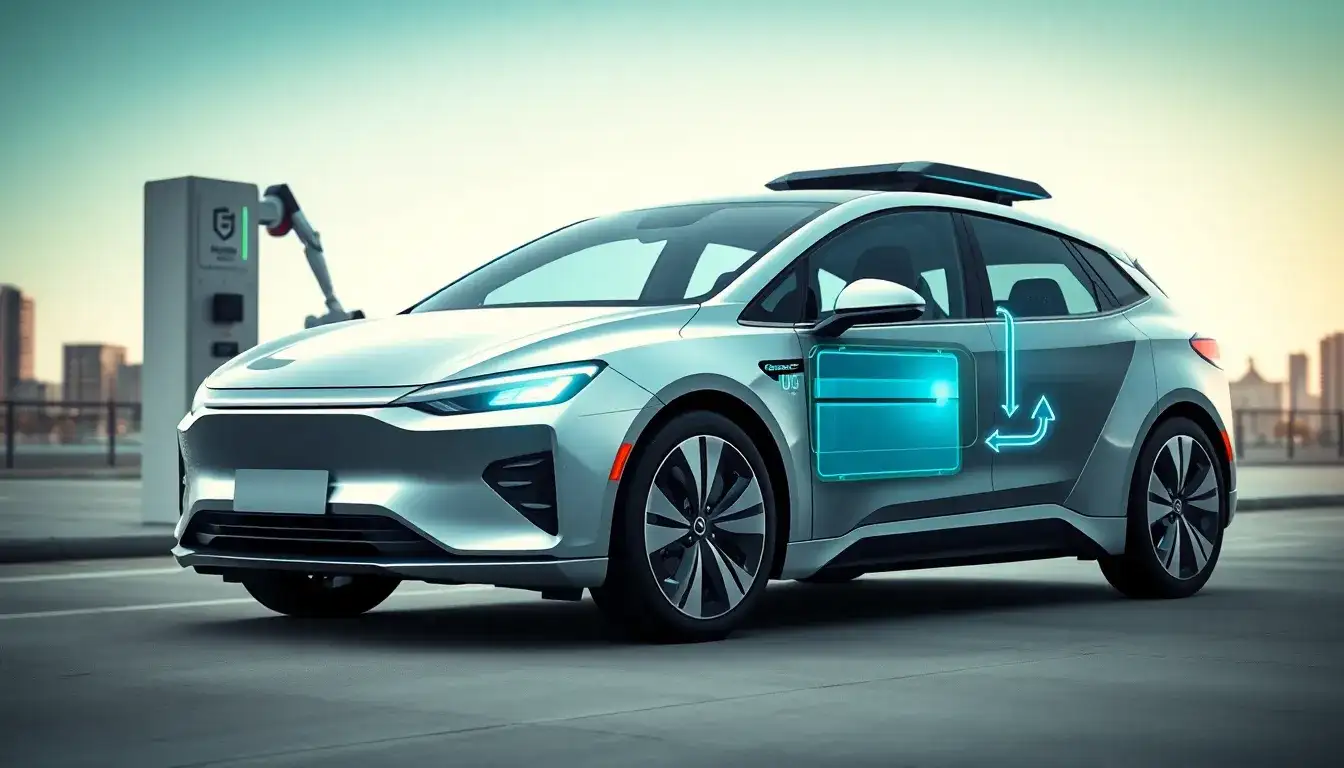
The Ministry of Industry and Information Technology has released the 2025 Automotive Standardization Work Points, which focuses on improving the standard system, enhancing standard quality and effectiveness, and strengthening implementation and application. Among the significant highlights for the new energy vehicle sector are three main points: advancing standards research in cutting-edge fields, enhancing safety levels for new energy vehicles, and strengthening the supply of standards for intelligent and connected vehicles.
To achieve these goals, the standards will encompass sub-systems such as solid-state batteries, electric vehicle battery swapping, safety requirements for power batteries, and efficiency standards for drive motor systems. Furthermore, standards for autonomous driving design and operational conditions, automatic parking, and simulation testing for autonomous driving will also be approved and implemented.
This announcement, consisting of 23 key points related to the improvement of the standard system, provides exciting insights. Specifically, three points regarding new energy vehicles stand out, and I will elaborate on them for readers.
-
Advancing Standards Research in Cutting-Edge Fields
This involves analyzing and assessing the development trends of advanced technologies and potential application scenarios to identify future directions for automotive standardization. It explicitly states the need to develop and release standards for vehicle artificial intelligence, solid-state batteries, and electric vehicle battery swapping systems, as well as to initiate the establishment of new standard systems for data governance and applications, including research into standardization needs for new business models such as flying cars.
The conclusion here is that the mass production and application of solid-state batteries are on the horizon. The physical characteristics of liquid electrolyte lithium-ion batteries make it challenging to achieve high safety performance. However, both ternary lithium batteries and lithium iron phosphate batteries have cost advantages, with lithium iron phosphate batteries being particularly profitable. Thus, while there may be obstacles to the application of solid-state batteries, the recent announcements suggest that the industry can now move towards large-scale adoption without hindrance.
-
Enhancing Safety Levels for New Energy Vehicles
The push for standards regarding remote service and management for electric vehicles, alongside the implementation of safety requirements for power batteries, is no longer just an industry prediction. This initiative not only aims to refine existing standards but also to expedite the approval of safety requirements for electric vehicles. This includes, but is not limited to, advancing the approval of standards for battery durability, thermal management systems, and optimizing performance requirements for power batteries. In simpler terms, the lifespan of power batteries will no longer rely solely on claims made by vehicle manufacturers; there will soon be standards in place that disallow the use of non-compliant batteries in vehicles.
The thermal management system is crucial in preventing thermal runaway (explosions), making standardization vital. These aspects are significant for consumers of new energy vehicles. Additionally, there is a mention of accelerating the formulation of efficiency testing standards for drive motor systems, conducting preliminary research on distributed drive motor systems, hybrid power systems, and onboard hydrogen systems, thereby enhancing quality requirements for key system components. This suggests that new standards will emerge in the fields of drive motor efficiency, energy consumption, and hybrid systems technology, shifting the focus from merely maximizing performance through motor stacking to gradually improving drive system efficiency and reducing energy consumption as a technological goal.
-
Strengthening Standards Supply for Intelligent and Connected Vehicles
This includes promoting the approval and implementation of standards for autonomous driving design, operational conditions, automatic parking, and simulation testing. There is also an emphasis on accelerating the development of mandatory national standards for the safety requirements of autonomous driving systems to establish a safety baseline. This is critical. Without corresponding mandatory national standards, automobile manufacturers could blur the boundaries of system functions, potentially exaggerating their capabilities. This could lead to misunderstandings among consumers of intelligent and connected vehicles, resulting in traffic accidents due to misuse stemming from misinterpretations. The resulting chain reaction and butterfly effect are significant and must be addressed with mandatory standards, which are expected to be forthcoming.
Additionally, the document calls for a stronger promotion of automotive standards, employing new media formats like visual aids and online courses to enhance understanding and outreach. This effort aims to broaden the scope and depth of standard promotion and training while encouraging businesses to summarize and share their experiences in standardization. In the future, automobile manufacturers may need to take on the responsibility of ‘educating consumers,’ akin to a sentiment expressed by a Tesla executive years ago. Consequently, strict adherence to standards will be essential from the product development stage onwards.
In conclusion, the various contradictions currently present in the new energy vehicle sector are expected to gradually resolve, leading to a transition in the automotive industry from disordered competition focused on price and marketing to healthy competition centered on technology. The automotive industry is poised for positive transformation, and we eagerly await these developments.
Original article by NenPower, If reposted, please credit the source: https://nenpower.com/blog/transforming-the-automotive-industry-key-standards-for-solid-state-batteries-safety-and-battery-swapping-in-2025/

