

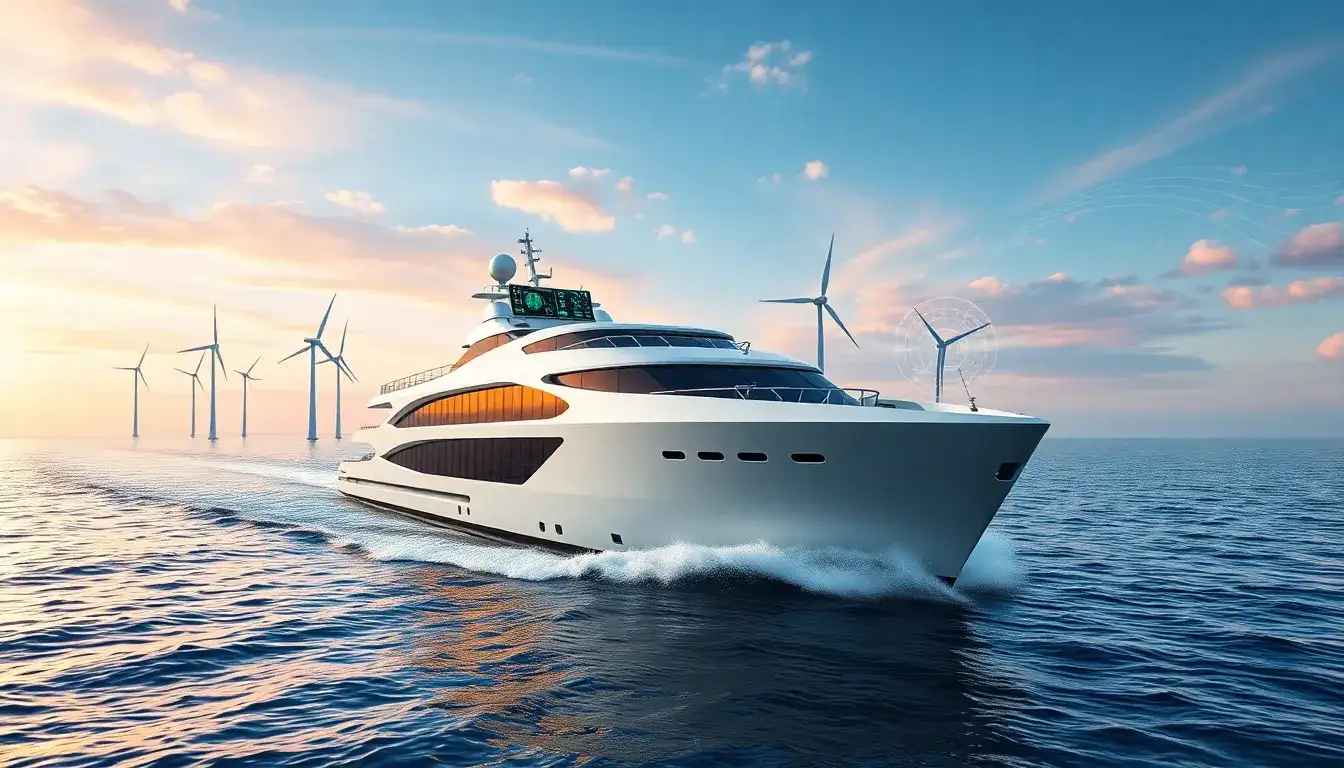
Revolutionizing Maritime Travel: When Vessels are Equipped with an “Electric Heart” and an “AI Brain”
On January 28, 2026, the marine economy is entering a new phase of “quality and efficiency enhancement” following the significant milestone of surpassing a gross ocean production value of 10 trillion yuan in 2024 and the incorporation of marine technology into the national strategic design in 2025. Driven by continued policy support and market forces, emerging fields such as deep-sea technology, marine renewable energy, and smart oceans are witnessing robust growth. Innovations like offshore wind power, underwater data centers, and underwater robots are continuously expanding the boundaries of the marine economy.
Models for layered and three-dimensional utilization of marine areas and multi-energy fusion development are gradually maturing, promoting a complete industrial ecosystem that encompasses “undersea resource exploration—marine energy development—marine equipment manufacturing.” The deep integration of general technologies like artificial intelligence and big data with the marine industry is facilitating the evolution of operational models toward automation, clustering, and intelligence, significantly enhancing the efficiency and sustainability of marine development.
Among the sectors in the marine industry characterized by intense technology and innovation activity, shipbuilding stands out. Since 2010, China has maintained a leading position in global ship manufacturing for several consecutive years while actively promoting the green and intelligent transformation of vessels. Currently, ship intelligent systems have achieved breakthroughs in scenarios such as autonomous navigation in narrow waterways and remote control from shore-based stations. However, the full implementation of intelligent vessels still faces multiple challenges: insufficient sensor accuracy in complex sea conditions, high communication delays between ship and shore, weak cybersecurity measures, and the need for AI to improve its decision-making capabilities in emergency situations. Additionally, electric vessels must address core issues like power endurance balance and high-pressure system safety.
On January 28, 2026 (Wednesday) at 17:00, 36Kr OpenTalk will host a live event titled “Revolutionizing Maritime Travel: When Vessels are Equipped with an ‘Electric Heart’ and an ‘AI Brain’“. We have the honor of inviting two distinguished guests: Dong Jiang, Founder & CEO of Qingtian Exploration, and Li Bo, Founder & CEO of Boli Technology. They will discuss two main themes: “Innovative Technologies Driving Global Vessel Electrification” and “Development and Outlook of Intelligent Navigation Technology and Smart Ship Equipment“. They will share insights on high-performance electric outboard motors, marine new energy, full-range autonomous navigation tasks, and comprehensive intelligent navigation solutions.
We welcome entrepreneurs, investors, and practitioners interested in marine technology to scan the QR code on the event poster below to register and engage in discussions with our guests. Join us as we explore the technological breakthroughs, commercialization challenges, and future trends in the fields of vessel electrification and intelligence.
Original article by NenPower, If reposted, please credit the source: https://nenpower.com/blog/transforming-maritime-travel-the-integration-of-electric-power-and-ai-in-vessels-opentalk-live-preview/

