

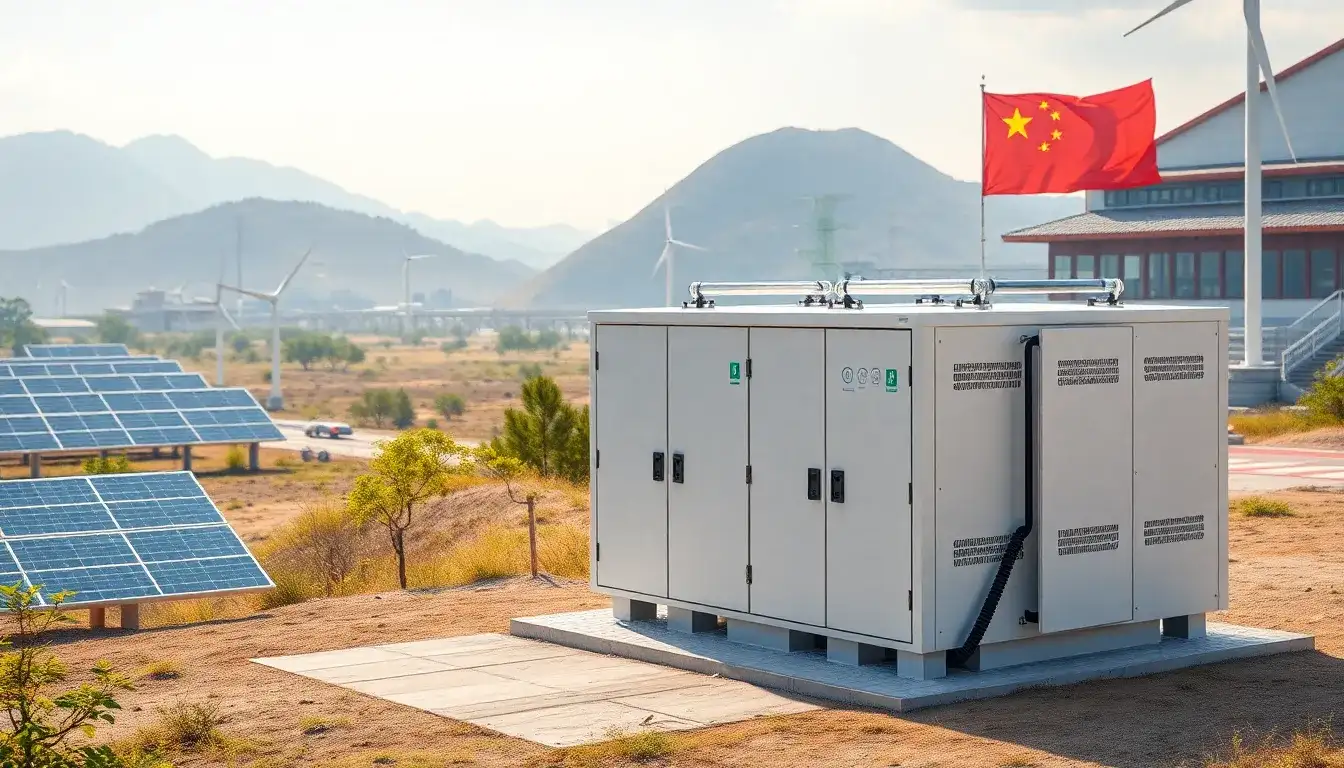
The year 2025 is set to be a turning point for the development of new energy storage systems in China, as outlined in Document No. 136 released this year. The growing volatility of renewable energy sources, along with increasing challenges in energy consumption, will prompt the renewable energy sector to actively seek assistance from storage solutions. This shift will transform energy storage from a perceived burden into a tool for revenue generation. However, before achieving a true market-oriented approach, energy storage devices must overcome several challenges.
Recent observations from the Beijing ESIE energy storage exhibition indicate that the straightforward cost-reduction strategies and passive safety measures of the past are no longer sufficient. Under new market policies, energy storage systems must now focus more on comprehensive active safety measures and the economic value derived from their actual operational effectiveness.

<b>The demand for large capacity and high voltage storage systems is increasing, which has led to a rise in safety concerns.</b> In response to the need for cost reductions, energy storage batteries have evolved from 280Ah and 314Ah to third-generation systems with capacities exceeding 500Ah and 600Ah. Consequently, single-container energy storage systems have increased their capacities to 7MWh and even 8MWh. Some companies are now offering integrated storage solutions with 2000V high-voltage systems on the direct current side. In the latest competition for large-capacity cells, significant changes have occurred in cell size and shape, further reshaping the integration demands of energy storage systems.

It is evident that the new requirements cannot be met by batteries or energy storage system integration alone; instead, the involvement of third-party Battery Management Systems (BMS) is crucial. The ability to monitor cell data and enhance intelligent capabilities will significantly impact system performance. Traditional BMS typically collects parameters such as cell voltage, current, and temperature. However, due to cost pressures, the number of temperature sensors is often only half of what is necessary, and traditional sensors have inadequate thermal response speeds, which can create safety risks in energy storage systems.

As the trend towards large capacity and large PACK systems continues, thermal management in energy storage systems becomes increasingly complex, raising safety risks and necessitating an urgent update of technological solutions. In this context, industry leader <b>GOTECH Electronics</b> has introduced the G.2 generation BMS, which is the first in the industry to offer status detection of cell safety valves for early warning of thermal runaway. Currently, the G.2 BMS has achieved a 1:1:1 monitoring ratio for safety valves, temperature, and voltage across each cell, representing the highest standard in monitoring within the industry.

Moreover, as the integration of energy storage systems increases, the number of cells contained within a single container also rises, which amplifies the risk of thermal runaway. This necessitates more precise data collection, along with millisecond-level data transmission, storage, and diagnostic technologies to help systems promptly detect and communicate anomalies in cell performance. This is where the demand for intelligent operations and maintenance platforms emerges.

With the rapid increase in energy storage installations scattered across various locations, traditional manual operations and maintenance are no longer sufficient. Both routine safety monitoring and anomaly management require energy storage devices to possess local and cloud data transmission capabilities. The integration of AI can facilitate comprehensive management, enabling early safety warnings, reducing downtime due to faults, and enhancing the overall lifecycle value of these systems.

Apart from early warnings, the energy storage industry must also prioritize post-incident management. For instance, following an accident, energy storage devices must disconnect power through a "high-voltage box" to prevent the risk of fire spreading. The "self-safety" of high-voltage boxes is particularly critical, as they must withstand environmental factors such as salt mist and corrosion, while also avoiding risks associated with electrical arcing. GOTECH Electronics has set a precedent in the BMS sector by innovatively designing an integrated plastic shell high-voltage box, which not only enhances device performance and safety but also reduces weight by 30%, saves 20% in space, and lowers costs by 5%.

Ultimately, analysis of international energy storage cases reveals that recurring issues, such as reignition after a fire, often stem from completely destroyed equipment that hinders investigation into the root causes of incidents. To address this, GOTECH Electronics has launched an energy storage "black box" fault recorder, capable of documenting the operational records of cells, BMS, and PCS components, marking a first in the energy storage industry. This innovation fills a critical gap in post-incident protection and tracing, significantly enhancing the overall safety standards within the Chinese energy storage sector.

As we move towards comprehensive marketization, how will the economic value of energy storage be realized? With the elimination of mandatory energy storage for renewable energy projects, the energy storage market will no longer solely pursue low prices but will increasingly focus on application value and the economics of the full lifecycle. Thus, the conversion efficiency and transactional capabilities of energy storage devices will come under scrutiny, with control management capabilities becoming a key factor in determining the economic viability of energy storage.

Currently, industry attention is shifting towards extending the lifespan of energy storage systems. However, as individual cell capacities increase, the inherent inconsistencies in batteries have emerged as the biggest bottleneck to enhancing energy efficiency. Traditional passive balancing management methods are proving inadequate, while early proactive balancing strategies are constrained by size and cost limitations, unable to reconcile the conflict between scale growth and cost reduction. The market urgently requires more advanced cluster-level, and even inter-cell proactive balancing solutions to improve system usable capacity and extend lifespan.

In this context, GOTECH Electronics has made breakthroughs in chip technology offering a bidirectional active balancing solution. Through higher integration chips and next-generation BMS algorithms, the average cycle life within the energy storage sector has been increased by 20%, while operational returns have also improved by 20%. During the transition to market-oriented energy storage, virtual power plants have become engines for the growth of distributed energy storage, providing additional channels for revenue generation. However, this "aggregation" function necessitates an upgrade of the energy management systems (EMS) associated with storage solutions.

Particularly under the influence of dynamic electricity markets, price fluctuations can add uncertainty to energy storage revenues, making "price prediction" capabilities a critical requirement for future EMS systems to maximize returns during operational periods. Consequently, an increasing number of energy storage system integrators are embracing AI technologies. However, effective AI price prediction relies on a vast pool of historical data and relatively mature algorithms to yield optimal outcomes.

GOTECH Electronics, consistently a market leader, has accumulated the most extensive dataset from operational energy storage projects, which will undoubtedly aid in the training of AI and promote faster widespread applications of AI within the energy storage sector.

Nonetheless, to achieve the policy goals of "multi-use" and "time-shared reuse," a deeper integration of BMS and EMS is essential. Only by acquiring real-time status data from storage batteries and eliminating potential safety risks within the system can we effectively deconstruct the capabilities of energy storage and ensure efficient utilization of storage systems.

As a leading BMS provider, GOTECH Electronics has taken the initiative to introduce an integrated BMS+EMS control system, featuring edge diagnostics and a cloud-edge collaborative platform to meet customer demands for energy data services. It is clear that in the evolution of energy storage system integration, BMS will bear the heaviest responsibility and obligation, from monitoring cell operational status to real-time information transmission and intelligent analysis, as well as enhancing system safety warnings and operational efficiency. All these aspects necessitate the advancement of BMS towards higher precision and greater intelligence.

According to the <b>2024 Statistical Data on the Electrochemical Energy Storage Station Industry</b> released by the China Electricity Council, the top five BMS manufacturers have a total installed capacity of 27.31GWh, accounting for 56.08% of the market share. GOTECH Electronics remains at the forefront, reflecting the industry’s recognition of its series of innovations and breakthroughs. Looking ahead, how will technological solutions continue to evolve in response to the energy storage industry’s transition towards digital intelligence? On May 16, GOTECH Electronics will hold a product launch in Hangzhou for new data service offerings, which promises to bring further technological innovations to the energy storage sector. We eagerly await the developments!
Original article by NenPower, If reposted, please credit the source: https://nenpower.com/blog/transforming-energy-storage-systems-ahead-of-the-2025-milestone-in-china/

