

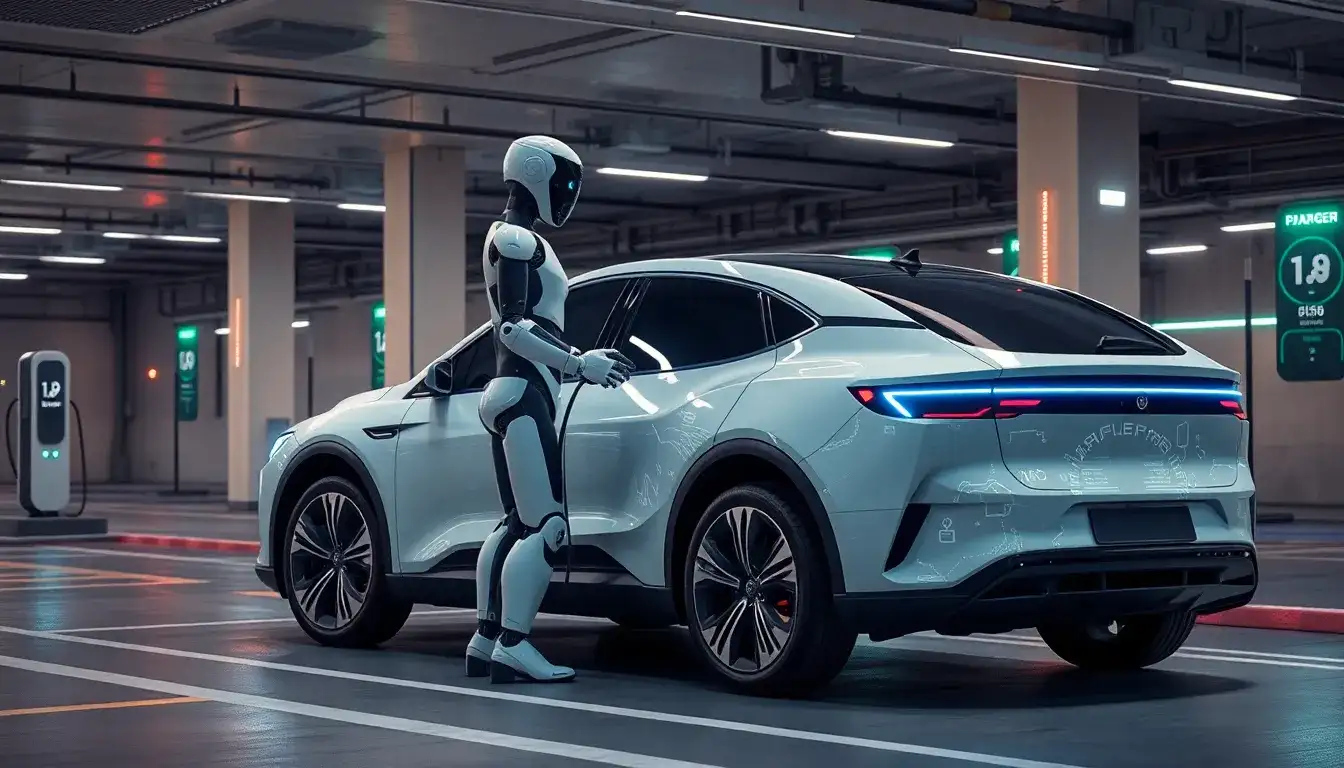
From “three-phase battery exchange” to “hundred-thousand units production line,” Shenzhen EHang Technology Co., Ltd. is accelerating the deployment of humanoid robots. This information was reported by Shenzhen Special Zone News on March 5, 2026.
During the 2026 South China International Robotics Expo, the autonomous battery exchange technology of humanoid robots attracted considerable attention from attendees. The technology employs advanced machine learning processes for efficient battery exchange.
According to the report, on March 4, 2026, the National People’s Congress will convene for its 15th session, where the introduction of new robotics initiatives will be discussed. Experts predict that 2025 will see a breakthrough in the production and application of humanoid robots, with a focus on creating systems that revolutionize battery exchange processes.
The capabilities of humanoid robots are expected to expand significantly, offering a glimpse into a future where humans can interact seamlessly with advanced technologies, leading to enhanced productivity across various sectors.
At the forefront of this innovation is the Walker S2, a humanoid robot that integrates artificial intelligence and advanced mobility. It is designed for efficient operations in dynamic environments, showcasing a self-sufficient battery exchange method that ensures minimal downtime.
As part of a broader strategy, EHang has committed to developing humanoid robots that can adapt to various operational scenarios. The Walker S2 aims to achieve a new level of efficiency in battery management, enabling it to work autonomously while ensuring safety and reliability in its operations.
Looking ahead, EHang plans to enhance its humanoid robotics capabilities by leveraging artificial intelligence and machine learning technologies, ensuring that these robots can not only operate efficiently but also learn and adapt to different tasks over time.
By 2026, the production capacity of humanoid robots is projected to reach significant milestones, further integrating these advanced machines into everyday operations across industries. EHang’s ambitious plans include scaling up production and expanding the applications of its humanoid robots, which will transform how businesses operate in the coming years.
In summary, EHang’s dedication to pushing the boundaries of humanoid robotics is paving the way for a future where these machines play an essential role in various sectors, enhancing efficiency and productivity. The company’s ongoing innovations reflect a commitment to advancing technology for a more integrated and intelligent future.
Original article by NenPower, If reposted, please credit the source: https://nenpower.com/blog/transforming-electric-vehicle-technology-the-rise-of-humanoid-robots-in-autonomous-charging-solutions/

