

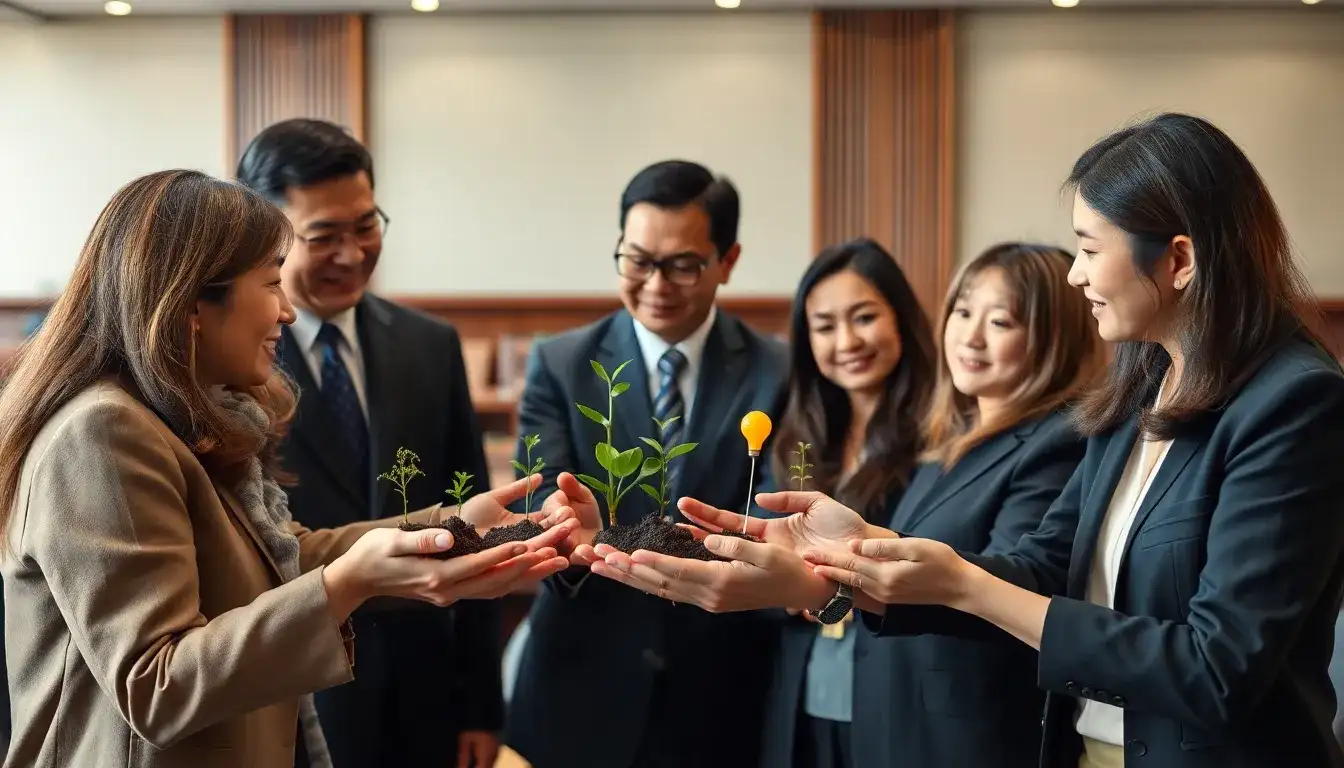
Small Changes, Big Picture — The Subtle “Light” and “Galaxy” in the Work of Six National People’s Congress Representatives
On the beams of a villager’s home in Wuke Village, Daliang Mountain, the fat on the cured meat has noticeably thickened. This is one of the small changes in rural life observed by representative Geng Funeng. At the conference, a tablet was equipped with a customized voice package, allowing visually impaired representatives to access information without needing someone to read it for them, showcasing a small but significant advancement in accessibility championed by Wang Yongcheng. In the old corridors of a community, folding benches have quietly been put in place, representing the efforts of Yang Miaomiao to address the mobility issues faced by the elderly.
These subtle changes are embedded in daily life, reflected in the hustle and bustle of farmland, seen in the smiles of neighbors, and heard in the hum of factories. Although they may seem minor, they represent the most genuine forms of happiness for the people and add vibrant annotations to the era of greatness and the pursuit of a better life.
Carrying the hopes of the public, the representatives come from the grassroots to respond to the needs of the people: paving the way for rural revitalization, passing down cultural legacies with every stitch, leveraging technological innovation to enhance manufacturing upgrades, and diligently working on the frontlines of education to support youth development…
“Light” gathers to ultimately become a “Galaxy”.
Rural Revitalization: Changes in Industry and Wealth
“The fat on my neighbor’s cured meat has thickened.”
Geng Funeng: Integrating specialty industries to promote rural revitalization
“Before coming to Beijing, my neighbor warmly invited me to his home to see the cured meat he was drying.” As a national representative and chairman of Good Doctor Group, Geng Funeng noticed that the fat on his neighbor’s cured meat had visibly increased. “Thicker fat indicates well-fed pigs and signifies that everyone is free from food worries, with enough grain to raise mountain pigs,” he explained. For Geng Funeng, the quality of life can be gauged by the thickness of the fat on the cured meat.
In Wuke Village, located 3,050 meters above sea level in the Liangshan Yi Autonomous Prefecture, cured meat that was once sparsely hung on beams is now abundant and glossy. This tangible change exemplifies the vibrant revitalization of rural Daliang Mountain.
Previously, high-altitude areas like Wuke Village could only grow potatoes, oats, and buckwheat, resulting in low yields and minimal income, leaving villagers often anxious about their basic needs. Geng Funeng understood that strengthening specialty industries was essential for stable income growth.
“Many villages in Liangshan have high altitudes and unpolluted soil, making them ideal for growing medicinal herbs.” Since founding Good Doctor Group in 1996, Geng Funeng has led his team to establish a mechanism that combines “companies + party branches + cooperatives + bases + farmers.” This initiative provides villagers with quality medicinal herb seeds and systematic training at no cost, while also sending technicians to teach scientific planting techniques directly in the fields. This helps villagers gradually move away from the traditional “farming by chance” approach and towards a new path of income growth through technology and production.
By 2025, Geng Funeng and his team, leveraging the innovative “grain and medicine intercropping” model, have systematically developed the medicinal herb industry across 23 villages in 10 counties of Liangshan Prefecture, cultivating 34,300 acres of medicinal herbs like Fuzi, Mu Xiang, and Jin Yin Hua, benefiting over 149,000 farmers with stable income increases.
In Huili City, Geng Funeng has implemented an order-based purchasing and minimum price mechanism, continuously purchasing pomegranates and mulberries. In 2025, the factory procured over 30,000 tons of pomegranate fruits, helping local fruit farmers consistently “fill their pockets.” On April 21, 2025, a mulberry purchasing ceremony was held in Yuntian Village, where the first mulberry farmers expressed their gratitude, stating, “The purchasing point is just a six or seven-minute walk from my home. I can pick at least 200 pounds a day, with stable prices and same-day settlement, which makes us feel very secure.”
Stable industrial income has given every household peace of mind: the cured meat hanging on beams has increased in quantity and thickness, and “thicker fat” has become a new symbol of happiness in Liangshan’s villages.
Geng Funeng believes that rural revitalization cannot rely on a single industry; it must embrace integrated development. With new highways and improved road networks in many areas of Liangshan, villagers now have renewed hopes of “reaping the benefits of tourism.” “For example, Wuke Village has thousands of acres of Soma flower viewing areas and natural grasslands, but these beautiful sights remain relatively undiscovered,” he hopes to develop the “last mile” to scenic spots, optimize rural landscape design, and promote the integration of “medicinal herb cultivation + rural tourism + cultural experiences,” allowing the aroma of herbs to blend with floral scents, connecting industrial routes with tourism paths.
“Liangshan is a magical land, and the people there are grateful and hardworking.” Geng Funeng is confident that Liangshan’s future will blossom, much like the Soma flower, with vibrant colors.
People’s Welfare: Changes in Accessibility
“The conference tablet is equipped with a customized voice package.”
Wang Yongcheng: Broader employment opportunities and smoother communication for people with disabilities
“In the past, it was quite challenging for the visually impaired to make a living. Now, with advancements in technology and societal progress, our employment opportunities have broadened significantly, from massage therapy to music education and piano tuning,” said Wang Yongcheng, who is the only blind representative in the 14th National People’s Congress, having lost his sight in an accident at the age of 18.
Wang Yongcheng has overcome numerous obstacles and has become a director of medical massage therapy for the visually impaired. As a steadfast advocate for the rights of disabled individuals, he has “personally witnessed” the improvements in the lives of the blind community, growing increasingly vibrant through various changes.
Traveling has become easier—wheelchair access has improved, with ramps available for getting on and off public transport; guide dogs are now permitted in stations; and highway service areas have added accessibility platforms and restrooms. “Disabled friends clearly feel that in recent years, it’s much more convenient and safer to go out for errands and travel,” Wang Yongcheng remarked.
Employment avenues have also widened—with roles such as massage trainers, music teachers, and computer trainers emerging. Traditional employment barriers continue to break down. “In Fujian, there are blind individuals who have become tea masters relying on their sense of touch and smell, able to distinguish the quality of tea leaves just by feeling them,” Wang Yongcheng shared, noting that such stories are no longer isolated cases.
Communication has improved significantly—over 3,000 websites and apps closely associated with the lives of people with disabilities have been upgraded to include accessible features, covering high-frequency scenarios in daily life such as news and shopping. “With a simple app on my phone, I can hear everything on the screen, and I can write articles using voice input,” Wang Yongcheng smiled as he spoke to reporters, “See, I reply to your WeChat messages quite quickly, right?”
In his advocacy for the disabled community, Wang Yongcheng is both a promoter and a beneficiary. In 2023, he received a Braille version of the representative suggestions responses; in 2024, the Braille version of the government work report made its debut at the two sessions; and in 2025, the draft amendment to the representative law specifically stated that representatives with physical disabilities or mobility challenges should receive necessary assistance from relevant departments based on their needs while performing their duties…
“Every year brings unexpected warmth, and this year is no exception.” Wang Yongcheng noted that the conference organizing committee specifically installed a customized voice package for his tablet, allowing him to access the agenda and materials without needing someone to read them aloud. He can now listen with simple voice commands.
“This is a revolutionary change; it’s my greatest feeling about the changes in the lives of disabled individuals.” Wang Yongcheng expressed that every small change reflects the government’s deep concern for the disabled community, as policies move from “implementation” to “detailed execution.” He is committed to carry this warmth forward, listening to the voices of the disabled community at the grassroots level, ensuring that the light of accessibility shines into more corners.
Grassroots Governance: Changes in Convenient Services
“There are now folding benches in the corridors.”
Yang Miaomiao: Grassroots governance must address small issues effectively and efficiently.
In recent months, several old residential buildings in the old district of Bengbu City, Anhui Province, have added small folding benches to their corridors. Previously, the elderly needed to hold onto the railing and move step by step down the stairs; now they can take a break and rest on the folding benches when they feel tired.
These seemingly insignificant folding benches not only solve the problem of mobility for the elderly but also serve as a warm reflection of grassroots governance. This initiative is the result of the observations and efforts of national representative Yang Miaomiao, a bus driver with Bengbu Public Transport Group.
With 30 years of driving experience, Yang Miaomiao views the bus as a window into the lives of the public. Traveling through the city’s streets daily, she captures the people’s needs through conversations with passengers. After being elected as a national representative in 2023, her attention to urgent public concerns intensified, leading her to engage with elderly residents during her breaks, collecting their sentiments and embedding grassroots governance into their daily lives.
“Now, the elderly can go downstairs,” Yang Miaomiao explained, referencing a unique situation in the Tongleyuan Community where residents must climb two flights of stairs to reach a larger platform where the residential buildings are located. This means that even those living on the first floor must first climb stairs to return home.
Consequently, elderly residents with mobility issues often find themselves “trapped” at home. “If only there were an elevator,” Yang Miaomiao recalled the urgent wishes of the elderly. After learning about their needs, she and community staff took proactive measures to address the issue. Despite facing challenges such as differing opinions from residents and funding difficulties, they went door to door to solicit feedback and engaged in thorough discussions. Yang Miaomiao also took advantage of her interactions with the elderly to repeatedly explain the benefits and details of installing an elevator.
Eventually, the entire building’s residents reached a consensus and collectively funded the installation. By June 2024, the elevator was successfully built and put into operation. Many elderly residents who had moved to live with their children due to mobility issues returned to their familiar neighborhoods. “The smiles on the elderly have noticeably increased,” Yang Miaomiao remarked, recalling an elderly resident who had been confined to a wheelchair and was once introverted; now he regularly engages in activities in the community garden and occasionally sings along with others.
For those buildings unable to install elevators due to close spacing and layout constraints, Yang Miaomiao and community staff remain concerned. During a volunteer service event, she noticed an elderly resident placing discarded chairs from moving households in the corridor corners for resting while going up and down the stairs. This sight inspired her.
To avoid obstructing resident passage, Yang Miaomiao proposed installing folding benches in the corridors, fixed to the walls, which could be pulled down when needed and stored away when not in use, thus not occupying public space. This idea received unanimous approval at the community meeting.
Every time she sees the elderly using the folding benches, Yang Miaomiao feels a sense of connection—grassroots governance involves countless small actions that resonate with everyday life, from renovating old residential communities and accompanying residents, to providing heartfelt greetings and making minor yet impactful improvements. She believes that precision and meticulousness are key in grassroots governance. Effectively addressing small matters and handling practical issues constitute the most substantial governance achievements.
Cultural Heritage: Revitalizing Traditions
“Young people are now actively coming to learn.”
Li Li: Continuously enhancing the transmission and dissemination of ethnic culture
“The changes in recent years have been profound. The most direct observation is: we used to ask others to learn, but now young people are actively coming to learn,” expressed Li Li, a national representative and a cultural heritage inheritor of Buiyi clothing.
In the Buiyi villages of Qinglong, Guizhou, what was once considered old material has transformed into a coveted cultural treasure. Young workers are returning home to learn embroidery, and ethnic clothing is being sold nationwide through live streams—scenarios that Li Li could hardly have imagined in the past.
From a young age, Li Li learned skills such as wax painting, fabric dyeing, and clothing making from her mother. After years of hard work outside, she returned to her hometown in 2015 with a deep affection for her roots and Buiyi culture, starting her entrepreneurial journey in Zitang Village, Jichang Town, Qinglong County.
Initially, Li Li faced challenges in preserving cultural heritage: traditional crafts were at risk of disappearing, and young people viewed ethnic clothing as “outdated,” preferring to work elsewhere. She even found herself “begging others to learn”…
Undeterred by difficulties, Li Li began her cultural transmission journey from a small online store. In 2016, she officially registered her company, Buiyi Yao. As her business expanded, Guizhou Buiyi Yao Cultural Development Co., Ltd. was established, producing a series of cultural and creative products including handwoven fabrics, handmade bags, clothing, and scarves, allowing Buiyi culture to enter modern life in diverse forms. Li Li leveraged e-commerce platforms to showcase these unique cultural products to a wider audience.
Today, the village has undergone a remarkable transformation: elders actively present their cherished embroidery patterns, teaching their skills hand-in-hand, fearing that this ethnic treasure might be lost; young women eagerly seek mentorship, incorporating Buiyi clothing into their daily lives and workplaces; and short videos featuring ethnic cultural creations have gone viral online, turning once “hidden” skills into sought-after fashion.
What moves Li Li the most is that these small changes in cultural transmission are closely linked to the happiness of the people, transforming cultural heritage from mere preservation to a “hand-to-hand economy” that enriches communities. In Qinglong, relocated impoverished households and rural women are sewing their way to happiness at their doorsteps, with some earning three to four thousand yuan a month—realizing the ideal of “carrying babies while embroidering, taking care of home while earning money.”
Li Li is now turning her focus to the new field of integrating culture, sports, and tourism. In 2025, the viral success of Guizhou Village Dance and Guizhou Village GT has enabled ethnic culture to reach wider audiences while also boosting the income of local residents. At this year’s two sessions, she presented suggestions for deepening the integration of culture, sports, and tourism, aiming to transform traffic into sustainable energy for cultural development.
“The yellow of gardenias, the purple of Mi Meng, and the blue of indigo grass are not just simple dyes but love letters written by the Buiyi people to the earth, the most touching verses of the mountains and fields,” Li Li expressed passionately, stating that each stitch not only preserves the roots of ancient memories but also shapes the bright future of the people.
Technological Innovation: Upgrading Smart Manufacturing
“Robots are becoming ‘smarter’!”
Wu Fengli: Committed to advancing digital transformation in manufacturing and the “Artificial Intelligence +” initiative
“Today’s robots are much smarter!” With over 20 years in the manufacturing industry, national representative Wu Fengli, chairman of Tuo Si Da Technology Co., Ltd., has observed significant transformations.
In Wu Fengli’s view, with rapid technological advancements, robots are no longer simple mechanical devices executing repetitive tasks; they are now “intelligent workers” that can understand production needs and autonomously adjust operations. Thanks to real-time optimization through artificial intelligence algorithms, entire production processes have become more efficient, flexible, and smart.
In 2007, Wu Fengli and a friend started Tuo Si Da from scratch, initially focusing on auxiliary equipment for injection molding machines. “I remember visiting a client and arm wrestling with a team leader who only had four fingers due to operating machines, which left me feeling quite unsettled.” From that moment, Wu Fengli resolved to independently develop robotic arms to keep manufacturing workers safe from danger and harm.
After more than a year of hard work, Wu Fengli assembled a technical team to develop their proprietary robotic arm products, gradually achieving domestic substitution for core technologies like controllers, significantly lowering product costs, making them accessible to more small and medium-sized enterprises.
In 2017, he led the company to become the first robotics enterprise listed on the GEM in Guangdong Province. Since being elected to the National People’s Congress in 2023, he has felt a heavy sense of responsibility. To accurately identify industry pain points and propose practical suggestions, Wu Fengli has conducted extensive research. In 2024 alone, he visited over 30 manufacturing companies and AI research teams across 12 cities, including Beijing, Hangzhou, Shenzhen, Dongguan, and Huizhou.
At an electronics company in Dongguan, Wu Fengli witnessed traditional industrial robots performing repetitive tasks at high frequency. The company manager explained that when products are upgraded, engineers must reprogram the robots, leading to increased labor costs and impacting production efficiency. This experience made Wu Fengli realize that mere automation could no longer meet the development needs of modern manufacturing; the deep integration of artificial intelligence and robotics is the future.
As the leader of Tuo Si Da, Wu Fengli adheres to the principle of “defining products based on scenarios,” driving technological innovation in his enterprise with numerous breakthroughs. The company has utilized its self-developed control algorithms and optimized structural designs to achieve dynamic optimization of motion precision and cycle speed. Tuo Si Da’s ultra-high-speed robots have a standard cycle time of just 0.24 seconds and a maximum repeat positioning accuracy of 0.01 millimeters, both of which are globally leading standards. Since 2025, the company has launched several embodied intelligent products, including the humanoid robot “Xiao Tuo,” capable of autonomously executing precise operations in injection molding scenarios, and the quadruped robot “Xing Zai,” adaptable to complex terrain environments, marking a shift from “passive execution” to “active perception and autonomous learning.”
Drawing from his practical experience, Wu Fengli focuses on embodied intelligence and industrial data infrastructure. He suggests accelerating the development of national-level industrial data infrastructure aimed at embodied intelligence, collaborating on standard formulation, regulatory improvements, policy incentives, application scenarios, and talent support, breaking down data barriers and transforming data from “resources” into “assets” to build a solid foundation for continuously enhancing the intelligence of robots.
Education for a Strong Nation: Changes in Character Building
“Children are now ‘sweaty and bright-eyed’.”
Hui Fenglian: Establishing a collaborative education mechanism to promote students’ physical and mental health and comprehensive development
As the spring sun illuminates the campus, students at Si County No. 3 Middle School in Suizhou, Anhui Province are energetically engaging in a break-time run, moving in sync with the lively music. With the melody building in intensity, their youthful faces flush with excitement, and beads of sweat form on their foreheads, their running figures exude vigor and vitality.
“Previously, we only had two physical education classes a week, which left children without opportunities to be active; now we regularly organize break-time exercises and runs, strictly adhering to the requirement of ‘one physical education class every day’ to ensure every child gets to fully engage and run,” said Hui Fenglian, the vice principal of Si County No. 3 Middle School, with a tone full of satisfaction.
What brings her the most joy is the subtle transformation in the children: “They are now ‘sweaty and bright-eyed’.”
In August 2024, the Anhui Provincial Department of Education issued a directive mandating that schools at the compulsory education stage must provide at least one physical education class each day and organize 30-minute physical activities in both the morning and afternoon, ensuring students engage in at least two hours of physical activity daily.
“Given the limitations of school space, we have creatively utilized our resources to develop unique features,” Hui Fenglian explained. The school has made use of available spaces in the teaching buildings and surrounding areas to create several “small but beautiful” themed sports locations; additional table tennis tables and badminton areas have been set up, effectively designating sports zones and transforming the campus into a paradise for student sports. Not only that, but the structure of extracurricular clubs has also been enhanced, expanding from once being limited to drawing, painting, and table tennis clubs to now include football, basketball, martial arts, and around fifty other types—ensuring every child can find a sport they enjoy.
In recent months, many parents have noticed changes in their children: fewer instances of illness, increased lung capacity, and much more vitality overall…
“Encouraging students to be active also requires bolstering their mental resilience.” Hui Fenglian believes that psychological support for adolescents cannot be a case of “fixing problems after they arise;” it must focus on prevention and early intervention. Under her leadership, the school conducts comprehensive psychological assessments each semester to accurately understand students’ mental states; regularly invites external experts to the school for lectures and group counseling to disseminate mental health knowledge; and broadly engages in activities like art exhibitions, labor practices, and outdoor challenges to enrich students’ extracurricular lives and alleviate academic pressure.
As a “national outstanding teacher” who has dedicated many years to education, Hui Fenglian actively listens to voices from classrooms and among students, striving to transform the challenges and difficulties faced in grassroots education into precise and pragmatic suggestions. This year, she will continue to focus on the healthy growth of youth, teacher training, and the establishment of educational practice bases.
“Education is a national priority,” Hui Fenglian emphasized, stating that mental and physical health is not an “additional item” in education, but a fundamental aspect of students’ comprehensive development. Moving forward, she aims to continue improving the collaborative education mechanisms between schools, families, and communities to promote students’ physical and mental well-being and overall development.
Original article by NenPower, If reposted, please credit the source: https://nenpower.com/blog/transformative-small-changes-insights-from-six-national-peoples-congress-representatives-on-their-impactful-contributions/

