

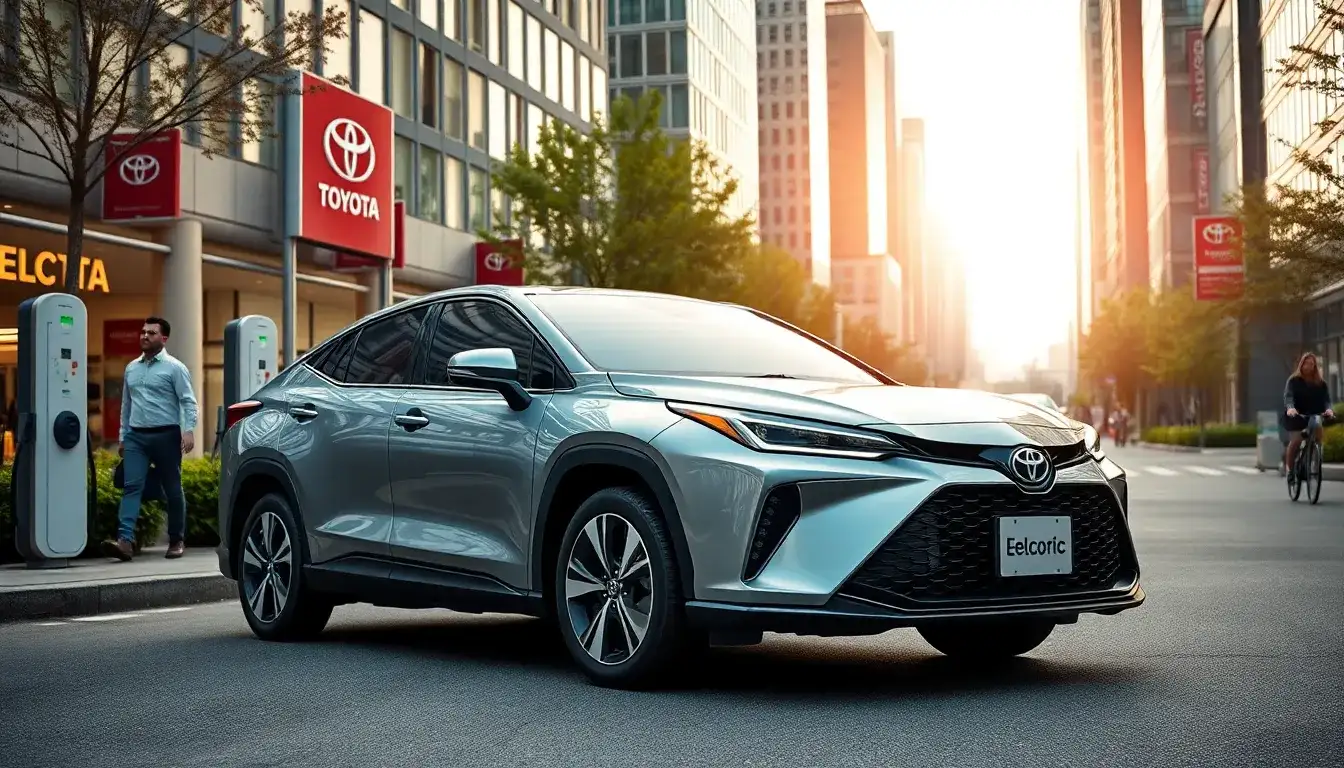
The growth rate of electric vehicles (EVs) has slowed down, prompting Toyota to heavily invest in plug-in hybrid vehicles (PHEVs). Although EV sales continue to rise, the pace of growth has not matched the rapid increases seen in early 2020. While many automakers are vigorously pursuing the development of electric vehicles, Toyota has taken a more cautious approach, leading to criticism. However, Toyota’s diversified strategy for achieving carbon neutrality has proven to be effective, as the adoption of electric vehicles in Europe and America has fallen short of expectations.
Other automakers have invested heavily and aggressively in pure electric vehicles, resulting in an inability to adapt to the recent slowdown in EV growth. This has forced companies like Mercedes-Benz and Volvo to postpone their plans to fully transition to electric vehicles. In contrast, Toyota has expanded its lineup of hybrid vehicles by introducing more plug-in hybrid models. As the industry moves toward cleaner and more efficient technologies, Toyota is banking on PHEVs to drive its growth.
Predictions and forecasts regarding the sales of plug-in hybrid vehicles vary among major data firms due to limited sales figures and the fact that not all companies report these numbers separately. Analysts in the U.S. forecast moderate growth for PHEVs over the next five years. Standard & Poor’s (S&P) anticipates that the penetration rate of PHEVs in the U.S. will rise from approximately 2% last year to 5% by the end of this decade. AutoPacific projects that by 2030, the penetration rate will reach about 4.2%, while AutoForecast Solutions expects it to remain relatively stable at around 3.3% in the coming years.
For Toyota, PHEVs are a natural progression, having promoted hybrid models globally since 1997. The first Prius plug-in hybrid was launched in the U.S. in 2016. Currently, electrified vehicle sales (including hybrids, PHEVs, and pure EVs) account for 50.6% of Toyota’s sales in North America. Although Toyota offers a wide variety of hybrid vehicles, the number of PHEV models remains limited. However, PHEVs are well-suited to meet current market demands, reflecting today’s automotive electrification landscape.
Recently, David Christ, Vice President of the Toyota brand in North America, stated in an interview with CNBC, “In the coming years, we will continually expand the sales of plug-in hybrid vehicles through our product lineup. We are enthusiastic about the PHEV system and are working to increase the electric-only range while consistently enhancing our offerings.” He added, “We have gasoline vehicles, hybrid vehicles, plug-in hybrids, and pure electric vehicles. This variety significantly increases our chances of successfully achieving electrification compared to focusing solely on one type of power system.”
One of the primary drivers for Toyota’s increased investment in PHEV development is the anticipated slowdown in the growth of pure electric vehicle sales. Additional factors include increasingly stringent emissions standards. PHEVs function as electric vehicles within certain ranges, activating the internal combustion engine only when the battery is depleted or when the driver demands significant acceleration. Notably, PHEVs are the fastest-growing powertrain system for Toyota. Last year, sales of Toyota and Lexus PHEVs grew by 39%, with the Prius and RAV4 PHEV models seeing a 30% increase, while Lexus PHEVs, including the new TX, experienced an impressive 88.6% growth.
Despite this growth, challenges remain. Toyota believes that PHEVs will serve as a “bridge” to achieve 100% electrified vehicles, but they also come with notable disadvantages. Since PHEVs combine electric and fuel technologies, their production costs are significantly higher. For instance, the 2025 Toyota RAV4 PHEV has a Manufacturer’s Suggested Retail Price (MSRP) of $44,265, nearly $15,000 more than its gasoline counterpart and $12,000 more than its hybrid version. Chris Hopson, Chief Analyst at S&P Global Mobility, noted, “The dual power system increases manufacturing costs for PHEVs. Manufacturers already invested in this platform may benefit, but newcomers will face cost challenges.”
Another obstacle for Toyota is educating consumers about the operation and benefits of PHEVs. The company believes that increasing consumer awareness could lead to significant market shifts. Ericksen noted, “Once we educate people, the transition is most pronounced for PHEVs among all power systems. Some consumers may consider PHEVs but are not inclined to choose pure electric vehicles.” He referenced Toyota’s studies that indicate consumer interest in PHEVs increases significantly once they realize these vehicles operate like electric cars for short trips yet can utilize gasoline when needed.
Historically, consumer understanding of PHEVs has been a challenge, contributing to the poor sales of General Motors’ Chevrolet Volt, which went into production in 2010 and was discontinued in early 2019.
Looking ahead, Toyota is gradually transitioning its core models to offer only hybrid versions. This shift began with the launch of the new Camry last year, and now the new generation RAV4 is also following a pure hybrid route. Currently, Toyota offers plug-in versions of the Prius, RAV4, and Lexus RX, NX, and TX models. While Christ did not specify any future plans in his CNBC interview, a likely candidate for a future PHEV is the Grand Highlander, as its Lexus counterpart, the TX 550h+, is equipped with an optional plug-in system.
The Lexus model features a 3.5-liter V6 engine, two motors, and an 18.1 kWh battery, providing a total output of 301 kW and an electric-only range of 53 kilometers. However, the most suitable powertrain for the Grand Highlander would likely be the optional 2.5-liter PHEV system found in the RAV4, as Toyota may not install the V6 PHEV system in the Grand Highlander. By 2025, PHEVs will primarily serve as high-end models within the mainstream Toyota brand, such as the 2026 Toyota RAV4 GR, which markets the RAV4 PHEV as a performance option.
Toyota’s long-term strategy focuses on providing consumers with a range of powertrain choices, including gasoline vehicles, traditional hybrids, PHEVs, and pure electric vehicles. In Japan, Toyota has adopted a strategy similar to that in the U.S. The luxury MPVs Alphard and Vellfire have recently been equipped with the same PHEV system as the soon-to-be-discontinued RAV4 PHEV, reaching an output of 225 kW, specifically for high-end executive and luxury models. Additionally, the V6 PHEV system found in the Lexus TX also appears in the Toyota Century SUV, highlighting the performance and extended electric range of this powertrain as a new feature for ultra-luxury SUVs.
While Toyota places significant emphasis on PHEV technology, it is also serious about the electric vehicle sector. The company has been launching new electric vehicles that not only offer competitive ranges but also strong performance and high-quality driver assistance features, making them attractive to potential buyers. Although Toyota’s efforts in the EV space might appear conservative, it remains a global automaker, and its commitment to maintaining its leading position in crucial markets like China is evident. At the Shanghai Auto Show in April, Toyota unveiled the new bZ7 flagship sedan and the bZ5 two-door coupe. The compact SUV bZ3X, developed in partnership with GAC Group, has received positive market feedback since its launch in March and has surpassed 10,000 deliveries, with an additional 12,000 orders pending. This strong sales performance contributed to a 21% year-over-year increase in Toyota’s new car sales in China in April.
Will Toyota’s significant investment in hybrid and plug-in hybrid vehicles yield success? As numerous advanced and efficient electric vehicles enter the market, this presents both a major opportunity and challenge for Toyota. Last year, PHEV sales accounted for only 2.4% of Toyota’s total sales in the U.S., yet the company has high hopes for this segment, aiming for PHEVs to make up 20% of its U.S. sales by 2030. However, these targets may fluctuate based on regulations, customer acceptance, and pricing factors.
Recently, Toyota began battery deliveries from its North Carolina plant, marking the company’s first in-house battery factory outside Japan. Spanning 650,000 square feet, roughly equivalent to 121 football fields, the vast facility is expected to produce over 30 GWh annually, enough to supply batteries for around 800,000 hybrid vehicles, 150,000 PHEVs, and 300,000 electric vehicles. The plant features 14 production lines, with 10 dedicated to EV batteries and 4 for hybrids. Toyota plans to launch its first production line for hybrid vehicle batteries in June.
In light of numerous challenges facing the electric vehicle market, such as high prices and slow infrastructure development, Toyota views PHEVs as a feasible and scalable solution that can help meet emissions standards and fulfill consumer expectations without overly relying on a single technology.
Original article by NenPower, If reposted, please credit the source: https://nenpower.com/blog/toyota-bets-on-plug-in-hybrids-as-electric-vehicle-growth-slows/

