

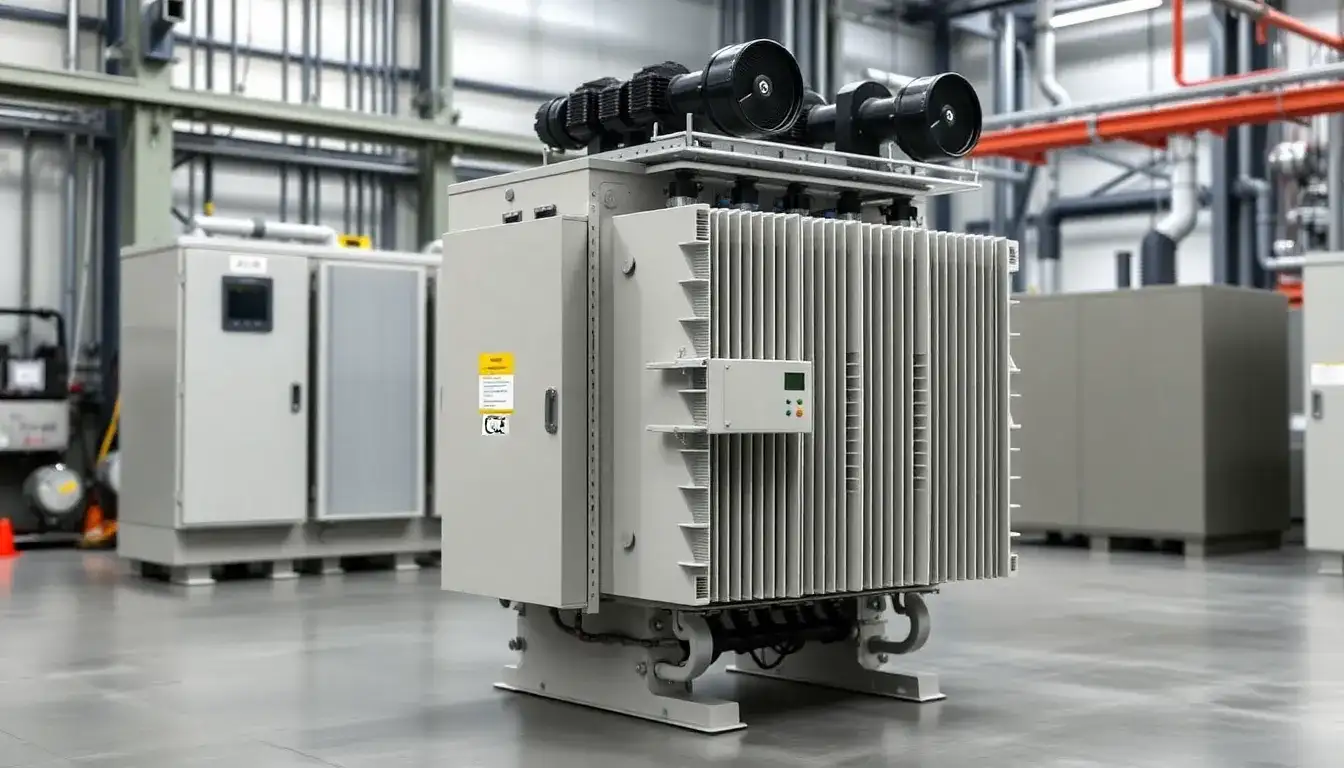
As the global energy transition continues to gain momentum, the demand for energy storage equipment in the United States is steadily increasing. The three-phase energy storage transformer plays a crucial role in energy storage systems, facilitating voltage conversion, power transmission, and distribution.
Among these transformers, those capable of converting 690V to 400V while complying with the UL1446 standard and obtaining TUV/CE certification have emerged as core competitive products for Chinese companies entering the U.S. market. These transformers, with their advanced technical specifications, strict safety standards compatibility, and broad market application potential, are significantly boosting the development of the U.S. energy storage industry.
Core Technical Parameters of Three-Phase Energy Storage Transformers
1. Three-Phase Design and Voltage Conversion Principle
The three-phase energy storage transformer utilizes a three-phase four-wire design, which offers higher power transmission efficiency and stability compared to single-phase transformers. In the power transmission process, three-phase electricity flows through three alternating current sources with phase angles differing by 120°, allowing for the simultaneous transmission of more electrical energy and reducing line losses. This transformer achieves the conversion from 690V to 400V based on the principle of electromagnetic induction. With a carefully designed turns ratio between the primary and secondary windings, when 690V of three-phase alternating current is input into the primary winding, it generates an alternating magnetic field in the core. According to the law of electromagnetic induction, the secondary winding induces a three-phase alternating current of 400V. This precise voltage conversion meets the electrical needs of various devices within U.S. energy storage systems, such as energy storage converters and battery management systems.
2. Capacity and Load Capability
The transformer features a large capacity design of 2500kVA, making it suitable for large-scale energy storage projects. In practical applications, it can power multiple energy storage units simultaneously, ensuring stable operation during charging and discharging processes. For instance, in a large commercial energy storage project, multiple battery packs operating in parallel require a high-capacity transformer for voltage conversion and power transmission. The 2500kVA transformer can easily meet these high load demands, ensuring efficient operation of the entire energy storage system.
3. Winding Material and Performance Advantages
Utilizing high-purity oxygen-free copper as the winding material is a significant highlight of this transformer. Copper wire exhibits excellent conductivity with low resistivity, effectively reducing winding resistance losses. Under the same current and voltage conditions, copper winding transformers can reduce energy losses by approximately 30% compared to aluminum winding transformers, significantly enhancing energy conversion efficiency. Additionally, copper wire has high mechanical strength and strong oxidation resistance, maintaining stable electrical performance during long-term operation, thereby extending the transformer’s service life and reducing maintenance costs.
Safety and Quality Assurance Behind Strict Certifications
1. In-Depth Interpretation of UL1446 Standard
The UL1446 standard, a critical certification for electrical insulation systems in the U.S., imposes stringent requirements on the insulation performance, thermal stability, and fire resistance of transformers. Regarding insulation performance, the standard mandates that insulation materials possess high dielectric strength, capable of withstanding high voltage tests without breakdown, ensuring the safety of electrical equipment during normal and over-voltage conditions. As for thermal stability, the standard assesses insulation material performance changes at various temperatures through long-term thermal aging tests, ensuring that insulation performance does not degrade due to thermal deterioration throughout the specified service life. In terms of fire performance, the insulation materials must exhibit flame-retardant properties to effectively prevent fire spread during a fire incident, thereby safeguarding personnel and equipment. This three-phase energy storage transformer adheres strictly to the UL1446 standard throughout its design and production processes, ensuring that every step, from material selection to insulation system design and production control, meets the required standards.
2. TUV Certification Aligning with European Standards
The TUV certification, awarded by the German Rhine Group, signifies that the product meets international advanced levels in safety, environmental protection, and performance. Obtaining TUV certification indicates that this three-phase energy storage transformer not only meets the demands of the U.S. market but also qualifies for entry into the European market. During the certification process, TUV conducts rigorous testing on various aspects of the transformer, including electrical safety, mechanical performance, and electromagnetic compatibility. For instance, in terms of electrical safety, it verifies whether the transformer’s grounding and leakage protection devices comply with standards; regarding electromagnetic compatibility, it ensures that the transformer does not interfere with surrounding electronic devices during operation while possessing its own resistance to interference. The TUV certification further enhances the product’s international recognition and competitiveness.
3. CE Certification as a Market Pass
The CE certification is a mandatory certification for the European market, indicating that the product complies with relevant EU directives and harmonized standards. For three-phase energy storage transformers exported to the U.S., obtaining CE certification carries dual significance. On one hand, it demonstrates that the product meets international safety, health, and environmental standards, enhancing U.S. customers’ trust in the product. On the other hand, it lays the groundwork for future expansion into the European market. The CE certification encompasses requirements from multiple areas, such as the Low Voltage Directive (LVD) and the Electromagnetic Compatibility Directive (EMC). The transformer’s design and production processes fully consider these directive requirements, ensuring compliance and compatibility in the global market.
Market Applications and Future Development Trends
1. Wide Range of Application Scenarios
This three-phase energy storage transformer, compliant with multiple certification standards, has extensive application scenarios in the U.S. market. On the grid side, it can be used in large-scale energy storage stations to help regulate peak and valley loads, thereby enhancing grid stability and reliability. On the user side, it is suitable for commercial energy storage projects, such as data centers and large factories, where energy storage systems can leverage peak and off-peak pricing arbitrage to reduce electricity costs. In the distributed energy sector, it can be integrated with renewable energy generation systems such as solar and wind energy to achieve efficient energy storage and utilization, promoting the transformation of the U.S. energy structure.
2. Future Development Trends
With the continuous development of energy storage technology and changing market demands, three-phase energy storage transformers will evolve towards increased intelligence, efficiency, and miniaturization. In terms of intelligence, integrating sensors and intelligent control systems will allow for real-time monitoring of transformer operating conditions and fault warnings, enhancing operational efficiency. For efficiency, ongoing optimization of transformer design and manufacturing processes will further reduce losses and improve energy conversion efficiency. Regarding miniaturization, new materials and compact designs will minimize transformer size and weight, reducing installation and transportation costs. In the future, these technological innovations will enable three-phase energy storage transformers to play an increasingly vital role in the global energy storage market, contributing significantly to sustainable energy development in the U.S. and beyond.
As the global energy storage industry flourishes, three-phase energy storage transformers exported to the U.S., with their exceptional technical performance and stringent certification standards, become a crucial link between the energy markets of China and the United States. With ongoing technological advancements and market expansion, these transformers will play an even more critical role in the energy storage sector, aiding the U.S. in achieving its energy transition and sustainable development goals.
Original article by NenPower, If reposted, please credit the source: https://nenpower.com/blog/three-phase-energy-storage-transformers-for-export-to-the-u-s-690v-to-400v-conversion-with-ul1446-tuv-and-ce-certifications/

