

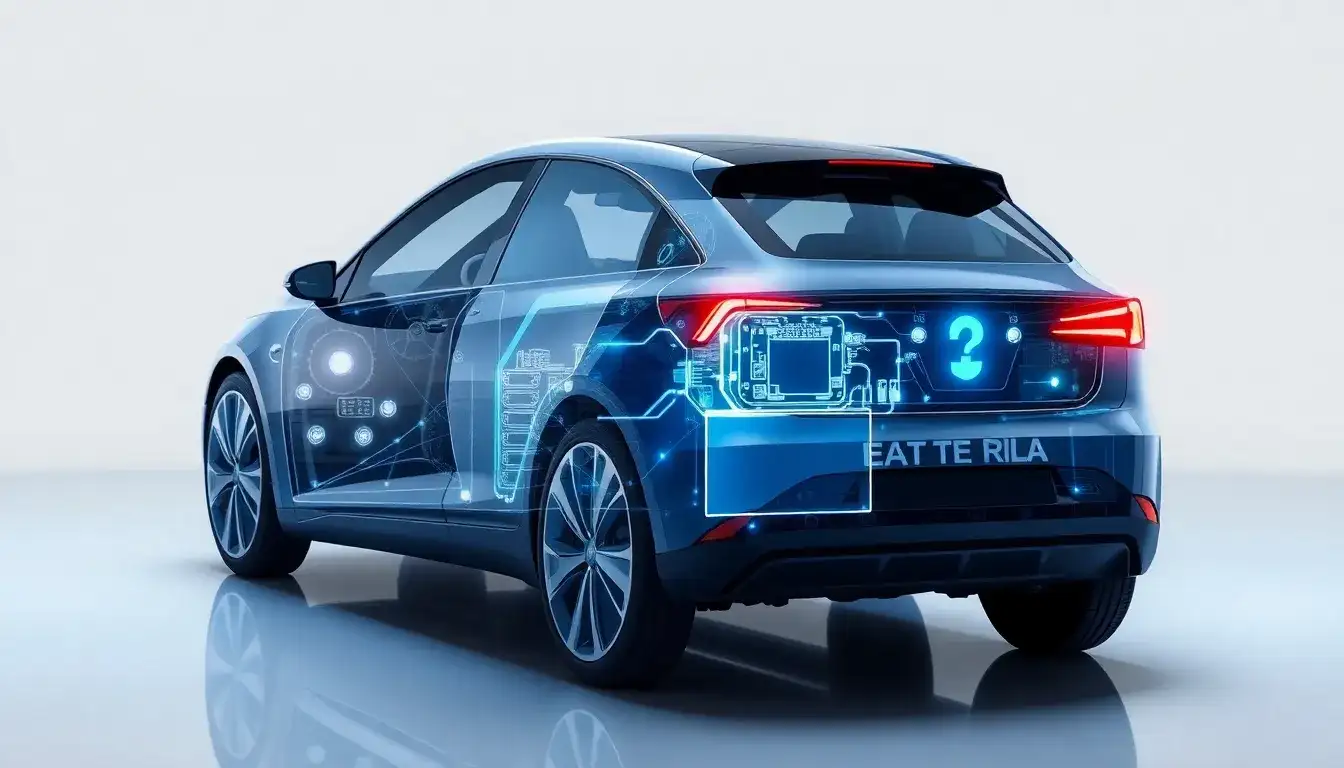
Battery Management Systems in New Energy Vehicles: The “Smart Guardian” of Battery Health
In the era of rapid development of new energy vehicles, the Battery Management System (BMS) acts as a silent “smart guardian,” playing a crucial role in the performance, safety, and lifespan of the vehicle’s core component—the power battery. During the charging and discharging processes, the battery is influenced by various factors, and the BMS is key to addressing these challenges.
The BMS utilizes a series of precise sensors to monitor critical parameters such as voltage, current, and temperature of each individual battery cell in real-time. These sensors function like the system’s “tentacles,” detecting the state of the batteries. For instance, when charging occurs, the sensors quickly evaluate the current level and relay this information to the management system, ensuring that the charging current remains within a safe range to prevent overcharging, which could damage the battery.
One of the BMS’s standout features is its ability to maintain battery consistency. A power battery pack is composed of numerous individual cells, each of which may exhibit slight performance variations due to manufacturing processes. Over time, these differences can amplify during charge and discharge cycles, leading to some cells being overcharged or overly discharged, which affects overall performance. The BMS employs balancing circuits to precisely regulate each cell. When a cell’s voltage exceeds the average level, the balancing circuit automatically redistributes excess energy to other cells, ensuring uniform charge levels and extending the battery pack’s lifespan. Studies have shown that battery packs equipped with advanced BMS can achieve a cycle life extension of 20% to 30%.
Thermal management is another vital function of the BMS. Batteries generate heat during operation, and extreme temperatures—either too high or too low—can impair battery performance and longevity. In hot summer conditions, the battery temperature can rise easily; the BMS activates cooling fans or water pumps to dissipate heat. Conversely, in cold winter months, the system engages heating elements to raise the battery temperature, ensuring it operates within an optimal range. For example, the Tesla Model S features an advanced thermal management system that maintains battery temperatures between 25°C and 35°C, significantly enhancing battery performance and safety.
Safety protection is a top priority for the BMS. When the system detects anomalies in battery voltage, current, or temperature that could pose safety risks, it takes immediate action. For instance, if the battery is overcharged or excessively discharged, the system quickly disconnects the circuit to prevent severe incidents such as fires or explosions, safeguarding the safety of drivers and passengers.
However, the development of BMS faces challenges. As the range of new energy vehicles increases and battery capacities grow, the amount of data that the BMS must process escalates exponentially, necessitating higher computational power and response speeds. Additionally, the significant differences in characteristics among various battery types make it challenging to develop a universal BMS suitable for multiple battery types. Furthermore, the stability and reliability of the system need enhancement to ensure continuous precise monitoring and control under complex operating conditions.
Despite these challenges, advancements in technology are expected to lead to breakthroughs in the computing performance, compatibility, and stability of BMS. In the future, BMS will become more intelligent and efficient, making it an indispensable core component of new energy vehicles and propelling the industry to new heights.
Original article by NenPower, If reposted, please credit the source: https://nenpower.com/blog/the-smart-guardians-of-electric-vehicles-exploring-battery-management-systems-in-new-energy-cars/

