

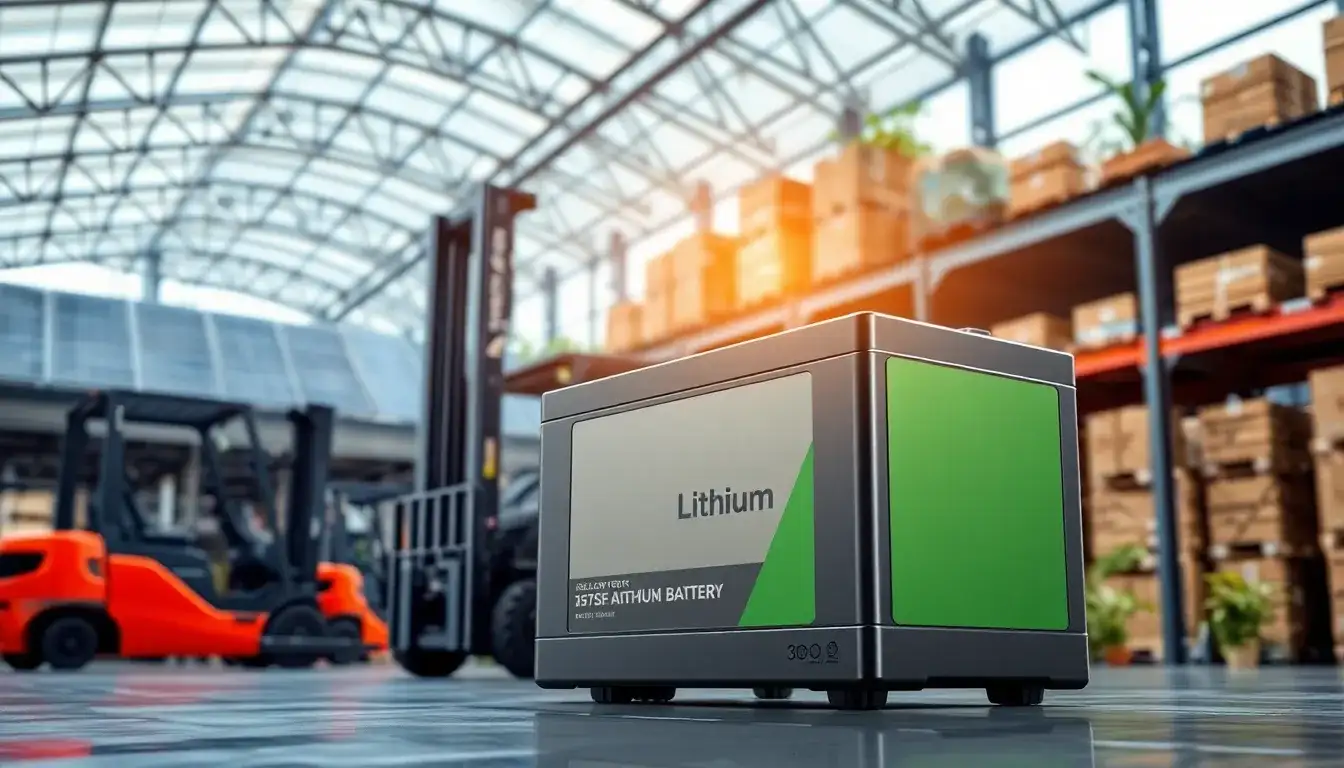
Lithium Forklift Batteries: A Key Component for Environmental Sustainability in Material Handling
Material handling equipment has always needed to be efficient, reliable, and safe. However, as industries evolve, the emphasis on sustainability has become increasingly important. Today, every major industrial sector is striving to reduce its carbon footprint, minimize environmental impact, and comply with rigorous regulatory standards—and the material handling industry is no exception. The rising demand for sustainability has accelerated the adoption of electric forklifts and lithium forklift battery technologies, which are vital solutions in this transition.
### Transitioning from Fuel to Electrification: The Role of Forklift Batteries
In the 1970s and 1980s, the material handling market was predominantly filled with internal combustion (IC) engine forklifts. However, today, electric forklifts have taken the lead, thanks to more affordable and enhanced electrification technologies, reduced electricity costs, and the persistently high prices of petrol, diesel, and LPG. The most significant factor driving this shift is the growing concern over emissions from IC engine forklifts. Many regions worldwide are enacting regulations aimed at reducing these emissions. For instance, the California Air Resources Board (CARB) is working on gradually retiring internal combustion forklifts from fleets. The increasing stringency of air quality regulations favors electric forklifts powered by batteries over their internal combustion counterparts. Compared to traditional diesel engines, battery-powered forklifts present remarkable environmental advantages, significantly cutting down air pollution and greenhouse gas emissions, thereby promoting more sustainable industrial operations and logistics. According to the U.S. Department of Energy, IC engine forklifts generate 54 tons more carbon when used for over 10,000 hours than their electric equivalents.
### Lithium vs. Lead Acid: A Comparison of Forklift Battery Technologies
Electric forklifts rely on two primary battery technologies: lithium-ion and lead-acid batteries. While both types produce no harmful emissions during operation, their production processes are associated with CO2 emissions. Lead-acid batteries emit 50% more CO2 throughout their lifecycle compared to lithium-ion batteries and also release acid fumes during charging and maintenance. Thus, lithium-ion batteries are considered a cleaner technology. Furthermore, lithium-ion batteries are more efficient, converting up to 95% of their energy into useful work, whereas lead-acid batteries typically convert only about 70% or even less. This higher energy efficiency makes electric forklifts powered by lithium-ion batteries more effective than those using lead-acid batteries.
Additionally, lithium-ion batteries have a longer lifespan, usually around 3,500 charge cycles, compared to 1,000 to 2,000 cycles for lead-acid batteries. This translates to lower maintenance and replacement frequency, contributing to reduced battery disposal concerns and aligning with businesses’ sustainability goals. As lithium-ion technology continues to advance with a decreased environmental footprint, it is becoming increasingly prominent in modern material handling.
### Choose ROYPOW Lithium Forklift Batteries for a Greener Future
As a socially responsible company, ROYPOW is dedicated to environmental sustainability. The company has conducted comparisons of carbon dioxide reduction between its lithium-ion forklift batteries and lead-acid batteries, revealing that ROYPOW batteries can reduce CO2 emissions by up to 23% annually. With ROYPOW forklift batteries, your warehouse is not just moving pallets; it is moving toward a cleaner and greener future.
ROYPOW batteries utilize LiFePO4 cells, which offer greater safety and stability than other lithium chemistries. With a design life of up to 10 years and over 3,500 charge cycles, they ensure long-lasting and reliable performance. The built-in intelligent Battery Management System (BMS) conducts real-time monitoring and provides multiple safety protections. Additionally, the unique hot aerosol fire extinguisher design effectively mitigates potential fire hazards. ROYPOW batteries are rigorously tested and certified to industry standards, including UL 2580 and RoHS.
For high-demand applications, ROYPOW offers IP67 forklift batteries suitable for cold storage and explosion-proof environments. Each battery comes equipped with a safe, efficient, and intelligent battery charger to enhance performance. These robust features ensure higher reliability, making them a more sustainable option in the long run.
For forklift fleets looking to replace lead-acid batteries with lithium-ion alternatives in support of environmental initiatives and long-term sustainability, ROYPOW is your trusted partner. The company provides drop-in-ready solutions that guarantee proper battery fitment and performance without the need for retrofitting. These batteries comply with the Battery Council International (BCI) standards, which categorize batteries based on physical dimensions, terminal placement, and special features affecting fitment.
### Conclusion
As we look to the future, sustainability will continue to drive innovation in material handling, leading to greener, more efficient, and cost-effective power solutions. Businesses that embrace the integration of advanced lithium forklift battery technologies will be well-positioned to enjoy the benefits of a sustainable tomorrow.
**Jodie Miller**
Managing Partner, ROYPOW
Original article by NenPower, If reposted, please credit the source: https://nenpower.com/blog/the-role-of-lithium-forklift-batteries-in-advancing-sustainability-in-material-handling/

