

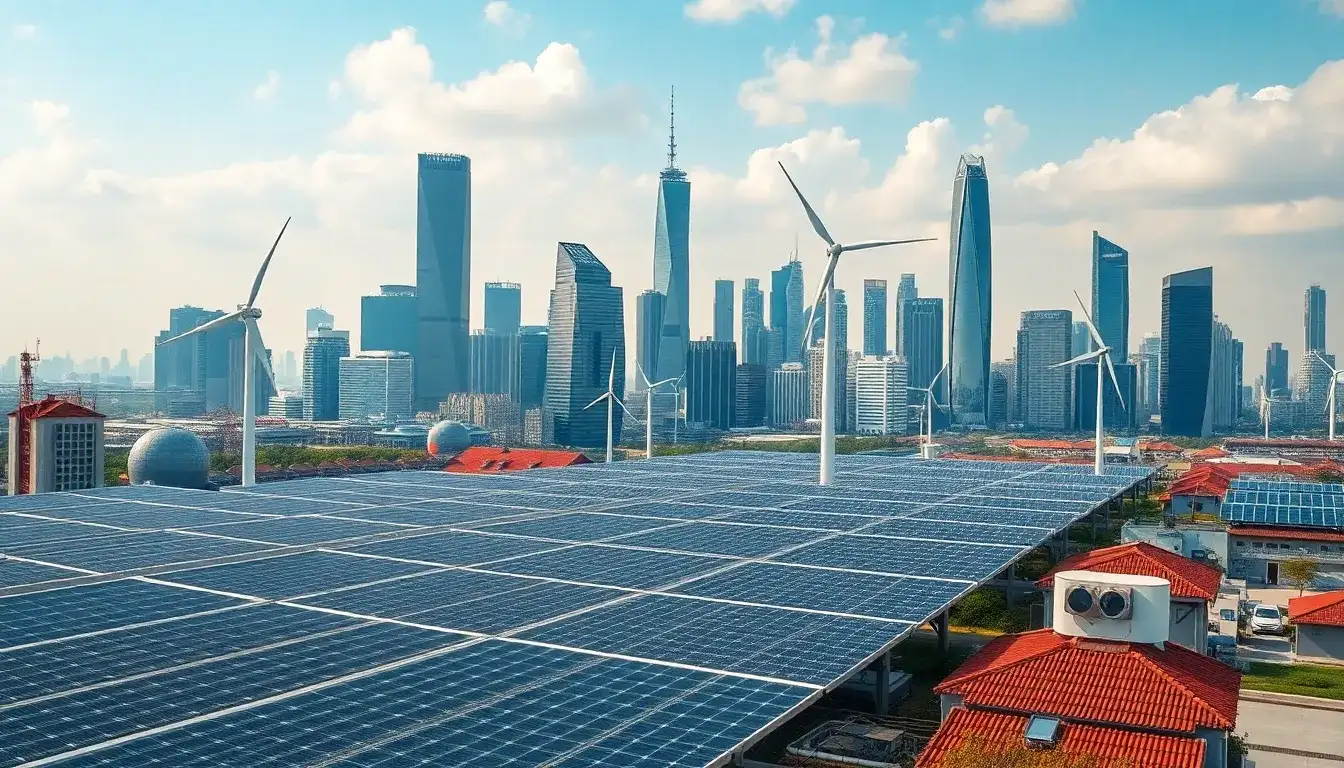
The concept of a “virtual power plant” is not new. It gained public attention in 2022 during widespread power shortages, as it was seen as an effective means to reduce electricity demand. Although referred to as a “power plant,” a virtual power plant does not have a physical facility. Instead, it involves equipping existing electrical devices with controllers and sensors, and utilizing software systems to manage and optimize decentralized resources such as demand-side loads, energy storage, and distributed energy sources. This can be viewed as a platform that aggregates these dispersed resources.
In recent years, many virtual power plants have been established across the country. Since the latter half of last year, stocks related to virtual power plants have seen increased interest in the capital markets. However, a comprehensive “top-level design” for virtual power plants has been lacking. On April 11, 2023, the National Development and Reform Commission and the National Energy Administration released guidelines titled “Guiding Opinions on Accelerating the Development of Virtual Power Plants,” which are seen as addressing this gap. These guidelines not only define the roles and functions of virtual power plants but also outline their development path, emphasizing that “marketization” is key to accelerating their growth.
What has driven the surge in interest in virtual power plants? Despite lacking physical facilities, their functions are similar to those of traditional power plants within the electrical system. According to Zhang Qiang, Deputy General Manager of Jiangsu Huagong New Energy Technology Co., Ltd., the increasing share of renewable energy in the power system, driven by “dual carbon” goals, introduces randomness and intermittency, complicating the balance of supply and demand. Virtual power plants can regulate demand-side loads and enhance supply reliability. As a platform for aggregating dispersed resources, a virtual power plant can be likened to a “ride-hailing platform,” where distributed resources like wind and solar power, energy storage, and adjustable loads are analogous to “social vehicles.” The platform uses algorithms to match supply with demand, thereby increasing efficiency. The guidelines describe the role of virtual power plants as crucial for enhancing power supply reliability, promoting the consumption of renewable energy, and improving the electricity market system.
According to Zhou Qin, a senior advisor for the Energy Foundation’s Clean Power Project, virtual power plants integrate previously uncontrollable or difficult-to-regulate decentralized resources into manageable assets. The functions they fulfill depend on the characteristics of the resources being aggregated. “If a virtual power plant aggregates a large amount of adjustable load or energy storage devices, it can significantly contribute to supply reliability,” he noted. Virtual power plants are categorized into load-type, source-type, and mixed-type based on the resources they aggregate. Currently, load-type virtual power plants are the mainstream model in China.
In recent years, government-led initiatives have frequently launched virtual power plants. By 2024, cities such as Chongqing, Chengdu, Qingdao, and Wuhu have launched their own virtual power plants, aggregating adjustable resources ranging from hundreds of kilowatts to tens of thousands of kilowatts, equivalent to the capacity of a small to medium-sized power station. Zhang Qiang reported that Huagong New Energy has rolled out virtual power plant platforms in 16 cities across five provinces, including many projects led by the government. These virtual power plants often contribute to supply reliability during periods of “energy shortages” by participating in demand response initiatives.
Demand response refers to the voluntary adjustment of electricity consumption by users in response to short-term electricity supply-demand imbalances or difficulties in absorbing renewable energy. In China, demand response typically addresses seasonal and temporary peaks in electricity demand. According to Zhang Yongping, Director of the Clean Power Project at the Energy Foundation, local governments mostly expect virtual power plants to enhance demand-side regulation and supply reliability. These virtual power plants often aggregate adjustable resources from the demand side, including building air conditioning systems, charging and swapping stations, and industrial enterprises.
Electric power systems consistently face challenges, particularly during peak summer periods. There are various options for ensuring supply: one is to build new power sources, such as coal-fired projects, while the other is to tap into demand-side potential by reducing electricity loads. From the perspectives of carbon reduction and economic feasibility, the latter option is preferable. In major cities like Shenzhen, which experience increasing peak loads annually, this challenge is particularly pronounced. On July 25, 2024, data from the Southern Power Grid showed that the electricity load in Shenzhen reached 23.134 million kilowatts, marking the first time it surpassed 23 million kilowatts and representing a 4.8% increase compared to the previous year’s peak load. Generally, peak loads within a 5% range do not exceed 100 hours in a year, making it economically impractical to add new generation capacity. Ensuring sufficient power supply has thus become a significant challenge for urban power system management.
Shenzhen is one of the first cities in the country to establish a virtual power plant, having set up the nation’s first virtual power plant management center in August 2022, managed by the Southern Power Grid Shenzhen Power Supply Bureau and the Shenzhen Development and Reform Commission. By the end of 2024, the management center had integrated 59 virtual power plant operators, with a total connected capacity of 3.8 million kilowatts and a maximum adjustable capacity of 840,000 kilowatts, equivalent to a large coal-fired power unit. Through more than 100 precision demand response initiatives, the center has cumulatively adjusted electricity consumption by 5.603 million kilowatt-hours, resulting in an estimated reduction of around 1 million tons of carbon dioxide emissions, based on the difference in coal and grid emissions factors.
Rao Yiran, Chairman of Shenzhen KZ Cloud Technology Co., Ltd., stated that the city’s virtual power plant primarily operates under a demand response model, with each response contributing around 200 megawatts of adjustable load, which is significant for managing peak summer loads. In July and October 2023, when the electricity supply fell short during peak load periods, the management center achieved a maximum adjustable power of 70,000 and 210,000 kilowatts, respectively, through invitations to participate. The virtual power plant operated by Huagong New Energy in Suzhou’s Xiangcheng District participated in local peak load exercises last summer, with seven companies reporting adjustable loads, including industrial flexible loads, energy storage, and charging stations, successfully covering the anticipated shortfall with a total response load of 8.8 megawatts.
According to Zhou Feng, Director of the Clean Power Project at the Energy Foundation, the adjustable load capacity of general municipal-level virtual power plants ranges from hundreds of thousands to millions of kilowatts. In situations of short-term electricity supply-demand imbalance, these plants can effectively participate in demand response to fill gaps, thereby avoiding the need for new coal-fired generation units. The guidelines propose a target of achieving a national adjustable capacity of over 20 million kilowatts for virtual power plants by 2027, and over 50 million kilowatts by 2030. The adjustable capacity of virtual power plants largely depends on the resources they can aggregate, requiring operators to consolidate more user-side resources, which is a critical indicator of their capabilities.
Building a connection to the virtual power plant management center for individual users can be costly. Rao Yiran stated that the construction cost of the Shenzhen virtual power plant platform amounts to tens of millions of yuan. However, amid the growing trend of virtual power plants, user participation, especially from enterprises, remains low due to a lack of understanding of the concept. In 2024, industrial electricity consumption accounted for about 65% of total social electricity consumption. Zhou Feng admitted that even deploying a load-access system requires an investment of 50,000 to 100,000 yuan, while establishing an energy management system or modifying production processes can cost hundreds to over a thousand yuan per kilowatt. Without a clear understanding of virtual power plants, enterprises may be reluctant to invest, and they will assess the cost-effectiveness based on their own adjustable load situations.
Virtual power plants serve as a method for resource aggregation rather than a specific technology. However, their implementation relies on technology. For instance, understanding the current load situation of enterprises, even down to specific high-energy-consuming devices, necessitates high-precision IoT terminals that upload load data in real-time to the virtual power plant platform, which requires upfront investment. After this initial investment, the potential returns from virtual power plants remain uncertain, which is a significant deterrent for some users.
Addressing profitability challenges, Zhang Qiang explained, “We mainly aggregate two types of resources. One is from the industrial and commercial sectors, such as in a city like Suzhou where industrial energy consumption is substantial. Some high-energy-consuming devices can actually shift production to off-peak times. The other type is energy storage, which is the best adjustable resource, but energy storage on the industrial and commercial side is still in its market promotion stage and remains limited.” Currently, enterprises have little awareness of virtual power plants; while they may consider ways to save energy costs, they have not contemplated using electricity market transactions to achieve this. Moreover, the current electricity market mechanisms are not well-developed, so even if operators sign agreements with enterprises, they may not generate any profits for the next two to three years, with estimated earnings remaining largely theoretical and insufficient to attract businesses.
According to Zhou Qin, virtual power plants in China are still at the demonstration phase and have not yet entered commercialization. The primary revenue source for domestic virtual power plants remains participation in demand response and obtaining government subsidies, resulting in limited profit avenues. The industry widely acknowledges that the guidelines’ call to “continuously enrich the commercial models of virtual power plants” reflects an understanding of the profitability challenges currently faced. Relying solely on government subsidies from demand response is insufficient for the sustainability of virtual power plants.
For example, from July 16 to August 7, 2022, Zhejiang Province conducted 16 demand response events, involving approximately 438,300 households and lowering peak grid loads by a total of 52 million kilowatts, with total subsidies amounting to about 546 million yuan, capped at 4 yuan per kilowatt-hour. “For a single enterprise with 1 to 2 megawatts of adjustable load, annual revenue may not exceed 100,000 yuan, which may only cover the costs of connecting to the virtual power plant,” Zhou Feng remarked. In Shenzhen, a subsidy of 4.5 million yuan was allocated for virtual power plants in 2023, with an anticipated subsidy of 14 million yuan for 2024. Currently, Shenzhen has about 60 virtual power plant operators, with relatively limited subsidy benefits for each operator.
Furthermore, participation in demand response carries significant uncertainties. “The demand for supply assurance is determined by the electricity supply-demand gap. This demand typically arises during peak summer and winter periods. For instance, in 2024, the Yangtze River Delta region did not experience a notable electricity supply shortage, with Jiangsu Province, a major load province, initiating demand response only once in a day. This indicates that supply assurance demand is not stable, making it challenging for virtual power plants to achieve consistent revenue through demand response,” Zhou Feng stated. Some provinces have already established capacity subsidies, meaning that if users report demand response participation, they will receive a subsidy even if the demand response is not ultimately activated. However, these capacity subsidies are minimal; for instance, in Zhejiang, during June to September and December 2023—traditional peak load periods—demand response was not activated, resulting in a capacity subsidy of about 14.47 million yuan, with users potentially receiving no more than a few thousand yuan per month.
Zhang Qiang acknowledged that if virtual power plants solely rely on demand response for revenue, the total earnings may be quite limited over a year. Currently, the entities benefiting the most from participation in demand response are not high-energy-consuming enterprises, but rather charging stations, energy storage stations, and buildings or enterprises with good energy storage capabilities, as they can utilize time-of-use pricing to generate additional profits. This is why virtual power plant operators often collaborate with energy storage suppliers to encourage users to install energy storage systems on the user side to enhance their adjustment capabilities. Even during periods of supply assurance demand, virtual power plants may not have an advantage over other adjustable resources.
Constructing a new coal-fired power unit with a capacity of one million kilowatts requires an investment of 3 to 4 billion yuan. In contrast, establishing a virtual power plant with equivalent adjustment capabilities requires significantly less investment, but the critical factor is whether the adjustment or backup costs of the new virtual power plant can be effectively managed. Coal-fired power units contribute significantly to local GDP and are easier to dispatch, making them the first choice for supply assurance. “In the face of electricity shortages, it is recommended that provincial electricity markets provide more opportunities and prioritization for new entities like virtual power plants in terms of participation and dispatch,” Zhou Qin suggested. In terms of maintaining the balance of the electricity system, relying solely on grid dispatch without market mechanisms means there are principles governing when to adjust supply or reduce loads. From the perspective of grid dispatch, demand response essentially reduces load, but when supply can be adjusted, reducing load may not be prioritized.
Regarding the current position of virtual power plants in grid dispatch, industry insiders have noted that different provinces have varying perspectives. In Shenzhen, for example, the virtual power plant management center is overseen by the dispatch department, which considers the limited adjustable resources available in Shenzhen. As a result, they may prioritize virtual power plants in dispatch decisions. However, from the standpoint of dispatch efficiency and difficulty, managing coal-fired plants or independent energy storage stations is generally easier than aggregating user-side resources through a virtual power plant. For example, dispatching coal-fired plants can be accomplished with a single phone call, while confirming execution after a virtual power plant is dispatched is more complex than for traditional power sources. Thus, in terms of competitive positioning, virtual power plants do not have a clear advantage.
“The core issue facing virtual power plants is how to expand the revenue pie and ensure that participants receive appropriate returns,” Zhang Yongping emphasized. “Public interest in the concept of virtual power plants has arisen due to supply assurance, but if operators merely participate in supply assurance, the commercial model will struggle to close the loop.” Zhou Feng stated that the release of the guidelines coincides with the introduction of policies to deepen the marketization of renewable energy grid pricing and promote high-quality growth in this sector, signaling progress in electricity market reform. Thus, the guidelines aim to guide virtual power plant operators toward earning revenue through market participation.
All stakeholders have recognized that participation in market transactions is the most appropriate form for virtual power plants. Rao Yiran believes that the transition from demand response to market-oriented models for virtual power plants is inevitable. Currently, to enhance user engagement, virtual power plant operators often provide services such as energy management and electricity sales agency, positioning the virtual power plant as one of several options for users. Zhang Qiang explained that companies engage with users not solely as virtual power plant operators but also as comprehensive energy service providers. They help enterprises build digital platforms for energy and carbon emission management, uncovering potential energy-saving opportunities. This approach enables them to aggregate user resources while awaiting the maturity of the electricity market. Once the market matures, they can assist enterprises in participating in electricity spot market transactions to create additional revenue streams. Currently, merely offering virtual power plant services makes it nearly impossible for enterprises to accept.
He emphasized that operators need to provide diverse services to obtain multiple revenue sources, allowing them to thrive even in an immature electricity market. In mature electricity markets in Europe and the U.S., virtual power plants have fully commercialized, primarily benefiting from the electricity spot market. For example, the Wuppertal Institute predicts that Germany’s energy aggregation and flexibility market will grow to approximately 75 gigawatts, expected to double by 2030. Currently, virtual power plants in China are emerging during a period of underdeveloped electricity markets. Zhou Qin pointed out that enterprises are highly responsive to price signals. Previous implementations of time-of-use pricing have yielded significant results, as enterprises schedule production during low-price periods. If enterprises receive price signals and possess adjustable loads, they are likely to participate actively.
The electricity market is crucial for transmitting price signals. However, many local electricity spot market constructions are still ongoing, and users generally cannot participate in the spot market with both quantity and price offers. Instead, they act as price takers without direct competitive bargaining power, with the grid still acting as the primary buyer in the market. Currently, only a few provinces, such as Shanxi and Shandong, have established electricity spot markets allowing virtual power plants to participate regularly. For instance, in Shanxi, virtual power plants can engage in the spot market for one-third to two-thirds of the year.
In provinces with established electricity spot markets, virtual power plants are often categorized into two types: load-type virtual power plants, which aggregate various load resources for flexible regulation in the market, and source-type virtual power plants, which aggregate smaller distributed energy sources for market participation. Each type has specific technical requirements for participation in the power spot market, such as adjustment capacity and minimum continuous response durations. For instance, participants in frequency regulation markets must also meet requirements for adjustment rates, generally between 1% to 3% of the adjustment capacity per minute.
The ability of virtual power plants to participate in electricity spot markets also depends on whether the local electricity market is designed for peak shaving or valley filling. For example, Shanxi is a valley-filling market, while the Yangtze River Delta, which has yet to open its electricity spot market, is a peak-shaving market. These two types of electricity markets have different demands for virtual power plants. In valley-filling markets where local loads are low and renewable generation is high, there is a greater demand for virtual power plants to fill the gaps. Zhang Qiang noted that Huagong New Energy’s virtual power plants in Shanxi have conducted nearly 100 peak shaving and valley filling operations annually.
According to Zhou Feng, the primary focus should be on improving electricity market mechanisms. Provinces that have yet to establish electricity spot markets should do so promptly, allowing new entities like virtual power plants to participate. In November 2022, the Zhejiang Electricity Trading Center issued a draft for “Zhejiang Electricity Spot Market Operation Plan,” indicating plans to explore the inclusion of grid-side energy storage and virtual power plants in spot market trading. From the perspective of fostering new entities, provinces should adopt differentiated designs based on local conditions, transitioning from no reporting and no pricing to mandatory reporting and pricing. Additionally, it is hoped that virtual power plant capacity subsidies or pricing mechanisms will be promoted to facilitate their scaled and normalized development.
Zhang Qiang believes that the market is currently in a cultivation phase. Only when more virtual power plant operators possess greater adjustment capabilities will related markets gradually open. Therefore, building the capabilities of virtual power plant operators is equally crucial. Virtual power plants need to establish the ability for source-load interaction; for instance, reducing electricity consumption during peak periods depends on both technical capabilities and the operators’ ability to aggregate more resources. The adjustment capacity of aggregating 100 companies versus 10,000 companies is not comparable. However, since the business operations and circumstances of industrial and commercial enterprises differ, it is essential to create customized adjustment models for each enterprise. This involves using algorithms to optimize and inform businesses about which devices can adjust how much resource during specific time periods, a capability that most virtual power plant operators currently lack.
He noted that many virtual power plant operators only complete registration and connect with electricity dispatch automation systems, without experiencing demand response participation. For example, they may lack experience in helping users confirm adjustable loads, verifying adjustment results with dispatch, or sharing profits with users. Industry insiders have noted that the entry threshold for becoming a virtual power plant operator has been relatively low, allowing entities with just one or two energy storage stations to apply, resulting in varying levels of professional capability. Consequently, the opening of provincial electricity markets to virtual power plant entities cannot happen overnight.
Zhou Feng believes that the recent national policies aim to encourage provinces to develop plans based on local realities to accelerate the cultivation of virtual power plant operators and related entities, continuously enhancing the construction and management levels of virtual power plants. Only when these entities are mature and their operational management capabilities are significantly improved can virtual power plants play a crucial role in aggregating dispersed electricity resources, enhancing flexible adjustment capabilities, reducing supply gaps, and promoting the consumption of renewable energy.
Original article by NenPower, If reposted, please credit the source: https://nenpower.com/blog/the-rise-of-virtual-power-plants-challenges-and-opportunities-in-chinas-energy-market/

