

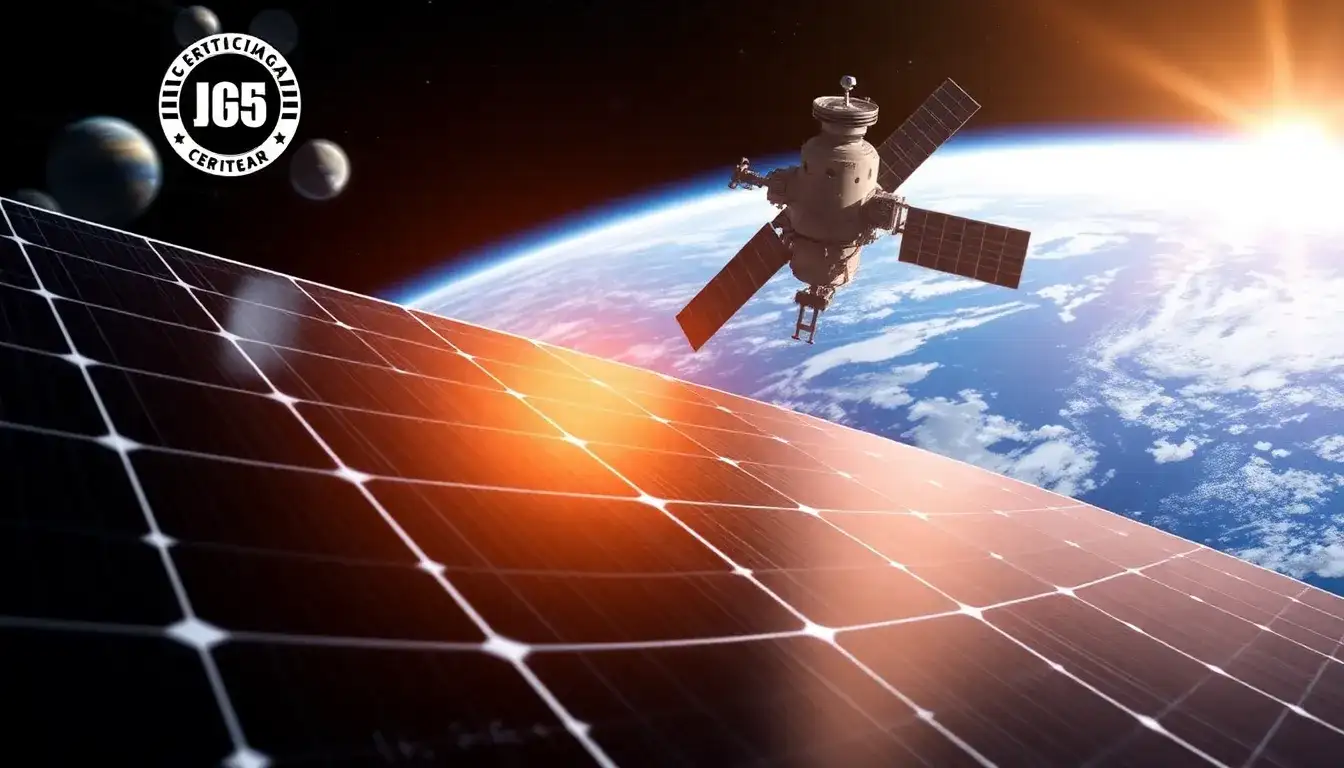
The space photovoltaic sector is experiencing rapid growth, but the reality is that the channels for aerospace-grade certification are far more critical than the technological pathways. Major players are actively acquiring companies that have already integrated into the supply chain.
In January 2026, space photovoltaics surged by 26% in a single month, yet the cost of gallium arsenide batteries remains around 1000 RMB/W, which is one thousand times that of terrestrial photovoltaic systems. The biggest barrier in the industry lies not in the technology itself, but in the channels for aerospace-grade certification. These certifications require passing extreme environmental and high radiation tests, with a lengthy certification process of 2 to 3 years. Furthermore, companies need to provide in-orbit data and a track record, making it challenging for new players to enter the market quickly.
The consensus is that space is driven by orders, not by competition in technological routes. Qian Zhao Photovoltaics, for example, has secured a long-term partnership with the Aerospace Science and Technology Corporation, achieving a market share of over 60% for gallium arsenide batteries, making it difficult for alternatives like HJT or perovskite to replace them in the short term.
The investment strategy is clear, focusing on three main categories:
- Market leaders already in the supply chain: Yunnan Geology Industry (with a global market share of 30% in germanium substrates) and Aotuwei (which manufactures space component string welders), both with orders secured through 2028.
- Potential technology adaptors: Dongfang Risheng (which has delivered tens of thousands of 70μm HJT modules) and Trina Solar (which is exploring multiple technological routes) are poised to benefit from the lightweight requirements of low-Earth orbit satellites.
- Key material suppliers: Nanda Optoelectronics (the only mass producer of MO sources) and Lushan New Materials (producing aerospace packaging adhesive films) face high barriers to entry and enjoy significant pricing premiums.
In the short term, the first batch of star rockets for China’s Thousand Sails Constellation will undergo joint training in Q2 of 2026. If successful, this will likely lead to a surge in space photovoltaic procurement. In the medium to long term, attention will also be on whether the lifespan of perovskite cells in orbit can exceed 5 years and if SpaceX’s Starlink V3 can increase its power consumption from 5kW to 20kW.
Key companies to watch include LONGi Green Energy (SH601012), Dongfang Risheng (SZ300118), and Aerospace Electronics (SH600879).
Original article by NenPower, If reposted, please credit the source: https://nenpower.com/blog/the-rise-of-space-photovoltaics-why-certification-channels-matter-more-than-technology-in-the-supply-chain/

