

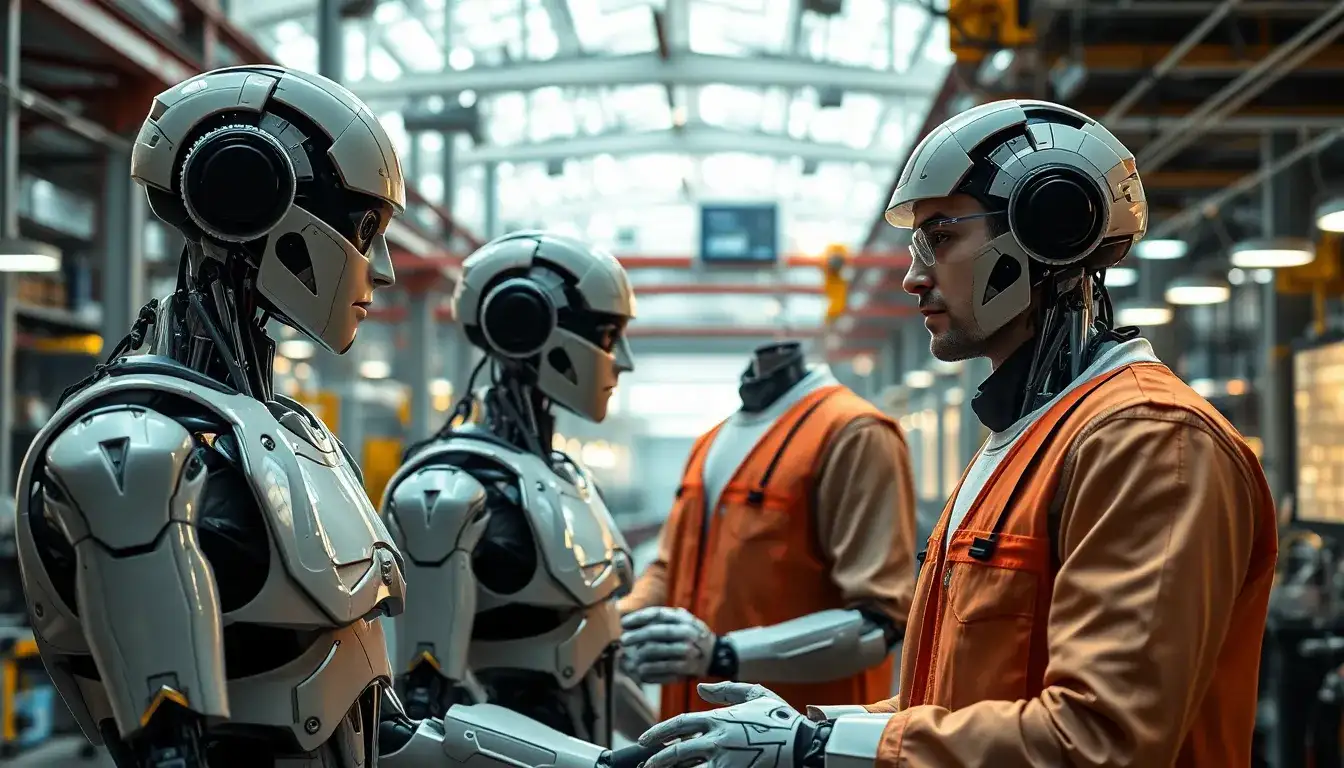
Can robots perform in short dramas? Will they bow and celebrate the New Year while asking for red envelopes? In a landscape filled with themes like powerful executives, comebacks, and sweet romances during the Spring Festival, a short drama featuring robot actors has gained significant attention even before its release, with related online discussions surpassing 100 million. According to the DataEye Research Institute, the upcoming Spring Festival-themed short drama “Welcoming the God of Wealth, the Lucky Baby is Here” by Shanhai Star marks the official entry of robot actors into mainstream entertainment. Can technology become a core variable for breaking new ground in the short drama industry? How will leading companies position themselves in this technological race?
1. Robot Participation in Short Dramas: A New Trend
The inclusion of robots in short dramas is not an isolated phenomenon. Public records indicate that a segment of the premium short drama series “Miracles,” which aired on CCTV, featured a humanoid robot named Atom, developed by Shenzhen Yuejiang Technology, portraying an intelligent household caretaker who performed tasks like cooking and providing emotional companionship. Additionally, “The Little Prince’s Adventure,” produced in Shenzhen Futian, is recognized as the first children’s short drama in China featuring a robot actor. However, integrating robot characters into Spring Festival-themed short dramas is a first for the industry.
What is the core consideration behind Shanhai Star’s use of robots in “Welcoming the God of Wealth, the Lucky Baby is Here”? In an interview with DataEye, the business leader of Shanhai Star pointed out that the inclusion of robots not only injects a sense of technology and futurism into the family-oriented New Year theme but also significantly enhances emotional resonance with the audience through human-like interactions. Furthermore, the inherent tech-related appeal of robots effectively boosts the short drama’s popularity and strengthens the brand’s memorability among viewers.
Notably, the collaborating robot, Booster K1, was a champion at the 2025 RoboCup Robot World Cup. In this short drama, the robot actor not only executes standard performances but also makes its debut in bowing, showcasing traditional New Year gestures and performing cultural lion dances, infusing a lively festive spirit into the otherwise cold technological product and blending seamlessly into the joyful atmosphere of family reunions. Viewers can genuinely experience the brand philosophy that “technology is a warm companion in life” while watching the drama.
This creative approach responds to the public expectation that “technology should not be a toy for the few but should benefit all corners of society,” reflecting a humanistic concern and aligning with the current societal focus on corporate social responsibility and the value of “technology for good.”
Reportedly, the robot actor in this drama was provided by the Accelerated Evolution Company, which has 20 years of experience in developing bipedal humanoid robots. The entire filming process, including scene adaptation and program debugging, took less than five hours, resulting in an impressive performance efficiency of 100% for the actual shooting moments. This collaboration has attracted widespread attention, with related online discussions exceeding 100 million.
From an industry perspective, the advantages of robot participation in short dramas are evident. Firstly, it creates differentiated highlights in content creation, setting it apart from traditional live-action dramas and sparking audience interest. Secondly, robots offer strong performance stability, capable of repetitively executing standardized, even complex, movements, significantly reducing unforeseen hazards and safety risks associated with live-action filming. Lastly, they can integrate deeply with brand products, showcasing the robot’s features within the storyline, achieving a natural blend of content and brand.
However, robots still have limitations and cannot completely replace human actors. On one hand, robots lack the immediate improvisational interaction capability of real people; all actions and dialogues must be pre-programmed, making them less flexible in spontaneous situations, which hinders their ability to convey complex emotions and engage in improvised dialogues. On the other hand, robot filming heavily relies on specialized technical teams, necessitating on-site adjustments and operations, which increases coordination costs and raises the technical demands on the production team.
2. Technology Fully Empowering the Short Drama Sector: Industry Competition Shifts from Content to Technology
By 2025, the market value of short dramas and comic dramas surpassed 100 billion, exceeding initial industry expectations. However, challenges in the live-action short drama sector are becoming increasingly pronounced—issues such as severe content homogenization, rising manpower and production costs, and low profit margins hinder further industry growth, highlighting the urgent need for technological assistance.
The explosive growth of the comic drama sector in 2025 exemplifies the empowerment of technology in the content industry. This surge is not only reliant on the implementation of AI technology but also stems from the need for transformation within the heavily saturated live-action short drama sector. Technology has become a crucial lever for breaking production bottlenecks and solving scalability challenges, gradually evolving into a central industry variable influencing the direction of the short drama sector.
In this context, the competitive focus in the short drama industry for 2026 is shifting from “content saturation” to “technology competition.” On one hand, major internet companies and tech firms are intensifying their R&D investments, striving for market influence at both the tool and technology levels. On the other hand, leading short drama companies are incorporating technology into their core strategies, actively pushing for a technological transformation of the content ecosystem.
For instance, Shanhai Star’s overall strategy for 2026 centers on “technological empowerment of the content ecosystem,” focusing on building a four-dimensional growth model of “short dramas + technology + cultural tourism + artist management.” The business leader emphasized that technology is an inevitable path for the evolution of the content industry. “AI is not merely a replacement for human labor; rather, it enhances creative efficiency through a human-machine collaboration model. We have fully integrated AI tools into our content creation process, achieving revolutionary improvements in capacity, efficiency, and precision.”
3. “Short Dramas + Technology” Emerges as a New Trend, Leading Companies Rush to Position Themselves
In a time when technology has become a core variable in the short drama industry, “Short Dramas + Technology” is undoubtedly a new trend. To explore this further, DataEye interviewed the business leader of Shanhai Star, who revealed the company’s core plans for the next phase: scaling short drama production, implementing AI empowerment across the entire industry chain, deepening the integration of cultural tourism, expanding artist management, and enhancing overseas business.
Specifically, the focus includes:
(1) Prioritizing AI-Driven Live-Action Short Dramas with a Target of Over 50 Productions Monthly
Since entering the comic drama sector in 2025, Shanhai Star has established accounts like “Xiao Ming Animation.” In 2026, the company will emphasize AI-driven live-action short dramas, aiming to achieve an average monthly output of over 50 AI short dramas. The anticipated ratio of AI to live-action short dramas is expected to be 2:8, with live-action remaining the core business pillar. Additionally, the company plans to expand its AI short drama team to 300 members, with the primary goal of creating a comprehensive closed-loop system covering content creation, production, and monetization.
(2) AI Empowerment for Overseas Short Dramas to Strengthen the European and American Markets while Expanding into Southeast Asia and the Middle East
DataEye reports that Shanhai Star’s overseas short drama platform Stardust TV achieved over $45 million in dual-end in-app purchases in 2025, ranking tenth among overseas short drama apps by revenue. In the overseas market, Shanhai Star employs a dual approach of producing local original dramas and dubbed versions. The local original drama “Mafia’s Tender Torture” topped the 2025 DataEye overseas short drama hot list, reaching a heat value of 21,584.5. For dubbed dramas, since implementing the human-machine collaboration system in June 2025, Stardust TV has delivered over 1,000 dubbed episodes monthly, increasing production capacity by 500% compared to 2024. The company has also optimized the dubbing process, with dubbed series accounting for nearly 50% of advertising consumption, significantly improving user retention and conversion rates. In the review stage, Shanhai Star has constructed a review system tailored to different regions using AI, reducing manual input while ensuring content aligns with local cultures and values. In the operational phase, the self-developed data attribution system tracks full-link data from content exposure to user interaction, accurately assessing conversion effectiveness in each marketing stage, enabling precise advertising placement, improving ROI, and lowering advertising costs.
Additionally, Shanhai Star is developing a one-stop AI short drama creation platform capable of generating storylines, optimizing dialogues, producing character scene graphics, and creating dynamic storyboards based on data. This will shorten the creative verification cycle and reduce trial-and-error costs, allowing the creative team to visualize ideas quickly and unify content production direction. In 2026, Shanhai Star plans to consolidate its overseas business in Europe and America while focusing on emerging markets in Southeast Asia and the Middle East, and is currently initiating personnel arrangements for AI-driven live-action short dramas.
(3) Deepening Cultural Tourism Short Dramas to Explore New Paths for International Cultural Exchange
In the “micro-short drama + cultural tourism” sector, Shanhai Star launched several cultural tourism micro-short dramas in 2025, including the “Nuo Drama” series, “Flying Tigers Ride the Wind,” “Lonely Tour Group,” “Embroidery Fate,” and “Lady Wa: Killing the Pirates.” The non-heritage micro-short drama series “Nuo Drama” achieved over 1 billion views online and was included in the National Radio and Television Administration’s seventh batch of recommended works for the “Travel with Micro-Short Dramas” project. The historical micro-short drama “Flying Tigers Ride the Wind” received quarterly excellent work certification from the National Radio and Television Administration and was launched globally in over 230 countries and regions in multiple language versions. In 2026, the company will continue to promote high-quality cultural tourism short dramas and explore new models of cultural exchange and tourism consumption.
(4) Expanding Artist Management to Enhance the Content Ecosystem Matrix
In terms of artist management, Shanhai Star has signed several short drama actors, including Sun Qianxun, Lu Mingjie, and Li Mengyuan. In 2026, the company plans to continuously recruit and sign promising actors through various channels such as campus recruitment and talent selection, aiming to expand the total number of actors to 90-100 by the end of 2026. The business leader of Shanhai Star indicated that the key planning for the artist management business in 2026 includes three main aspects: firstly, upgrading the professional actor incubation system to create a triadic closed-loop of “training through practice + specialized training + innovative marketing,” developing personalized growth plans for each signed actor. Secondly, establishing a three-tier actor matrix comprising “new actors, core actors, and leading actors” to specifically address team shortcomings, create differentiated labels for actors, avoid homogenized competition, and assist actors at different development stages in achieving precise positioning and rapid growth. Thirdly, advancing the application of digital and AI technologies in actor operations, including building a digital asset center for actors to securely store their image, voice, and performance data, ensuring controllable digital rights; and introducing an AI-assisted casting system to precisely match roles with actor characteristics, enhancing project production efficiency while increasing compatibility between roles and actors. Furthermore, a smart data analysis platform for actors will be developed to monitor market performance, fan demographics, and commercial value, providing data support for actor development planning and business decisions, promoting a shift towards digitalization and refinement in actor management.
The business leader stated that in the future, Shanhai Star will explore the modeling and monetization of AI actors, but virtual actors will only serve as extensions and supplements to real actors, not replacements. The core objective is to leverage virtual technology to expand the boundaries of actor business, lower production costs, mitigate industry risks, and maximize the value of actor IP. This year, Shanhai Star will officially launch the “Shanhai Star Creation Plan,” focusing on developing 3-5 virtual actors with distinct and differentiated personas, avoiding blind trends of “high fidelity,” and emphasizing uniqueness in character design and scene adaptability for various scenarios such as short drama supporting roles, IP derivative content, brand marketing, and cultural tourism integration. The company will also draw on successful industry cases to continually refine the images and expressiveness of virtual actors to meet the core needs of its short drama creation and commercial monetization.
The artist management business is a critical talent support component of Shanhai Star’s entire industry chain, operating under the logic of “actor-driven + business reciprocation,” adhering to the philosophy of “nurturing people through drama, and promoting drama through people.” This business will synergize with the company’s live-action short drama production, overseas platforms (Stardust TV), and AI live-action drama production segments to create a positive cycle.
As the market for short dramas continues to expand towards the 100 billion scale in 2026, the logic of competition in the industry is gradually shifting from “content saturation” to “technology competition.” The fusion of “short dramas + technology” is recognized as a new trend in the industry. Currently, the technological empowerment of the short drama sector is still in its early stages, with objective shortcomings such as insufficient emotional expression by robots and the need for improved content quality in AI creations. However, the integration of technology and content has become a consensus for industry development.
In this trend, the proactive positioning of leading short drama companies like Shanhai Star provides a reference model for the industry, spurring technological transformation among small and medium-sized short drama enterprises. As AI technology continues to evolve and upgrade, coupled with the leadership and influence of major companies, the short drama industry may enter a new cycle of high-quality development, with the deep integration of “technology + content” remaining a core theme for long-term industry growth.
Original article by NenPower, If reposted, please credit the source: https://nenpower.com/blog/the-rise-of-robots-in-short-drama-is-technology-transforming-the-industry/

