

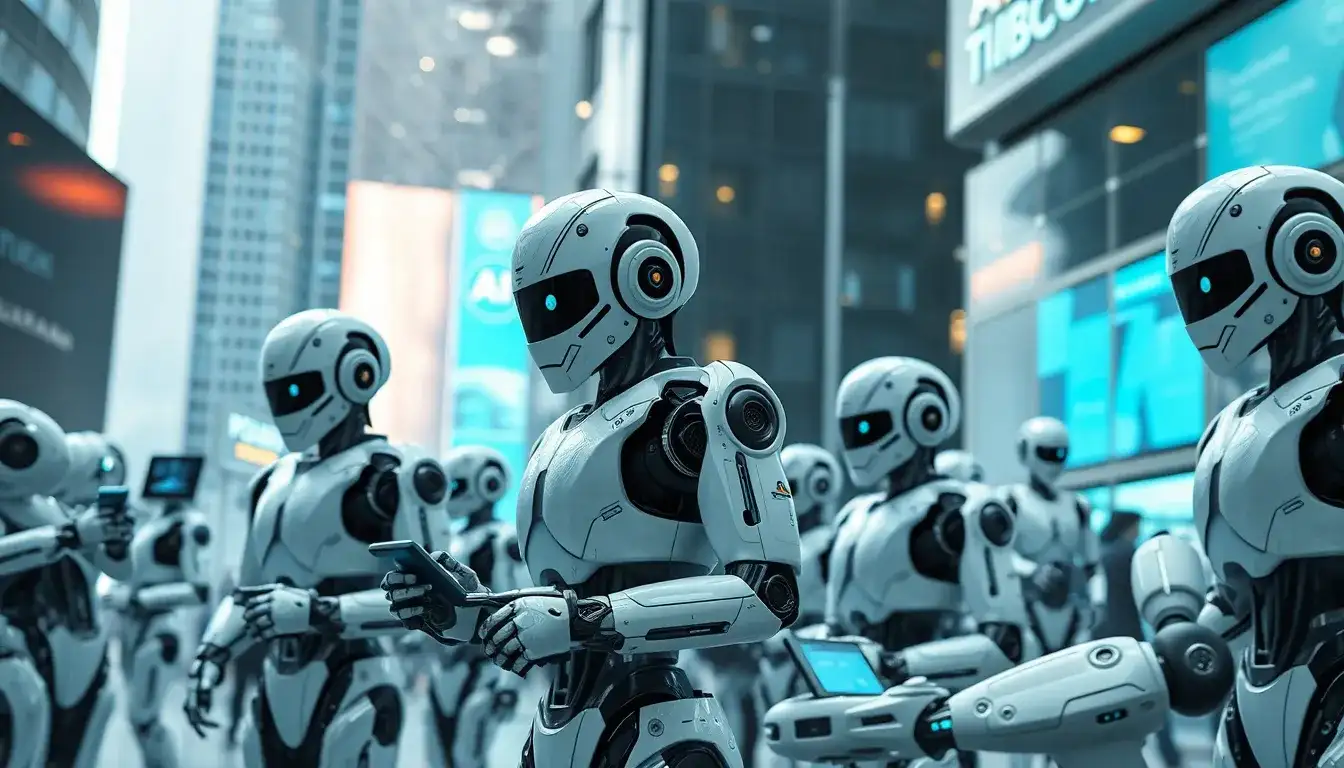
Humanoid Robots are set to become a significant trend by 2026, often referred to as the “Year of the Humanoid.” As of February 27, 2026, the advancements in humanoid robotics have been notable, particularly during the Spring Festival when 16 humanoid robots showcased their capabilities at the exhibition. These robots have emerged as the most dynamic and engaging technological displays of the time. Within just one year, humanoid robots have demonstrated abilities in various fields such as navigation, interaction, and performance, continuously impressing audiences.
Artificial intelligence, along with its sensory integration and control mechanisms, has significantly enhanced the functionality of humanoid robots. These robots are now transitioning from testing environments to real-world applications, moving beyond mere concepts to practical implementations. The flying capabilities of these robots are not just theoretical; they are designed to genuinely understand their surroundings and interact appropriately, thus paving the way for a new era of operational efficiency.
As the technology progresses, we expect to see a shift from “automation” to “intelligent collaboration” in humanoid robotics by 2026. This evolution will lead to a more sophisticated interaction model that combines “large-scale integration” with “deep learning,” resulting in a system that can adapt and respond to various environments effectively. For instance, projects like “Project Atlas” by DeepMind and partners have showcased the potential of AI in understanding human emotions and states, enhancing the robots’ operational capabilities.
By 2026, humanoid robots are expected to evolve to perform tasks traditionally undertaken by humans, such as household duties, healthcare assistance, and educational support. The integration of advanced AI systems will enable them to operate more efficiently in diverse environments, including homes, hospitals, and schools. These robots are designed to be safe and user-friendly, reducing the risk of accidents and enhancing the overall quality of life.
In terms of safety, the International Electrotechnical Commission (IEC) has released standards such as IEC 62849 for evaluating the performance and safety of humanoid robots used in households and similar applications. These standards ensure that robots are equipped with features to minimize risks and enhance user confidence in their operations.
As humanoid robots become more prevalent, their design and operational frameworks will also evolve. Companies are focusing on developing these robots with an emphasis on communication and interaction, ensuring they can effectively engage with users. The integration of AI and machine learning will allow these robots to learn and improve their performance over time, adapting to the needs and preferences of their users.
By 2026, the market for humanoid robots is projected to grow significantly, driven by advancements in technology and increasing demand for automation across various sectors. The expected output for humanoid robots is projected to reach around 500,000 units annually. This growth reflects the broader trend of integrating intelligent systems into everyday life, making humanoid robots an essential part of our future.
In summary, the evolution of humanoid robots by 2026 will not just be about enhanced functionality but also about reshaping our interactions with technology. As these robots transition from mere tools to collaborative partners in our daily lives, they promise to bring about a transformation that aligns with our societal needs and values.
Original article by NenPower, If reposted, please credit the source: https://nenpower.com/blog/the-rise-of-humanoid-robots-a-glimpse-into-the-future-of-ai-by-2026/

