

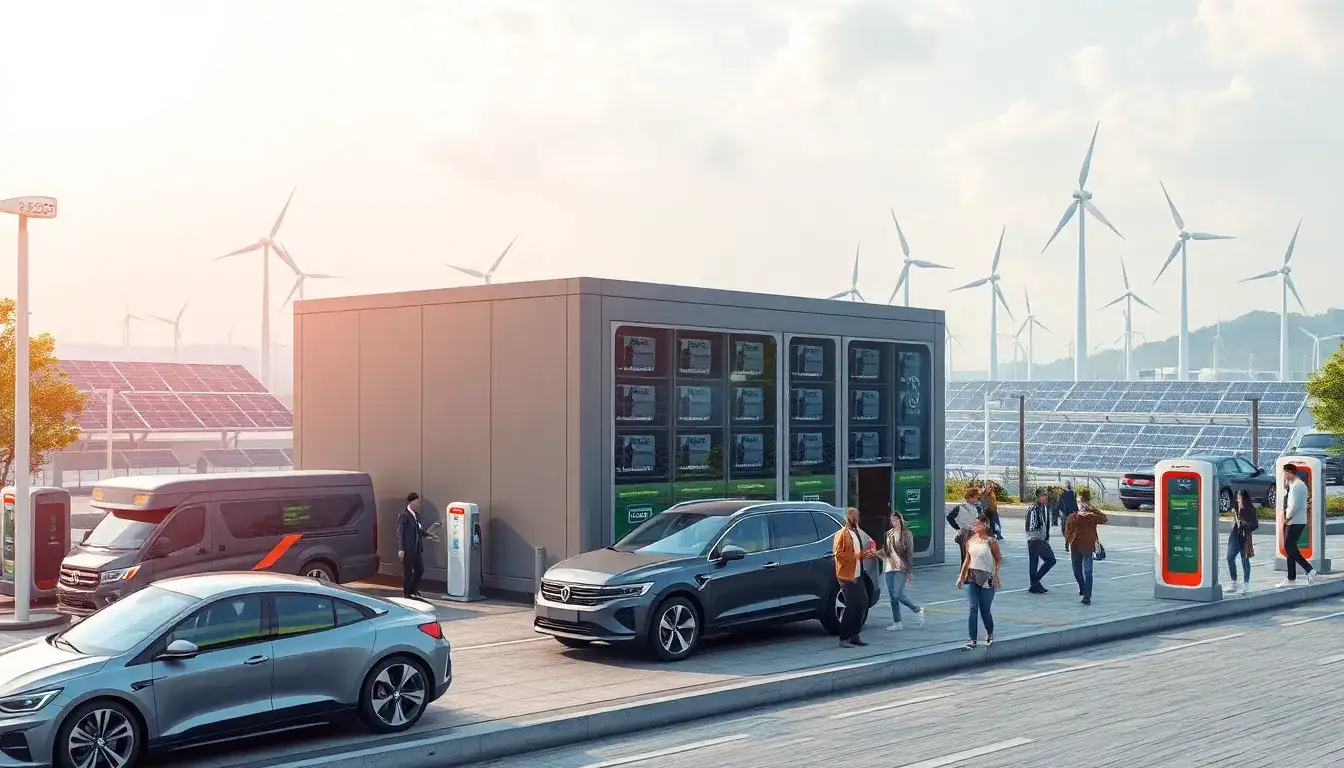
Energy Storage: Are Electric Vehicles Still the Main Focus? With the energy storage market projected to grow eightfold by 2030, what changes are happening that you might not have noticed?
On May 23, 2025, it was noted that electric vehicles (EVs) were once considered the primary drivers of the battery industry. However, a recent in-depth analysis of global energy storage developments reveals a strong emerging trend: the growth rate of energy storage systems is now significantly outpacing that of electric vehicles.
Exponential Growth Driven by Renewable Energy
The rise of the energy storage market is closely tied to the global decarbonization of electrical grids. To address the instability associated with renewable energy sources, such as wind and solar power, the demand for energy storage systems is expanding at an exponential rate. To keep pace with the growth of green energy, global energy storage capacity must increase eightfold by 2030 and 34 times by 2050.
While electric vehicles currently dominate battery applications, recent data indicates that the share of energy storage is rising rapidly. According to forecasts from Rho Motion, by 2030, energy storage demand will account for one-fifth of the overall battery market. This signifies that energy storage is transitioning from behind-the-scenes support to becoming one of the key players in the battery industry.
The Rise of LFP Batteries: Halving Costs and Doubling Lifespan
The technological core driving this growth is the rapid evolution of lithium iron phosphate (LFP) batteries. Observations from the Thorpe Marsh energy storage project in the UK reveal that within just 18 months, the cost of LFP batteries has nearly halved, making previously unfeasible energy storage investments viable. Additionally, the lifespan of these batteries has greatly improved from 10–15 years to 20 years, further reducing the cost per kilowatt-hour of energy storage.
Notably, LFP batteries do not require expensive and controversial metals like nickel and cobalt, giving them a significant edge in terms of material availability and ethical considerations. Data shows that over the past four years, the density of nickel used in batteries has decreased by nearly one-third, while cobalt usage has plummeted by two-thirds.
China’s Deepening Dominance
However, amid this wave of energy storage growth, the geopolitical and supply chain risks have become apparent. Currently, about 90% of energy storage batteries in the U.S. rely on imports from China. Even though a 90-day trade truce has been established between the U.S. and China, tariffs on Chinese batteries remain at 41%, making it difficult to reduce this dependency. Despite Western governments’ efforts to build independent supply chains, the deepening trend of LFP batteries has solidified China’s dominant position in the global energy storage battery market.
The CEO of Thorpe Marsh has acknowledged that to achieve net-zero carbon targets, the UK government must realistically confront the necessity of collaborating with China. This highlights the delicate balance between energy transition and industrial realities.
Original article by NenPower, If reposted, please credit the source: https://nenpower.com/blog/the-rise-of-energy-storage-why-electric-vehicles-may-no-longer-be-the-main-focus-by-2030/

