

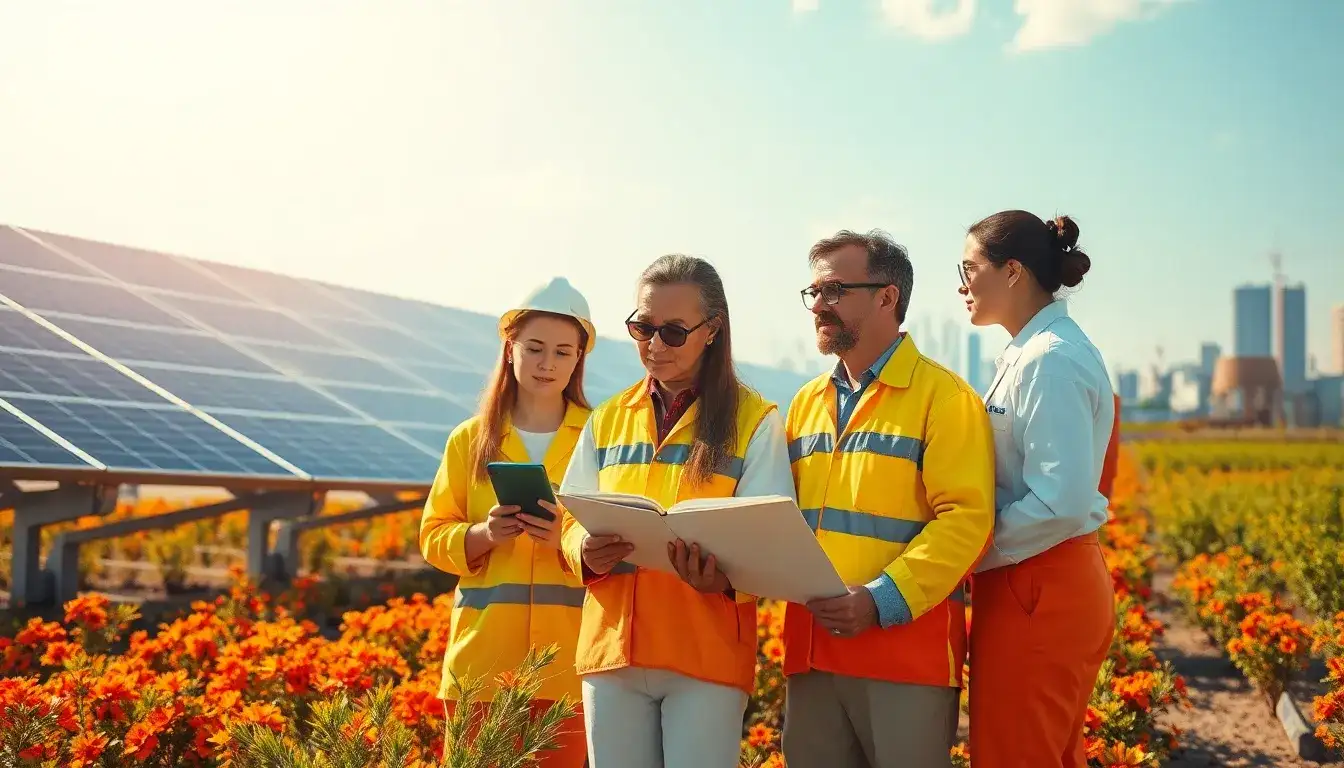
From Components to Energy: The Energy Storage Ambitions of Solar Companies – The Most Promising Trend to Bet On by 2025
Recently, JinkoSolar signed a memorandum of understanding with several well-known energy companies in Pakistan for a total of approximately 2.3 GW of photovoltaic modules and energy storage systems. This collaboration includes the supply of the Tiger Neo series of high-efficiency modules, energy storage system integration, and the development of large-scale ground-mounted power stations, providing a one-stop solution to help optimize the local renewable energy structure.
This cross-border cooperation is not an isolated case but rather a typical representation of the solar module companies venturing into integrated solar and storage solutions. As photovoltaic capacity enters the “TWh era,” merely competing on module efficiency is no longer sufficient to create differentiation. The challenges of integrating renewable energy with grid instability and the peaks and troughs of electricity load further elevate the importance of “solar + storage” as a necessary configuration.
Part 1: The Rush of Layouts Driven by Policies and Market Forces
Under the dual catalysts of achieving carbon neutrality and transforming the energy structure, solar and storage integration has evolved from an optional configuration to a core competitive advantage in the photovoltaic industry. Data shows that in 2023, the market size for integrated solar and storage in China surpassed 50 billion yuan, with a compound annual growth rate of over 35% over the past five years. It is expected to exceed 100 billion yuan by 2025. On the policy front, the document titled “Several Opinions on Accelerating the Digital and Intelligent Development of Energy” clearly mandates that by 2025, the coverage rate of integrated solar and storage projects in industrial parks and transportation hubs should exceed 60%, providing clear guidance for enterprise layout. The policy benefits are driving market expansion, with forecasts indicating that the global market for integrated solar and storage will exceed 1.2 trillion yuan by 2025, with China accounting for over 40%.
Leveraging their advantages in the industrial chain, photovoltaic module companies have developed a diversified layout of “module supply + storage integration + scenario services.” Leading companies exemplify this trend:
- Technological Synergy: Deep Integration of Modules and Storage – Trina Solar has built its core competitiveness through “high-efficiency modules + grid-forming storage.” In September 2025, its subsidiary, Jiangsu Trina Storage, signed a total of 2.48 GWh sales contracts for storage products with clients in China, Latin America, and Asia. Among these, a 1 GWh overseas order employs a grid-forming system, marking its first GWh-level overseas project. This project combines Trina Solar’s 210mm high-efficiency modules with a 1500V high-voltage storage architecture, enhancing overall system efficiency to over 90% and addressing the stability issues of high renewable energy grid integration.
- Scenario-Focused: Precision Breakthroughs in Niche Markets – Canadian Solar has established a first-mover advantage in the overseas large-scale energy storage market. In April 2025, its subsidiary, Canadian Solar Energy Technology, signed an agreement with Chile’s Colbún Company to provide a 228MW/912MWh battery storage system for the “Diego de Almagro South” project, paired with Canadian Solar’s Titan series modules, creating a “solar-storage” joint power supply solution to meet the continuous electricity needs of local mining companies. In the second quarter of 2025, its energy storage delivery reached 2.2 GWh, a quarterly increase of over 140%, with an order value of $3 billion, and an expected annual shipment volume of 7-9 GWh.
Part 2: The Dual Empowerment of Technological Breakthroughs and Demand Upgrades
The integration of solar and storage by module companies is not coincidental but a necessary result of technological iteration, decreasing costs, and resonating market demands:
- Technical Side: Breakthroughs from Efficiency Improvements and Cost Reductions – The conversion efficiency of photovoltaic modules has surpassed the 25% industrialization threshold, with companies like Canadian Solar and Longi Green Energy achieving a 15%-20% increase in power generation per unit area. In the storage sector, the cost per kilowatt-hour has declined by 50% since 2020, now at 0.6 yuan/Wh, with 1500V high-voltage architecture becoming mainstream. The integration of technologies further generates value increments, as solar-storage systems with direct current coupling reduce energy conversion losses, boosting overall efficiency by 3-5%.
- Demand Side: Diverse Scenarios Creating Rigid Demand – Industrial parks are becoming the largest incremental market, with the installation share expected to rise to 35% by 2025. A solar-storage project in an industrial park in Changzhou, Jiangsu, shows that an integrated station configured with 1MW of solar, 2MWh of storage, and 10 fast charging piles can generate annual revenues of 1.8 million yuan, with an investment payback period shortened to 5.8 years. Additionally, the number of electric vehicles has exceeded 20 million, creating a daily charging gap of 320 million kWh, while the vehicle-to-grid (V2G) model accelerates commercialization, with pilot projects achieving 92% efficiency in bidirectional charging and discharging, providing new scenarios for integrated solar and storage solutions.
- Policy Side: Gradual Improvement of Market Mechanisms – The National Energy Administration requires that by 2025, new public charging stations must have at least 30% of their facilities integrated for solar and storage. The Ministry of Industry and Information Technology aims for over 50 GW of building-integrated photovoltaics (BIPV) installations by 2025. The expansion of pilot programs for electricity spot markets and the liberalization of wall-to-wall electricity sales policies are expected to activate 30% of potential profit space for solar-storage projects, ensuring ongoing profitability.
Part 3: Conclusion
The entry of photovoltaic module companies into the solar-storage integration field represents a strategic choice to navigate industry cyclicality and a historical opportunity to participate in the global energy governance system’s reconstruction. From JinkoSolar’s large overseas projects to the innovations of Skyworth Solar in household terminals, and from the intelligent upgrades of urban transportation networks to the zero-carbon transformation of rural areas, solar-storage integration is reshaping the energy industry’s landscape with a three-dimensional drive of “technology + scenarios + ecology.”
In the future, as the costs of storage decrease and the level of intelligence improves, solar-storage solutions will become more widespread, promoting a transition of the global energy structure towards low-carbon and stability. Companies need to continuously invest in technological iteration, market adaptation, and safety regulations to seize the opportunities in this trillion-yuan market.
Original article by NenPower, If reposted, please credit the source: https://nenpower.com/blog/the-rise-of-energy-storage-ambitions-how-photovoltaic-companies-are-shaping-the-future-by-2025/

