

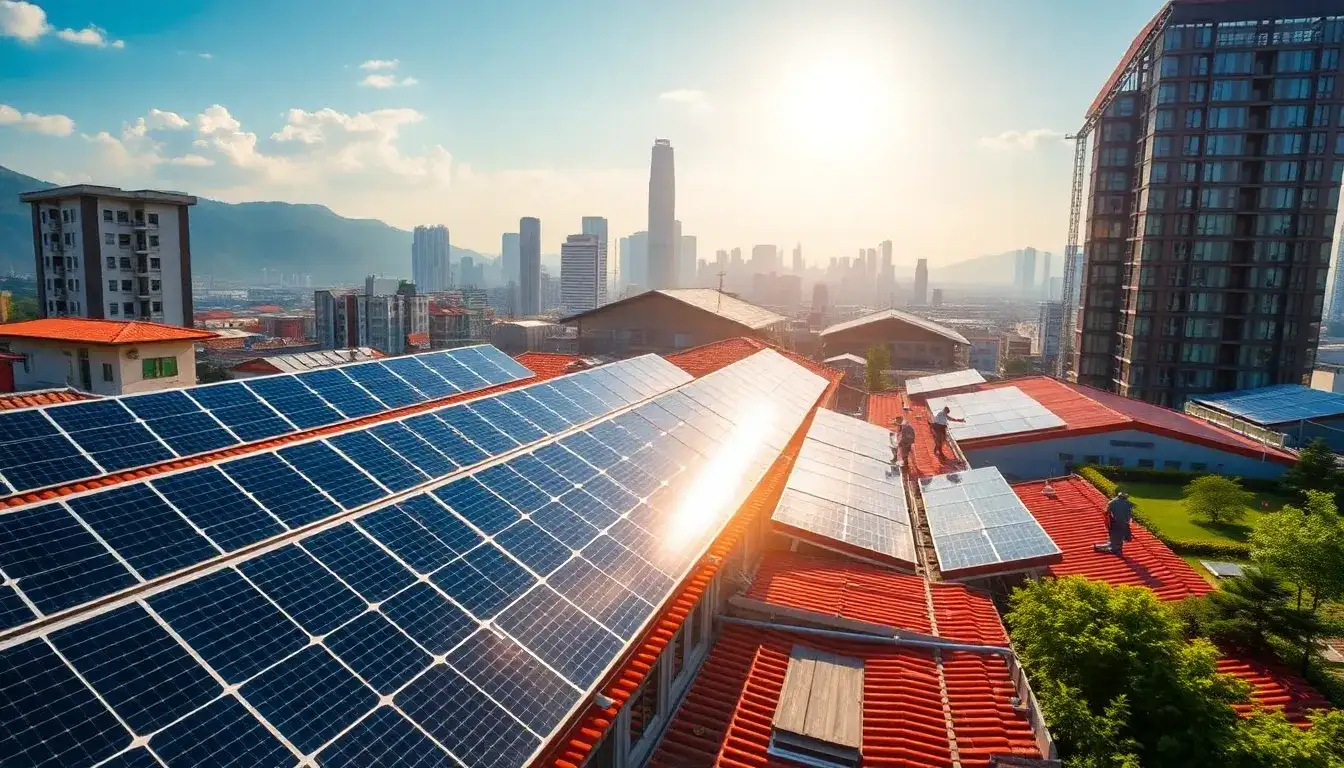
Distributed solar photovoltaic (PV) power generation has become a crucial force in the energy transition. By the end of 2024, the total installed capacity of distributed solar PV in China reached 370 million kilowatts, which is 121 times the capacity at the end of 2013, accounting for 42% of the total installed capacity for solar power generation. In 2024, the newly added capacity for distributed solar PV reached 120 million kilowatts, making up 43% of the total new solar power generation capacity that year. The electricity generated by distributed solar PV was 346.2 billion kilowatt-hours, representing 41% of the total solar power generation.
As the installed capacity of distributed solar PV continues to grow, the industry development environment is also changing. The release of the Notice on Deepening the Market-Oriented Reform of Renewable Energy Grid Tariffs to Promote High-Quality Development of Renewable Energy (referred to as “Document No. 136”) and the Management Measures for the Development and Construction of Distributed Solar PV marks a new phase of market-oriented pricing for grid tariffs in distributed solar PV. This raises questions about how its business models will evolve and what new opportunities may arise.
Reconstructing the Market Mechanism and Industry Ecology
Liu Yiyang, Executive Secretary-General of the China Photovoltaic Industry Association, noted that the photovoltaic industry in China has maintained rapid growth in recent years, continuously promoting high-quality development. The issuance of Document No. 136 and the latest revisions of the management measures signify the end of the era of “fixed tariffs” for renewable energy, with solar power now fully entering a market-oriented pricing phase and accelerating the construction of a unified national electricity market.
According to Zheng Hua, an associate professor at the School of Electrical and Electronic Engineering at North China Electric Power University, the proportion of electric energy in terminal energy consumption has been increasing, and the goal of having renewable energy account for 50% of the global electricity structure by 2050 is likely to be achieved ahead of schedule. In this context, the previous fixed investment model will shift towards operational models, making the acceleration of electricity market construction crucial.
Zheng emphasized that under the dual drivers of the “dual carbon” targets and current electricity market construction, it is essential to achieve “green” outcomes through market mechanisms. For renewable energy to become a primary support source, issues of intermittency, volatility, and randomness must be addressed, enhancing compatibility with the grid.
Wang Shujuan, an expert consultant at the China Investment Association’s Energy Investment Professional Committee and founder of Zhihui Photovoltaics, explained that the new policy introduces a mechanism for both pricing and electricity quantity. If one secures the mechanism quantity, a relatively stable pricing mechanism can be implemented. “All electricity quantities should participate in trading. Large-scale ground-mounted solar power plants can trade independently, while distributed solar PV projects can engage in bundled trading.”
Deep Integration of Source, Grid, Load, and Storage
Pang Huimin, Deputy Director of the New Energy and Renewable Energy Department at the National Energy Administration, pointed out during a press conference in the first quarter of 2025 that with the rapid growth of distributed solar PV installed capacity, grid connection and consumption have become major constraints on development. There is an urgent need to adjust management strategies to promote collaborative efforts among source, grid, load, and storage to facilitate healthy and rapid industry growth.
As a form of intermittent energy, solar power must use technological measures to address the “weather-dependent” challenges. Zheng believes this requires simultaneous efforts from both the source and load sides to collaboratively solve these problems. “In the context of a spot market, we need to ensure that renewable energy becomes a controllable resource. Specifically, there are two main application scenarios: centralized single power stations and direct current supporting power stations in desert areas.”
He further stated that the development of flexible resources, represented by energy storage, is essential. “Flexible resources are designed for renewable energy, and time-of-use pricing can highlight the advantages of integrating variable power sources and flexible resources. New modes and business formats arising from innovative energy storage solutions will emerge, and participation in market-driven trading to obtain returns will become an inevitable trend. In the future, the industry should focus on the differentiated needs of niche markets and emphasize operational technology accumulation.”
Wang Shujuan suggested that the future of distributed solar PV will show a trend towards “source, grid, load, and storage” development. “Previously, project revenues largely depended on the consumption levels and pricing settled by the grid company. In the future, a greater focus will be on self-consumption, with order scales and prices determined by customers. Provinces such as Henan and Shandong have already begun promoting the development of distributed solar PV ‘source, grid, load, and storage’ projects.”
Technological Integration and New Business Formats
In the future, numerous opportunities will continue to emerge in the segmented market for distributed solar PV, opening up multiple value frontiers. Wang Shujuan pointed out that energy conservation and carbon reduction will become the main driving forces for the development of distributed solar PV. “As enterprises are required to consume a certain proportion of non-hydropower renewable energy electricity according to national or local government regulations, their motivation to build and install distributed solar PV stations will be further stimulated. Additionally, Chinese export enterprises are actively exploring product carbon footprints, which will further expand the market space for distributed solar PV.”
Wang anticipates that distributed solar PV will align with energy transition requirements and will develop using the “solar-storage-charging” model. The willingness of urban investment companies and energy-consuming enterprises to invest in distributed solar PV stations will increase significantly. The prospects for zero-carbon parks are promising, and under the context of energy conservation and carbon reduction in the industrial manufacturing sector, the integration of solar, storage, and charging will soon welcome new opportunities. “The opportunities for the integration of solar, storage, and charging are not only in urban industrial parks but also present significant development space in rural areas. Currently, the increasing number of electric vehicles in rural areas and the emerging demand for charging stations provide favorable conditions for this integration. Moreover, the greening of logistics parks will drive substantial electricity demand for heavy-duty trucks, making the consumption of green electricity through charging stations a vital pathway.”
Liu Yiyang stated that under conditions that do not consider system balance, solar PV is currently the cheapest new power source available. With low marginal operating costs for solar power generation, the future combination of energy storage and other technologies will continue to offer prices comparable to traditional energy sources.
Industry experts generally agree that the transition from “fixed tariffs” to “comprehensive marketization” indicates that China’s photovoltaic industry is moving towards a new stage of high-quality development. The introduction of new policies marks the acceleration of a unified national electricity market formation, and the photovoltaic industry will also continue to unleash its green potential through technological innovation and model innovation.
Original article by NenPower, If reposted, please credit the source: https://nenpower.com/blog/the-rise-of-distributed-solar-power-in-china-navigating-market-changes-and-opportunities/

