

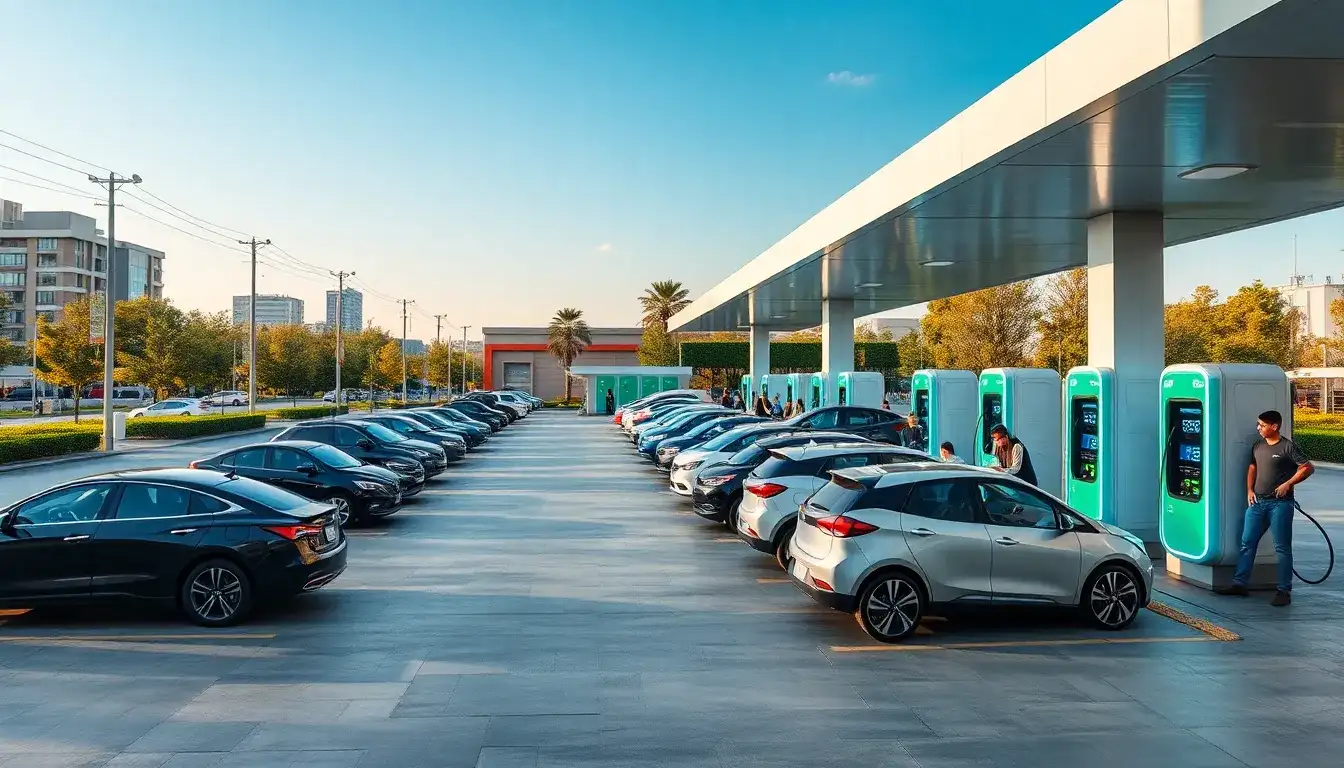
The adoption of new energy vehicles is rapidly accelerating, yet charging speed and the development of charging networks remain significant challenges for vehicle owners. Picture this: you are nervously planning a charging route for an upcoming long-distance trip, only to find that the locations of charging stations and their accessibility are quite frustrating. Recent statistics reveal that the number of electric vehicles in China has surpassed 10 million, but the pace of charging infrastructure development lags far behind.
The battery swapping model presents a promising solution to this problem. Recently, the collaboration between Ningde Times and NIO has garnered significant attention in the industry, reigniting enthusiasm for the battery swapping market. As a leader in the power battery sector, Ningde Times not only possesses remarkable advantages in battery technology but also has established a mature operational capacity for large-scale implementation. This potential partnership signifies a new landscape for the energy replenishment system of new energy vehicles, with the promise of significantly enhancing battery swapping efficiency.
With the introduction of the “chocolate” battery swapping module, Ningde Times has showcased its innovations in modular battery technology, addressing the current inconsistencies in battery specifications among different automakers. This initiative facilitates battery interchangeability across various brands and models, promoting a standardized approach that encourages the healthy development of the battery swapping industry.
Some may wonder how this innovative technology will transform our everyday driving experience. The convenience and efficiency of the battery swapping model are set to dramatically reduce the waiting time at swapping stations, allowing for quick energy replenishment that meets user demands.
From a market perspective, the involvement of Ningde Times could create new business opportunities. Professional operators are likely to reduce operational costs for battery swapping stations through intelligent management and strategic expansion, making this service more economically viable. Additionally, this approach opens new avenues for battery recycling, transforming batteries from disposable products into sustainable assets. In the future, batteries will no longer be mere accessories of new vehicles; they will become tradable resources, fully leveraging their potential value.
For NIO, a deep partnership with Ningde Times means outsourcing battery swapping operations to a specialized company, allowing NIO to focus more on vehicle research and user experience. Meanwhile, Anhui, as NIO’s core manufacturing base, continues to advance the supporting ecosystem for the new energy vehicle industry. This clearly defined division of labor in their collaboration represents the future direction of the new energy sector.
As we look forward to advancements in the energy replenishment system for new energy vehicles, it is essential to consider the challenges that accompany such developments. Standardization of the battery swapping network, innovation in business models, and the expansion of service channels will require concerted efforts from the entire industry chain. While we anticipate the convenience and economic benefits brought by the battery swapping model, the collaboration between Ningde Times and NIO will serve as a crucial test case. Will you trust this new model in this era of transformation?
Original article by NenPower, If reposted, please credit the source: https://nenpower.com/blog/the-rise-of-battery-swap-stations-for-electric-vehicles-challenges-and-opportunities-in-a-transforming-era/

