

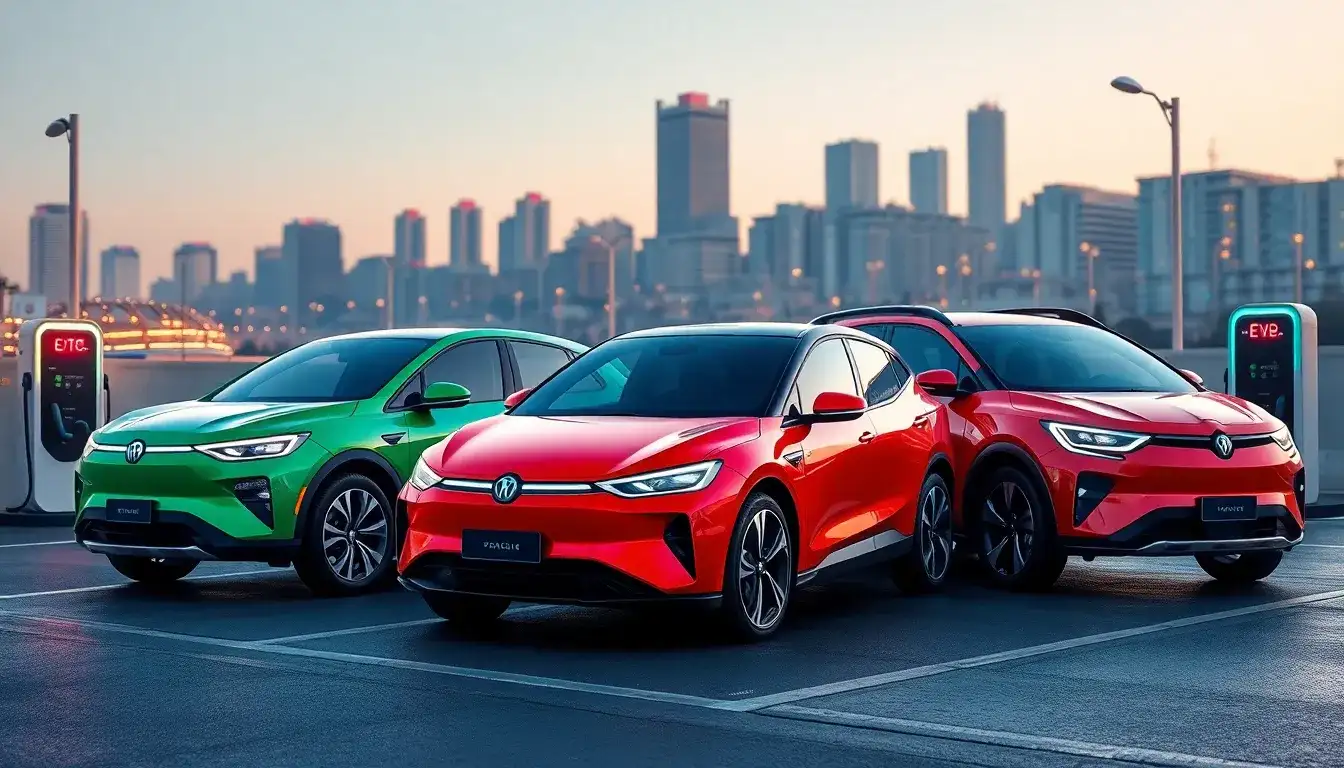
2025 Automotive Power Dynamics: BEV, PHEV, and EREV Compete in the Market
The global automotive market is undergoing a profound power revolution, with the diversification of powertrains emerging as a core characteristic of industry development. Driven by carbon neutrality goals, countries are accelerating the green transformation of the automotive industry. The deep integration of technological innovation and market demand has led to the vigorous development of multiple technological routes, including Battery Electric Vehicles (BEV), Plug-in Hybrid Electric Vehicles (PHEV), and Extended Range Electric Vehicles (EREV).
This diversified landscape reflects not only technological inclusivity but also the differentiated demands for powertrains from various regions and consumer groups. For instance, the European market shows a preference for plug-in hybrid models, while emerging markets in the Asia-Pacific region are enthusiastic about efficient electrification. As a result, the global automotive power system is exhibiting a competitive atmosphere characterized by diversity.
As the world’s largest market for new energy vehicles, China is set to continue leading this transformation in the next decade. In 2024, China’s production and sales of new energy vehicles exceeded 10 million units, achieving a market penetration rate of 40.3%. It is projected that by 2025, sales will reach 16.5 million units, with penetration exceeding 55%.
With dual drivers of policy support and technological breakthroughs, China’s new energy vehicle industry is transitioning from a “policy dividend period” to a “technology universalization period.” The market demand structure is undergoing significant changes: the demand for replacement and new purchases has become the core driving force, with the lower-tier markets experiencing a growth rate as high as 61%. Price ranges are converging towards the mainstream bracket of 100,000 to 150,000 yuan, and technological innovation is shifting from “configurations stacking” to “experience competition.”
Market Dynamics of Three Main Power Technologies
In this context, the three major power technology routes are showing clear market positioning and development logic:
- BEV (Battery Electric Vehicles): With advantages such as zero emissions, high efficiency, and favorable policies, BEVs are gradually establishing their position as the main line of development in the new energy vehicle sector. By the first quarter of 2025, global BEV sales reached 2.67 million units, a year-on-year increase of 45%. In China, the charging infrastructure has surpassed 13.749 million units, with the number of public charging stations exceeding twice that of gas stations, and the coverage rate of service areas along highways reaching 98%, effectively addressing the “range anxiety” issue.
- PHEV (Plug-in Hybrid Electric Vehicles): PHEVs are strategically positioned in the mid-to-low-end market, quickly rising due to their unique advantages of “no charging dependency + fuel backup.” In the first quarter of 2025, global PHEV sales reached 1.35 million units, a year-on-year increase of 28%. Their core competitiveness lies in optimized battery capacity and power system design—maintaining pure electric range between 100-200 kilometers to cater to daily commuting needs while using an internal combustion engine (ICE) for long-distance travel, all at a price 15%-20% lower than BEVs, aligning with lower-tier market consumption characteristics. Companies like BYD and Geely are enhancing fuel economy and performance through high-efficiency engines and multi-speed hybrid transmission technology, rapidly increasing PHEV penetration in the B-class car market.
- EREV (Extended Range Electric Vehicles): Focused on the mid-to-high-end market, EREV technology reconstructs user experience with a “pure electric drive + range extender” approach. Brands such as Li Auto and AITO are achieving over 200 kilometers of pure electric range and more than 1,000 kilometers of comprehensive range with high-efficiency motors above 200kW and intelligent energy management systems. EREVs are equipped with Level 2 combined driving assistance and voice interaction features, precisely meeting the needs of middle-class families for technology and comfort. In regions with weak charging infrastructure, the range extender function of the ICE can extend energy replenishment radius to traditional gas station networks, making EREV a preferred choice in northern markets and county-level consumption.
It is noteworthy that this diversified power landscape is accelerating the globalization of the Chinese automotive industry. In 2023, China exported 1.203 million new energy vehicles, a year-on-year increase of 77.2%. In the EU market, they are cultivating user habits through plug-in hybrid models, while in Southeast Asia, they are capturing market share with cost-effective BEVs, forming a dual-driven model of “technology output + localized production.” Additionally, explorations of alternative energies such as methanol, ammonia, and hydrogen in the commercial vehicle sector (e.g., methanol heavy-duty trucks and hydrogen fuel cell cold chain vehicles) are adding new dimensions to the diversification of automotive power systems.
This transformation, driven by both technological innovation and market choices, is reshaping the competitive rules of the automotive industry and heralding a new era characterized by “multiple technological routes coexisting and comprehensive demand coverage.” In the coming decade, as breakthroughs in battery technology, upgrades in intelligent experiences, and improvements in global infrastructure continue, diversified powertrains will persistently advance the automotive industry towards achieving high efficiency, low carbon emissions, and smart technologies.
Original article by NenPower, If reposted, please credit the source: https://nenpower.com/blog/the-power-struggle-in-automotive-technology-bevs-phevs-and-erevs-compete-for-market-dominance-in-2025/

