

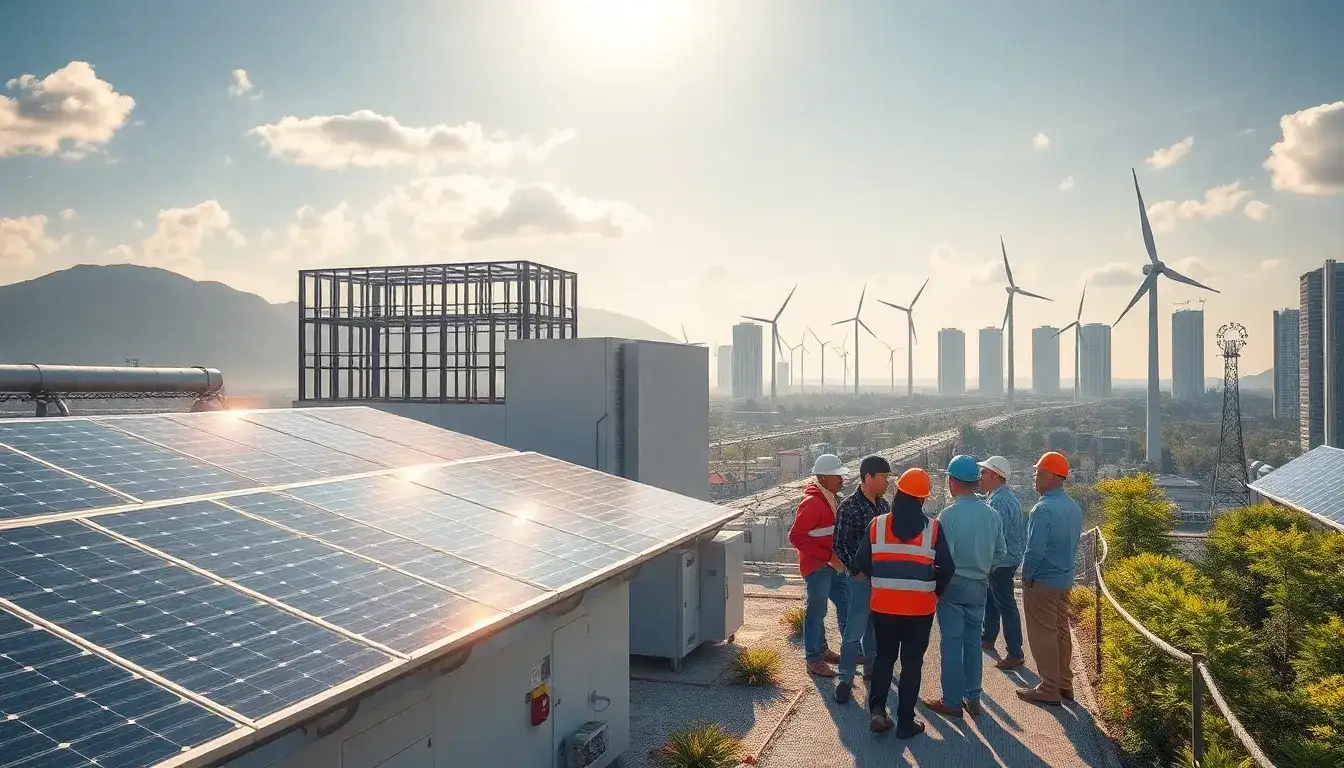
The Future of Energy Storage: A Centerpiece for New Power Systems
Within the next five years, energy storage is poised to take center stage in the evolving energy landscape, with expectations that installed capacity will exceed 240 million kilowatts by 2030. During the World Energy Storage Conference held from September 17 to 18, Hu Ming, the Secretary of the Party Committee of the Power Planning and Design Institute, emphasized that the large-scale development of energy storage is a crucial indicator of the construction of new power systems. He noted that the scale of energy storage will determine the quality of renewable energy development during the 14th Five-Year Plan, impact the safe operation of power grids, and influence the quality and economy of energy consumption on the consumer side.
New energy storage generally refers to advanced electrical storage technologies excluding pumped hydro storage, including electrochemical storage, compressed air storage, and molten salt storage. Since the beginning of the 14th Five-Year Plan, the installed capacity of new energy storage has been doubling year after year, significantly enhancing industry capabilities and leading to a substantial increase in direct investments, which have surpassed 300 billion yuan.
Currently, the majority of China’s new energy storage capacity is electrochemical storage, which utilizes batteries to complete energy storage, release, and management processes. According to Zeng Yuqun, the founder and chairman of CATL, China has emerged as the world’s largest market for new energy storage. Lithium-ion batteries dominate this market, accounting for 95% to 99% of the total capacity, which has increased twentyfold over the past five years. China boasts the most complete, largest, and advanced energy storage industry chain globally, with battery and system shipments representing over 90% and 70% of the global market, respectively.
This year marks the fifth anniversary of the “dual carbon” goals, which aim to peak carbon emissions and achieve carbon neutrality. Energy serves as the backbone of the national economy and is the primary battlefield for advancing these objectives. Under the “carbon neutrality and carbon peak” goals, China’s power system is transitioning to one dominated by renewable energy sources, with energy storage playing a vital role as a flexible regulatory resource. As the installation of renewable energy sources continues to rise rapidly, the challenges of balancing power systems are becoming increasingly significant. Energy storage is viewed as one of the main solutions to mitigate the volatility associated with renewable energy.
With the acceleration of China’s energy structure transformation, the proportion of non-fossil energy generation, such as wind and solar, is rising annually. Recent statistics indicate that over the past four years, 84% of the newly installed power generation capacity nationwide has come from non-fossil sources. As of July this year, the installed capacity of non-fossil energy generation reached 2.23 billion kilowatts, accounting for 60.8% of the total generation capacity. However, the variability and intermittency associated with renewable energy pose challenges to the safety and stability of power supply. Consequently, the demand for energy storage stations that can charge during peak renewable generation hours and discharge during low output hours is becoming increasingly urgent.
Hu Ming remarked that China’s renewable energy installations have already surpassed the maximum load capacity of the system. Over the next five years, the installed capacity of wind and solar energy is expected to reach between 280 million to 300 million kilowatts, with an average annual increase of around 25 million kilowatts, further raising its share above 50%. Concurrently, the proportion of load capacity will decrease, leading to a more pronounced trend of low energy density in the system and highlighting the issue of insufficient adjustment capability. The reliance solely on traditional power sources is no longer sufficient; additional energy storage is necessary, and system regulation must balance both energy quantity and power adjustments to meet critical regulatory needs.
The global energy structure is rapidly transforming, and China’s power system is undergoing a historic shift from fossil fuel dominance to one centered around renewable energy. In this context, energy storage will undoubtedly take a central role. Chen Haisheng, chairman of the Zhongguancun Energy Storage Industry Technology Alliance and director of the Institute of Engineering Thermophysics at the Chinese Academy of Sciences, noted that energy storage will become more closely integrated with new power system construction, enabling diverse applications in areas such as zero-carbon parks and green electricity connections, thereby expanding new business models.
According to forecasts from the Zhongguancun Energy Storage Industry Technology Alliance, by 2030, China’s cumulative installed capacity for new energy storage is expected to reach 236.1 GW under conservative scenarios, and over 291 GW in ideal scenarios, with a compound annual growth rate exceeding 20%. As new scenarios such as large-scale energy bases, zero-carbon parks, and virtual power plants expand, and with innovations in materials, structures, and intelligent technologies, energy storage will play a more central role in ensuring power security and advancing the dual carbon goals.
During the aforementioned world energy storage conference, Liu Xinyan, secretary of the Party Committee of the Equipment Industry Development Center of the Ministry of Industry and Information Technology, also expressed that with continuous industry efforts, the development of various new energy storage technologies will effectively support the high-quality development of China’s energy storage manufacturing industry.
Looking ahead, the power market reform during the 14th Five-Year Plan is another key area of focus and an opportunity for energy storage development. Hu Ming indicated that the 14th Five-Year Plan is an accelerated period for constructing a new power system. The National Energy Administration initiated various pilot projects to hasten the development of the new power system, including large-scale, high-proportion renewable energy delivery and virtual power plants.
With the comprehensive entry of renewable energy into the market, the demand for energy storage installation has become a pressing issue. Liu Yongdong, deputy secretary-general of the China Electricity Council, noted that the recent policy adjustments focus on the application of energy storage rather than construction alone, marking a pivotal shift in addressing the commercial model for energy storage applications.
This year, on February 9, the National Development and Reform Commission and the National Energy Administration jointly released a notice on deepening the market-oriented reform of new energy on-grid prices to promote high-quality development. The notice eliminated the requirement of mandatory energy storage for new energy project approvals, signifying that energy storage has officially entered the market.
On September 12, the National Development and Reform Commission and the National Energy Administration issued the “Special Action Plan for the Large-Scale Construction of New Energy Storage (2025-2027),” which outlines a clear development path for the next three years in the new energy storage sector. The action plan aims to achieve a national installed capacity of over 180 GW by 2027, driving project investments of around 250 billion yuan. Analysts believe this target is achievable.
The National Energy Administration stated that this policy was driven by the rapid development of renewable energy and the increasing pressure on system peak regulation and power supply reliability. As a crucial flexible adjustment resource, new energy storage is a necessary component for constructing new power systems. To foster the high-quality development of the new energy storage industry, it is essential to clarify measures for application expansion, innovative integration, and market mechanisms.
In fact, the next five years will present multiple challenges for China’s power system. On one hand, the share of renewable energy generation is expected to approach 25%, which will significantly impact system stability and increase the demand for system adjustment capabilities and operational costs. On the other hand, diverse market entities are emerging in all aspects of the energy system, necessitating a restructuring of interests.
Hu Ming concluded that the large-scale development of energy storage, as a critical element of the new power system, is the most significant indicator of its construction. The scale of energy storage will determine the quality of renewable energy development during the 14th Five-Year Plan and influence the safe operation levels of the power grid, as well as the quality and economy of energy consumption.
However, the long-term sustainable development of new energy storage depends on improving policy frameworks and market mechanisms. Zeng Yuqun stressed that while energy storage costs have decreased significantly, future success will require strong policy guidance. Unlike traditional storage, new energy storage must effectively address the volatility of renewable sources, particularly solar energy, and must be well integrated with solar power characteristics.
The action plan issued by the National Development and Reform Commission and the National Energy Administration also encourages new energy storage to participate fully in the energy market, promoting integrated market transactions under the “new energy + storage” model. It aims to build a price mechanism for new energy storage and establish a reliable capacity compensation mechanism to ensure fair compensation for the reliable capacity of the power system.
In summary, the development of the energy storage industry during the 14th Five-Year Plan has seen explosive growth, but it has also accumulated several risks and challenges. To support the construction needs of the 14th Five-Year Plan, it is crucial to address the pain points in the energy storage industry. Zeng Yuqun remarked that during this transformative period, the industry must maintain a clear understanding of both achievements and challenges to drive high-quality development.
Original article by NenPower, If reposted, please credit the source: https://nenpower.com/blog/the-next-five-years-energy-storage-takes-center-stage-in-chinas-renewable-energy-transition/

