

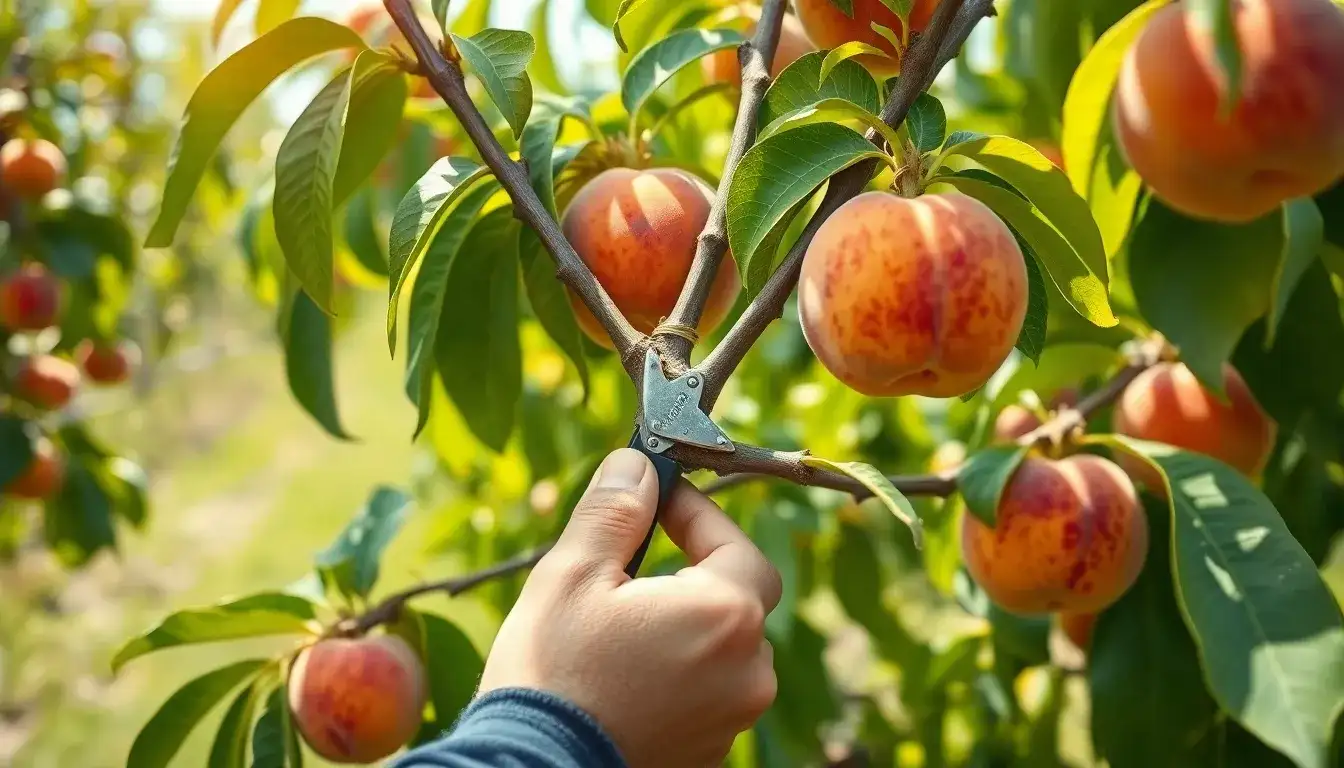
Peach Grafting: The Miracle of Sweetness at Your Fingertips
As summer approaches, nothing is more tempting than a plump, juicy peach, bursting with fragrance. Taking a bite releases a sweet explosion that seems to encompass all the sunshine of the season. Have you ever wondered how these delightful peaches end up in our hands? Beyond simply buying them, is there a more profound and engaging way to embrace this gift from nature? Today, we delve into the enchanting topic of peach grafting.
This is not merely about planting; it is a magical journey of life continuation, skill transmission, and dream realization.
From Seed to Branch: The Beginning of Cultivation
Our love for peaches often starts with that sweet bite. But the source of this sweetness lies in a seemingly ordinary peach pit. Many might casually toss a leftover pit into the ground, hoping it will sprout into a peach tree. While this is possible, it is a long and uncertain journey. A peach pit carries the genetics of its parent tree but can produce fruit with flavors, sizes, and disease resistances that differ significantly from the beloved original, and it may even never bear fruit at all. It’s like opening a genetic “blind box,” filled with surprises, but also potential disappointments.
Yet, we often seek that familiar and stunning sweetness. How can we more reliably and efficiently replicate this beauty or even improve upon it? The answer lies in grafting, specifically “peach grafting.” This ancient and exquisite horticultural technique grants us the power to selectively retain the traits of superior varieties and “transplant” them onto a healthy rootstock, creating even better peach trees.
The Allure of Grafting: Selection and Reshaping
Imagine you have a rootstock with a robust root system, drought resistance, and hardiness, but its fruit may not be very satisfying. You might desire a specific variety, such as the juicy “Honey Peach” or the finely textured “Nectarine.” In this case, grafting becomes the bridge connecting your dreams to reality.
Through grafting, you can carefully attach a branch from your desired peach variety (known as the “scion”) to the rootstock. Once the scion and rootstock successfully heal together, they can draw nutrients and water from the rootstock, growing into the desired variety, eventually producing fruit that matches the scion. It’s like giving a strong body a “sweet heart.”
But why choose grafting instead of planting seeds? There are several compelling reasons:
- Quality Assurance: Grafting ensures the fruit’s quality. By selecting superior scions, we can guarantee that the resulting peaches will have the expected taste, size, flavor, and appearance, avoiding the risks of degradation or mutation associated with seed propagation.
- Shortened Time to Fruit: Peach trees grown from seeds can take several years to bear fruit, whereas grafted trees, especially those using current season’s branches as scions, can often start producing fruit within 1-3 years, significantly speeding up the time to enjoy sweet peaches.
- Improved Traits: Grafting allows us to combine rootstocks with disease resistance, cold hardiness, or suitability for specific soil conditions with high-quality scions, cultivating peach trees that are better suited to local environmental conditions and easier to manage.
- Miniature Orchard: For container gardening enthusiasts, grafting is a powerful tool to realize the dream of a “mini orchard.” It allows us to control the growth height and shape of the peach tree, enabling it to thrive in limited spaces and even produce multiple harvests in a year.
Core Knowledge of Peach Grafting: The Union of Rootstock and Scion
To successfully graft peaches, understanding the selection of rootstock and scions is crucial.
Choosing the Rootstock:
The rootstock is the foundation of the peach tree, and its quality directly affects the tree’s growth vigor, disease resistance, and adaptability to the environment.
- Wild Peach or Mountain Peach: These are common choices for rootstock due to their vigorous growth, extensive root systems, and strong resistance to drought and cold, making them suitable for harsher environments.
- Peach Rootstocks: Some specially bred peach rootstocks, like dwarfing rootstocks, can effectively control the tree’s height, making them ideal for dense planting and container gardening.
- Apricot or Plum Rootstocks: In certain cases, apricot or plum rootstocks can be used, but compatibility issues may arise, and the success rate of grafting between different species can be lower.
Choosing the Scion:
The scion determines the type of peach you will ultimately enjoy.
- Healthy Varieties: Select branches from healthy, disease-free, and vigorously growing superior varieties. Ideally, the branches should be from the current or previous season, of moderate thickness, and with plump buds.
- Timing of Scion Collection: Scions are usually collected during the peach tree’s dormant period (late autumn or early spring) and should be stored in sand or cold storage until grafting. If using new shoots as scions (known as “softwood grafting”), the process should occur during the growing season.
Rootstocks and scions are like a destined pair; they need a certain compatibility to successfully unite. Generally, grafting within the same species yields the highest success rate, making it safest to graft peach branches onto peach rootstocks.
Peach grafting is not just a technical skill; it embodies a respect for nature and an exploration of vitality. It allows us to take part in the fruit’s creation process, experiencing the transformation from a small scion to a flourishing tree laden with fruit. This sense of achievement is far more profound and precious than simply purchasing a peach.
In the following sections, we will explore specific grafting methods and how to realize your “peach dreams.”
The Sweet Magic at Your Fingertips: Four Grafting Techniques and Success Secrets
In the previous section, we explored the charm of peach grafting and how it enables us to reliably obtain our desired sweet fruits while shortening the wait. Now, let’s roll up our sleeves and dive into the practical aspects. Mastering a few key grafting techniques is like possessing “four weapons” that can help you navigate different situations, making your peach grafting journey smoother.
Some vital “success secrets” can help you master this art, allowing sweetness to truly blossom at your fingertips.
Four Grafting Techniques: Each with Unique Advantages
There are various grafting techniques, but a few are most commonly used and effective, particularly for peach grafting:
- Bud Grafting:
- Principle: This is one of the most common grafting methods, utilizing a single bud as the scion. It is typically performed during the peach tree’s growing season (spring to summer) when the cambium layer is active and healing capacity is strong.
- Key Steps: Cut a “T” or “I” shaped incision on the rootstock about 10-20 cm above the ground. Carefully cut the selected bud along with a small portion of the bark and insert it into the incision, ensuring the cambium layers align. Wrap it with grafting tape to prevent moisture loss while allowing the bud to breathe.
- Advantages: This method is relatively simple, requires minimal materials (just one bud), has a high survival rate, and places minimal demands on the rootstock’s wound.
- Suitable for: Small-scale home gardening, container peach trees, or when a supplementary graft is needed during the growing season.
- Branch Grafting:
- Principle: This method uses one or two-year-old branches as scions. Depending on the thickness of the rootstock and scion, there are various techniques, with “cleft grafting” and “whip-and-tongue grafting” being among the most common.
- Cleft Grafting: Used when the rootstock is thicker than the scion. A deep vertical cut is made at the top of the rootstock, and the wedge-shaped scion is inserted into the split, aligning the cambium layers.
- Whip-and-Tongue Grafting: Used when the rootstock and scion are of similar thickness. Both the rootstock and scion are cut at an angle and then interlocked, forming a secure structure that heals well.
- Key Steps: Typically performed during the peach tree’s dormant period (late autumn or early spring). The key is to ensure smooth and even cuts while aligning the cambium layers accurately.
- Advantages: Scions are easier to obtain, and the larger healing surface area leads to robust growth after successful grafting.
- Suitable for: Large-scale propagation in orchards or when rapid establishment of new plants is needed.
- Side Grafting:
- Principle: This method involves grafting on the side of the rootstock without damaging its top.
- Key Steps: Remove a portion of the bark at a suitable position on the side of the rootstock to create an angled surface, then insert a similarly shaped scion, ensuring the cambium layers fit together.
- Advantages: The top bud of the rootstock can continue to grow, minimally impacting its overall growth, making it suitable for grafting more challenging varieties.
- Suitable for: When it is desirable for the rootstock to maintain its original growth vigor, or when there are specific requirements for the grafting site.
- Root Grafting:
- Principle: This method directly uses segments of the peach tree’s roots as rootstock, with the scion grafted onto the root section.
- Key Steps: Typically performed during dormancy, the excavated root segments (usually 10-15 cm long) are joined with the scion using tongue or cleft grafting.
- Advantages: This method can be used to propagate special varieties or for creating potted seedlings in limited land resources.
- Suitable for: Seedling production, making rootstocks, and propagating some special varieties.
Success Secrets: Details Determine the Outcome
Timing is Key: Each grafting method has an optimal time for execution. Bud grafting is typically done during the growing season (late spring to early autumn), while branch grafting is often conducted during dormancy (late autumn or early spring). Choose clear, mild days without rain or snow for grafting.
Tools Must Be Sharp: Grafting knives should be extremely sharp to create smooth, even cuts, ensuring good contact between cambium layers. Dull tools can tear tissues, negatively affecting healing.
Disinfection is Essential: Keep grafting tools and hands clean, preferably disinfected, to prevent bacterial infections and reduce the risk of disease.
Aligning the Cambium Layer: This is the core of successful grafting! Regardless of the method used, ensure that the cambium layers of both rootstock and scion have as much contact area as possible.
Binding Needs to Be Tight Yet Breathable: After grafting, use grafting tape or string to tightly bind the wound, preventing moisture loss and external pathogens from entering. However, ensure there is space for the bud to breathe.
Patience and Observation: After grafting, it is important to wait patiently. Typically, 1-3 weeks post-grafting, you can carefully check the graft site. If the scion’s bud begins to swell and sprout, the grafting has been successful. If the scion withers, it may have failed.
“Bud Removal” is Crucial: After successful grafting, any unwanted buds that emerge on the rootstock should be removed promptly to concentrate nutrients for the scion’s growth.
From “One Peach” to “A Peach Orchard”: Extending Dreams
Peach grafting is not merely a technical practice; it is a sowing and harvesting of vitality. Through grafting, we can enable the potted peach tree on our balcony to bear sweet fruit, improve the old peach trees in our yards, or even participate in larger-scale fruit tree improvement and breeding efforts.
This is a delightful horticultural experience that transforms you from a mere consumer into a creator of life. Witnessing your grafted peach tree sprout tender green buds in spring and bear abundant fruit in summer brings a sense of achievement and joy that no material possession can compare to.
Perhaps you never considered that a small peach pit or an inconspicuous branch in your hands could cultivate such sweet hope. Peach grafting is a magical skill that allows you to touch the pulse of life and nurture sweetness with your own hands. Now, give it a try and let this summer’s sweetness bloom in your garden and your heart.
Original article by NenPower, If reposted, please credit the source: https://nenpower.com/blog/the-miraculous-art-of-peach-grafting-cultivating-sweetness-at-your-fingertips/

