

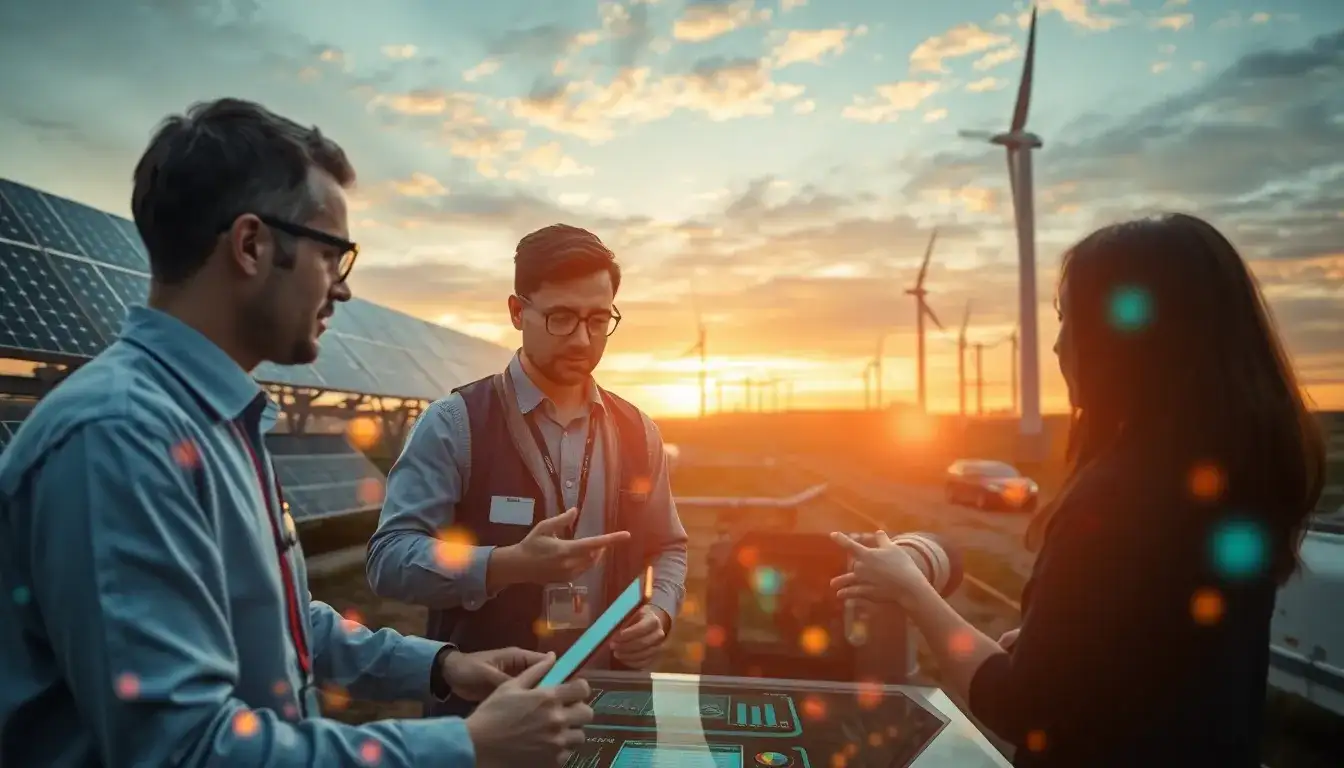
With the advent of AI, the energy sector is undergoing significant transformations. According to a report from Science and Technology Daily, by 2025, AI technology will play a crucial role in the energy sector across Europe, including the establishment of AI-driven energy management systems.
The North Sea Wind Power Hub is set to deploy AI for optimizing energy production and distribution. This hub, named HyperGenie, will enhance operational efficiency, facilitate real-time data analysis, and optimize energy resource allocation.
During the 13th National Energy Conference, various stakeholders emphasized the importance of integrating AI into the energy sector. The conference highlighted discussions on the future of energy businesses, especially as companies strive for greater efficiency and sustainability.
What transformations can AI bring to the energy sector? How can we further integrate AI with the energy industry for deeper collaboration? These questions are being actively explored in ongoing discussions.
AI’s role in the energy sector is being described as a “breakthrough”, with new technologies emerging to address storage needs and energy management challenges. These technologies include advancements in battery storage, hydrogen energy, and solar energy systems.
Recent developments indicate that by 2024, the average price for small-scale energy storage systems is projected to be $0.628 per kWh, down 43% compared to previous years. The North Sea Wind Power Hub is also expected to lead in the deployment of AI technologies, which will enhance the efficiency of energy generation.
AI is expected to streamline the energy management process, integrating sustainability practices and ensuring that energy production meets demand efficiently. The integration of AI with energy systems aims to maximize operational efficiency and improve safety measures.
Furthermore, AI applications are being developed for monitoring and optimizing energy consumption and production. For instance, AI systems can analyze vast amounts of data to predict energy demands and ensure optimal energy distribution across networks.
By 2024, it is anticipated that wind energy contributions will reach approximately 10% of total energy generation, alongside other renewable sources. The ongoing integration of AI with energy systems is set to improve efficiency and adaptability in real-time energy management.
Moving forward, the focus will be on building a collaborative framework that integrates AI technologies with traditional energy systems, enhancing quality and reliability. The energy sector’s evolution will increasingly involve the automation of processes, supported by AI-driven insights and analytics.
In conclusion, the energy industry is on the brink of a revolution powered by AI technologies. As these advancements continue to unfold, they promise to reshape how energy is produced, managed, and consumed, paving the way for a more efficient and sustainable future.
Original article by NenPower, If reposted, please credit the source: https://nenpower.com/blog/the-impact-of-ai-on-the-energy-sector-transformations-and-future-trends/

