

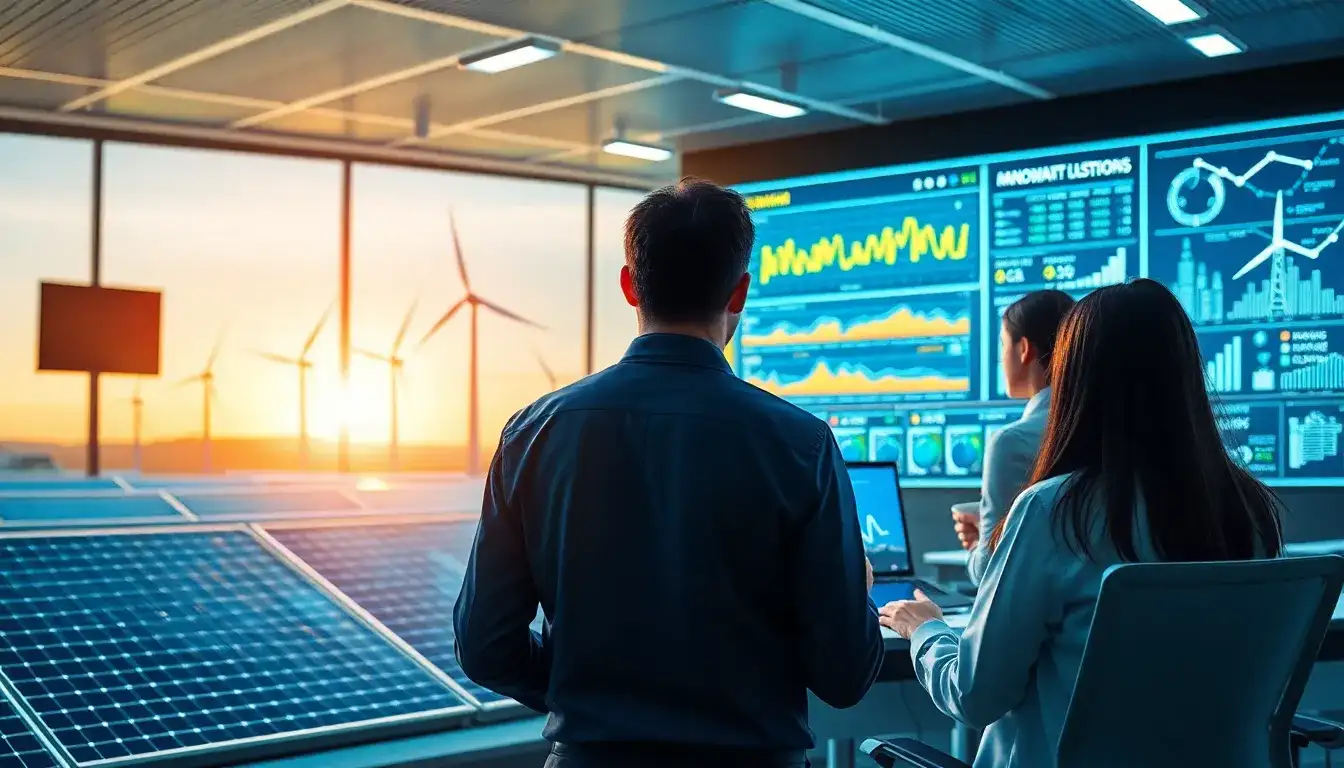
AI technology has arrived, transforming the energy storage industry. As of May 26, 2025, at 07:30, the Chinese economic network reported that the energy storage sector is undergoing significant changes driven by advancements in artificial intelligence (AI). By 2025, during the European AI resource development phase, North China will launch an AI-powered energy storage platform named “HyperGenie”. This platform aims to provide precise positioning, multi-scenario operational guidance, and dynamic data analysis for maintenance and service delivery.
At the recent energy storage conference, discussions highlighted the potential of AI in enhancing the energy storage business. Key questions arose regarding how AI could further push the boundaries of energy storage, and how to deepen the integration of AI into the industry.
Facing seasonal challenges, the new energy storage model, termed “levelized energy storage“, is primarily used for storing electricity and addressing demand fluctuations. This model seeks to solve imbalances in electricity supply and demand during peak times, with an emphasis on minimizing traditional water-cooling energy consumption and enhancing efficiency through new technologies.
In recent years, China’s energy storage industry has seen rapid development, achieving notable progress in infrastructure and product capacity. However, it still faces challenges related to seasonal fluctuations.
The energy storage market’s growth is predicted to accelerate. Reports indicate that by 2024, the annual average price of small-scale energy storage systems will be approximately 0.628 yuan per watt hour, a 43% decrease compared to previous years. The North China energy storage innovation platform is set to bolster the industry’s growth, promoting collaborative product development among various companies.
AI will significantly impact the energy storage sector. The integration of AI and energy storage is expected to deepen, facilitating improved operational efficiencies and enabling smarter energy management solutions.
As AI technologies advance from “feasible” to “usable” and ultimately to “highly efficient”, the industry must focus on ensuring safety and longevity while enhancing effective quality and efficiency. Addressing these challenges requires the adoption of new technologies and methods to optimize energy storage systems.
AI has become a game changer for the energy storage sector, with various applications emerging in both design and operational management. From simulations to system integration, AI is enhancing the operational efficiency of energy storage solutions, particularly in the realm of battery management and grid stability.
For example, AI can significantly reduce the operational time for battery storage systems, enhancing their efficiency and performance. AI-driven systems can ensure that energy storage facilities operate optimally under varying conditions, thus improving overall system reliability.
Moreover, AI can be utilized to monitor and manage the health status of energy storage systems, advancing fault detection and predictive maintenance capabilities.
The future of the energy storage industry will likely revolve around collaborative mechanisms that ensure data security and operational integrity while facilitating large-scale deployment and efficiency.
As the energy storage sector continues to evolve, leveraging AI to enhance system performance, safety, and efficiency will be paramount for success.
Original article by NenPower, If reposted, please credit the source: https://nenpower.com/blog/the-impact-of-ai-on-the-energy-industry-transformations-and-future-trends/

