

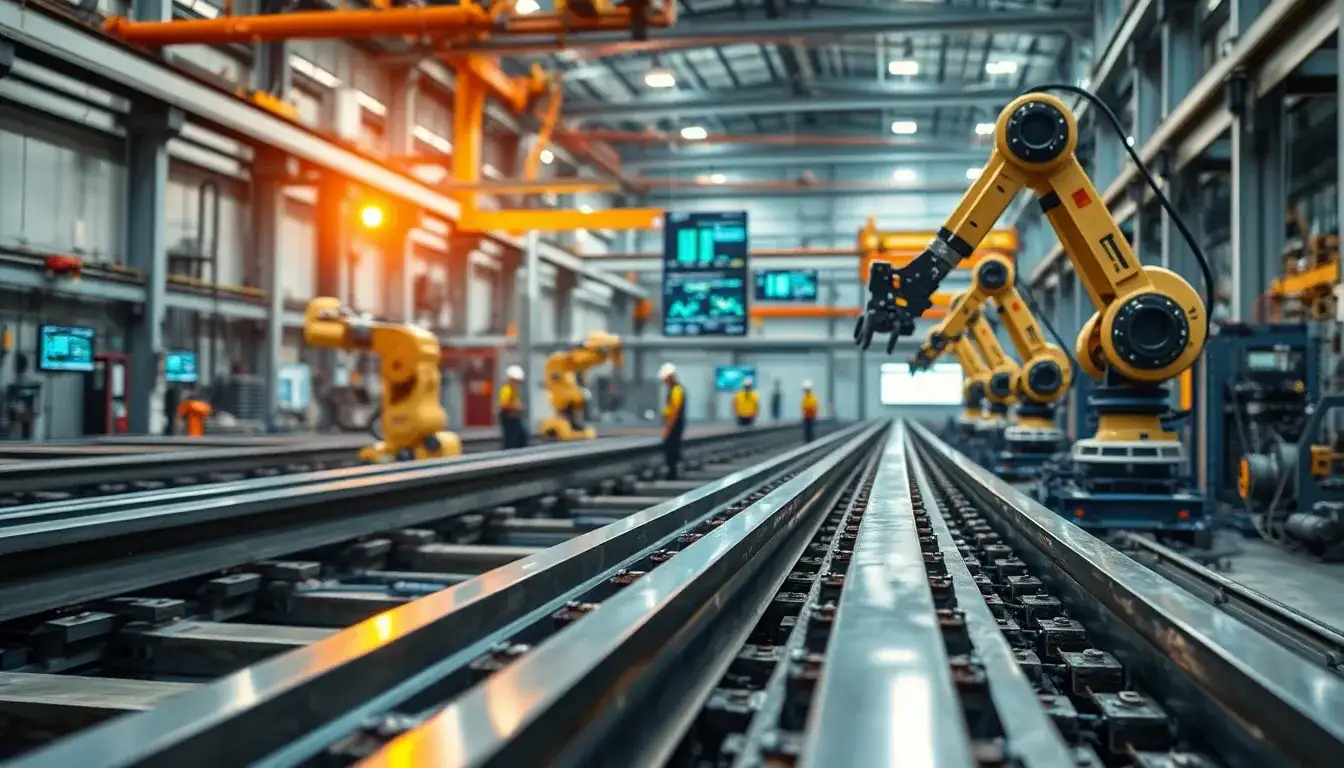
Recent Developments in Artificial Intelligence and its Impact on the Steel Industry
As of February 14, 2026, the steel industry is experiencing significant advancements in the application of artificial intelligence (AI) and automation. The integration of AI technologies is transforming production processes, enhancing efficiency, and improving product quality.
Steel production has seen a shift towards automation, with AI systems handling approximately 80% to 99% of operations, depending on the complexity of tasks. The use of AI in monitoring and controlling production has been instrumental in optimizing workflows, reducing waste, and ensuring consistent quality of steel products.
Currently, the industry is focusing on increasing the efficiency of production lines, with a goal of reducing production costs and enhancing overall output quality. The incorporation of AI-driven data analysis allows for real-time adjustments to processes, leading to improved operational performance.
The steel industry is also investing in AI for predictive maintenance, aiming to minimize downtime and increase reliability. With the implementation of advanced sensors and AI algorithms, manufacturers can predict equipment failures before they occur, significantly reducing maintenance costs.
In terms of market trends, the steel sector is projected to grow, with a focus on environmentally friendly practices and sustainable production methods. The integration of new technologies not only contributes to higher efficiency but also aligns with global sustainability goals.
As part of this technological evolution, companies are urged to enhance their data management systems and invest in AI-driven tools that facilitate better decision-making and streamline operations.
Future Prospects
Looking ahead, the steel industry is set to embrace AI’s potential fully. Initiatives to develop “smart factories” that utilize AI for automated processes are underway, with the aim of achieving higher production rates and improved product standards.
Furthermore, industry leaders are collaborating to establish standards for AI applications in steel production, ensuring that innovations lead to tangible benefits across the sector. The ongoing focus on AI will likely redefine competitive dynamics and create new opportunities for growth within the industry.
This transformation signifies a crucial shift in how steel is produced and consumed, highlighting the importance of embracing technology in a rapidly evolving market.
Original article by NenPower, If reposted, please credit the source: https://nenpower.com/blog/the-impact-of-ai-on-steel-manufacturing-innovations-and-efficiency-challenges/

