

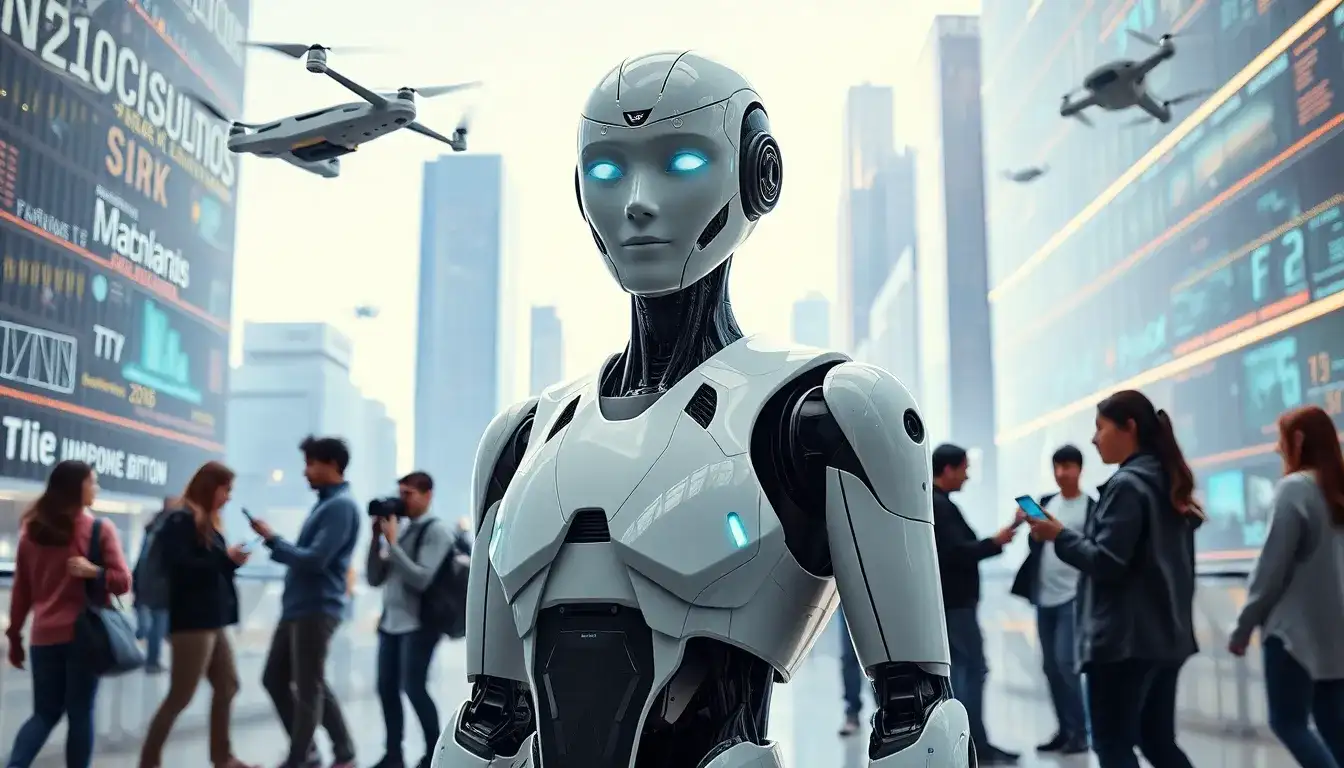
Robotics in Manufacturing and Service: The Vision and Reality of Humanoid Robots by 2026
As of February 7, 2026, significant advancements are expected in the field of humanoid robotics, particularly in their integration into manufacturing and service sectors. Recent demonstrations by various companies highlight the ongoing evolution of humanoid robots, which aim to achieve unprecedented levels of operational efficiency and capability.
The third-generation humanoid robots are designed to meet specific performance targets, with an increasing focus on their operational intensity. The question arises: what is the current status and future potential of humanoid robots? As we move towards 2026, the landscape of humanoid robotics is evolving rapidly, with a strong emphasis on artificial intelligence (AI) integration and enhanced functionality.
On January 31, 2026, a humanoid robot from a company named Xiao Yao made its debut at the Shenshan Bay Expo, showcasing its capabilities to navigate complex environments. This robot is part of a broader movement towards enhancing the functionality of humanoid robots, which are increasingly being viewed as essential in various sectors.
Through advancements in AI, humanoid robots are expected to achieve a level of sophistication that enables them to interact seamlessly with human environments. The goal is to create machines that can work alongside humans, improving productivity and efficiency across industries.
However, challenges remain. For example, humanoid robots must be able to operate effectively in diverse environments, whether in manufacturing plants or service sectors like hospitality and healthcare. As these robots become more integrated into daily operations, their design and functionality must evolve to meet specific industry needs.
Looking ahead, the development of humanoid robots will likely focus on achieving a balance between human-like abilities and machine precision. The integration of advanced materials and AI is crucial in this process, as companies strive to create robots that are both efficient and adaptable.
Moreover, the introduction of humanoid robots will not only enhance operational capabilities but will also raise questions about the future workforce and job displacement. Industry leaders are already discussing the implications of these advancements, aiming to ensure that the transition is smooth and beneficial for all parties involved.
In summary, the vision for humanoid robots by 2026 is one of increased integration and functionality within various sectors. As technology continues to advance, the expectation is for these robots to become pivotal players in enhancing productivity and innovation in the workplace.
Original article by NenPower, If reposted, please credit the source: https://nenpower.com/blog/the-future-of-humanoid-robots-insights-and-realities-leading-to-2026/

