

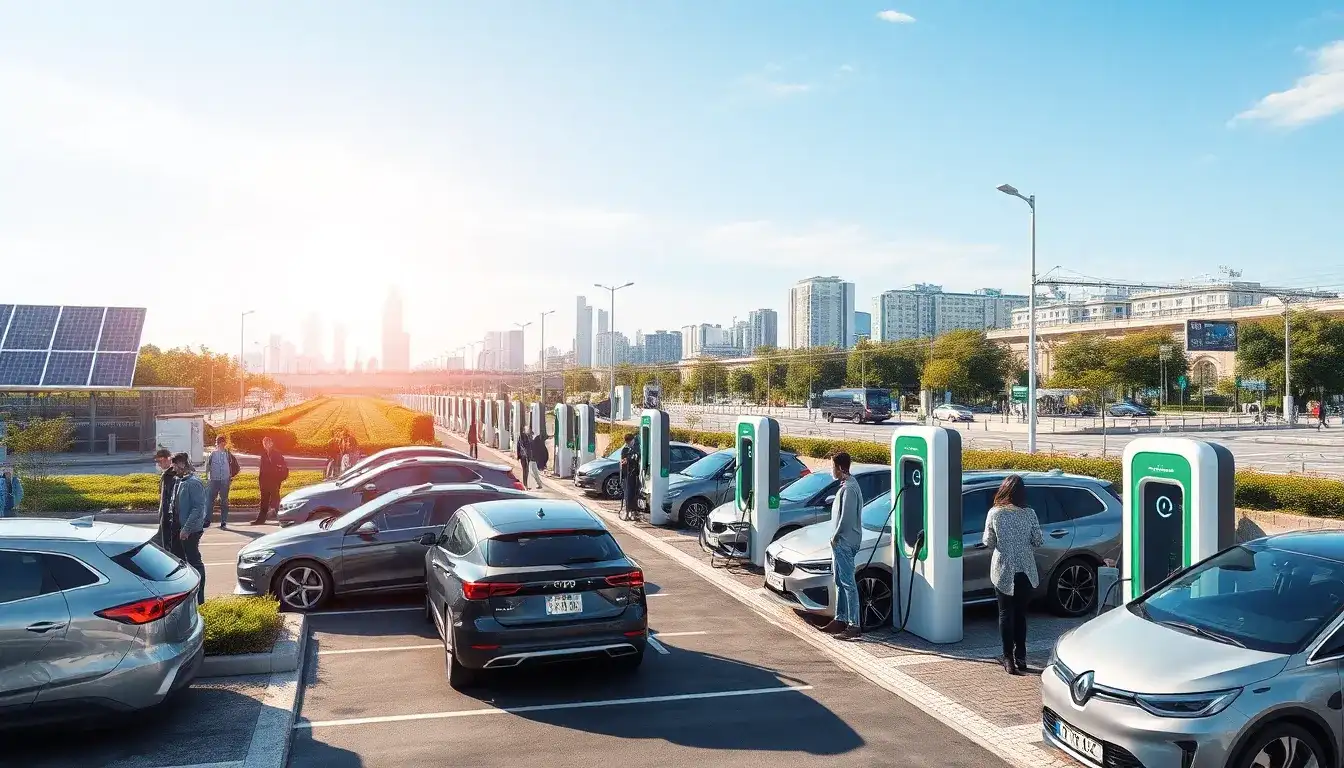
Electric vehicles (EVs) and their charging capabilities are often discussed topics in the new energy sector. As the demand for EVs surges, the question arises: What is the best solution for charging electric vehicles?
As of April 17, 2025, the pace of EV charging development is becoming a critical factor in the automotive industry. The EV market is rapidly expanding, particularly in China, where a network of charging stations is being constructed. The first major charging station, known as the “Super Charging Station,” has already been established, with plans to build over 4,000 additional stations nationwide to meet the growing demand.
Currently, there are over 500 Super Charging Stations in operation, and the network is expanding further. In addition to standard charging stations, the industry is also seeing the introduction of high-speed charging solutions, which are expected to enhance charging efficiency significantly. With the support of various partnerships, the expansion of the EV charging network is being prioritized by both governmental and private sectors.
As electric vehicles continue to evolve, the need for advanced charging technology becomes more evident. The introduction of ultra-fast charging stations is set to revolutionize the industry. These stations can deliver 2400 volts of power, allowing for a full charge in just a matter of minutes. This capability is crucial in addressing the range anxiety associated with electric vehicles.
Recent advancements indicate that by the second quarter of this year, a new generation of charging stations will be deployed, capable of charging electric vehicles at unprecedented speeds. The goal is to achieve a charging time of less than 100 seconds for a substantial amount of charge, thus significantly improving the user experience.
In terms of electric battery technology, the industry is seeing innovations that allow for faster charging and longer battery life. Current electric vehicles predominantly operate within a range of 480 kW to 600 kW for power output, while the charging rates typically fall between 4C to 6C. However, some high-performance models are pushing the boundaries towards 10C charging rates, which could potentially allow for full charges in under 10 minutes.
As the competition intensifies, manufacturers are looking to differentiate themselves through enhanced charging solutions and partnerships. The market is witnessing a surge in initiatives aimed at creating a robust infrastructure for electric vehicle charging, which is essential for supporting the increasing number of electric cars on the road.
The economic viability of charging stations is also a topic of concern. The construction costs vary significantly across different models of charging stations, with first-generation stations costing around 3 million yuan, while second-generation stations may cost approximately 2 million yuan. These expenses highlight the need for strategic investments and efficient resource allocation to ensure the sustainability of the electric vehicle ecosystem.
In conclusion, as electric vehicles gain traction worldwide, the development of a comprehensive and efficient charging infrastructure is paramount. With advancements in technology and the establishment of robust partnerships, the future of electric vehicle charging looks promising. The industry is poised for rapid growth, addressing both consumer needs and environmental concerns effectively.
Original article by NenPower, If reposted, please credit the source: https://nenpower.com/blog/the-future-of-electric-vehicle-charging-innovations-and-challenges-ahead/

