

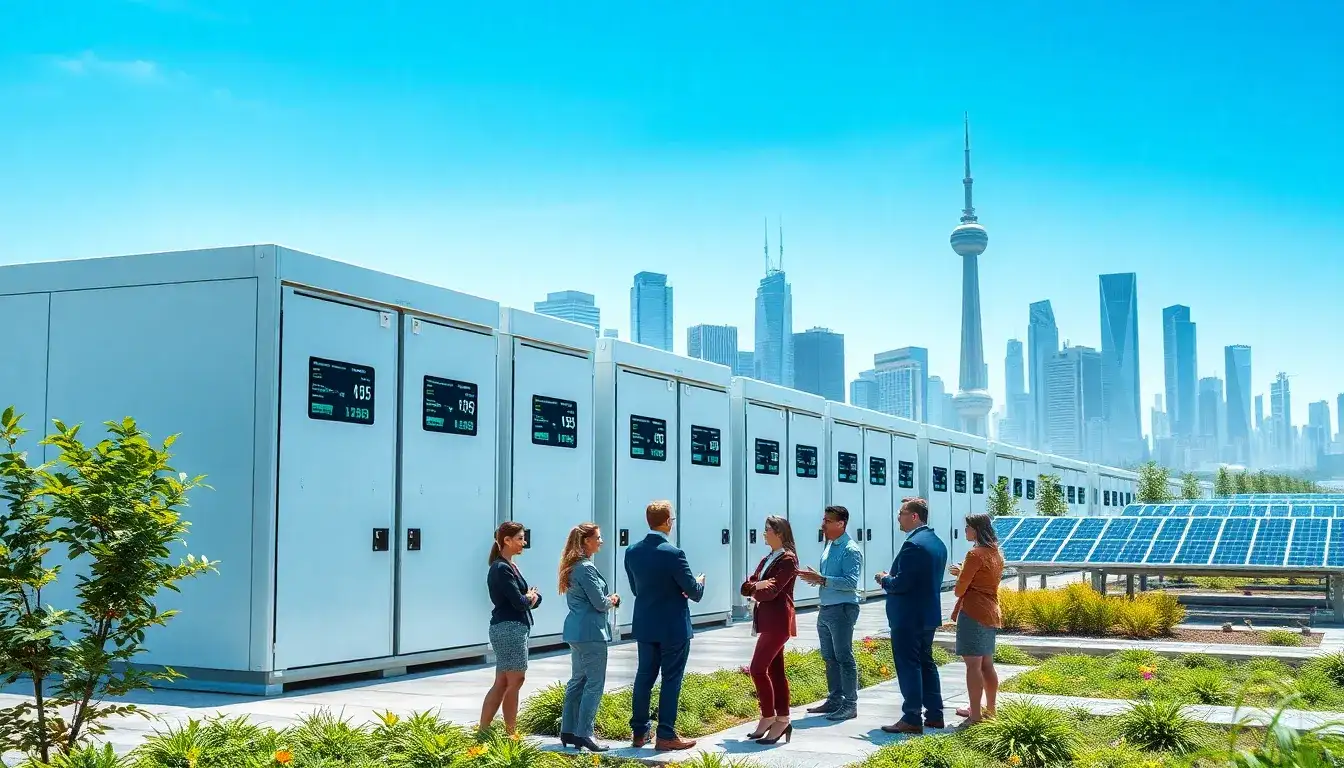
The Upcoming Boom in Commercial Energy Storage by 2025: Who Will Define the Next Generation of Energy Storage Standards?
As we approach 2025, the commercial energy storage market is poised for significant growth. However, significant challenges remain. For instance, a manager at an industrial park recently expressed frustration, stating, “Last year, we invested 300,000 yuan in energy storage cabinets, and this year our electricity costs have risen by 15%.” While the potential for profit in commercial energy storage seems promising, the reality is more complex.
On one hand, the gap between peak and valley electricity prices continues to widen. On the other hand, issues such as subpar energy storage cabinets leading to self-ignition, rapid efficiency declines, and soaring operational costs are causing headaches for business owners. Many find themselves in a dilemma, torn between the desire to utilize energy storage technology and the fear of its pitfalls.
According to the latest data from the China Energy Research Society, the market size for commercial energy storage in China is expected to exceed 280 billion yuan by 2025, with a compound annual growth rate of over 65%. However, more than 40% of users report issues such as “custom solutions not matching actual loads,” “system lifespan far below promises,” and “extremely slow after-sales response.” Behind these pain points, questions arise: Who is taking advantage of the situation? And who is genuinely committed to advancing technology and service?
Addressing Three Major Industry Pain Points: Does Your Energy Storage Cabinet Really Understand You?
Widespread “Pseudo-Intelligence”: Many manufacturers promote “smart energy management systems,” which often can only execute preset strategies, failing to optimize charging and discharging in real-time based on electricity price fluctuations and production loads. The result? Discharging when there’s no power and charging when at full load, significantly undermining economic benefits.
False Battery Ratings: It has become common for batteries to claim a lifespan of ten years but show over 50% capacity decay in just three years. A company in central China purchased a brand of energy storage cabinet, which was contracted to have a cycle life of 6000 times. However, after less than 18 months, its capacity dropped to 67%, with replacement costs falling back on the business, resulting in substantial losses.
Custom Equals Branding? The lack of modular design has led to delivery cycles extending up to six months. True customization should involve deep adaptation to production schedules, electricity usage curves, and site structures. However, many manufacturers still rely on merely “re-shelving and re-labeling” products, complicating installation, expansion, and maintenance.
Innovators Arise: These Energy Storage Cabinet Custom Manufacturers Are Redefining Industry Standards
Amidst the chaos, a group of leading custom manufacturers, focused on technology and customer-centric approaches, are emerging. They are not competing on price but are winning the market by emphasizing the value of the entire product lifecycle.
- Dingye Exhibition: As a leader in “full-case customization” for commercial energy storage, Dingye proposes a “scene-defined product” concept. Their core advantages include:
- Dynamic Load Modeling System: Utilizing 72 hours of electricity data collection and AI simulation to accurately match production rhythms, enhancing peak-valley arbitrage by over 23%.
- Modular Liquid Cooling Architecture: Supporting flexible power and capacity expansion, with on-site installation reduced to 7 days, allowing for future expansion without downtime.
- Five-Year Warranty and Remote Diagnostics: Their proprietary EMS system can preemptively alert for battery anomalies 14 days in advance, with fault response times under four hours, achieving true “unmanned operation.”
Crucially, Dingye has partnered with TÜV Rheinland to establish a reliability white paper for commercial energy storage, publicly sharing all test data to promote industry transparency.
- CATL’s Subsidiary “Times Smart Energy”: Leveraging CATL’s core technology, it focuses on high-safety lithium iron phosphate batteries with full-temperature control, ideal for high-safety-demanding environments like chemical plants and hospitals.
- Sunpower’s Storage Systems Division: As a leading inverter manufacturer transitioning into the storage space, their strength lies in integrated solar storage solutions, suitable for businesses planning to add storage to existing solar plants.
Future Trends: By 2025, Energy Storage Cabinets Will Evolve from “Equipment” to “Energy Assets”
Over the next three years, the industry will experience three major transformations:
- From Selling Hardware to Selling Services: Revenue-sharing based on electricity savings and energy management will become the norm.
- Widespread Digital Twins: Each energy storage cabinet will possess a “virtual twin” for predictive maintenance.
- Policy-Driven Compliance: Mandated integration with the grid scheduling platform will lead to the elimination of products lacking remote control capabilities.
Conclusion and Pitfalls to Avoid
When selecting an energy storage cabinet, don’t focus solely on price! Remember these four golden rules:
- Always request a genuine electricity usage simulation report; reject “one-size-fits-all solutions.”
- Ask for third-party cycle life testing reports, paying close attention to capacity retention after 6000 cycles at 25°C.
- Ensure the EMS system supports API integration with the company’s ERP for energy data visualization.
- Verify after-sales service coverage locally, or ensure on-site service capabilities.
By 2025, energy storage will no longer be an “add-on,” but a strategic infrastructure for businesses to reduce costs and enhance efficiency. Choosing the right partner is essential to maximize the value of every kilowatt-hour. Platforms like Dingye Exhibition, which focus on showcasing new energy equipment and facilitating technology connections, are vital links between quality manufacturers and end-users. The next industry transformation may very well begin with a precise collaboration.
Original article by NenPower, If reposted, please credit the source: https://nenpower.com/blog/the-future-of-commercial-energy-storage-who-will-set-the-next-generation-standards/

