

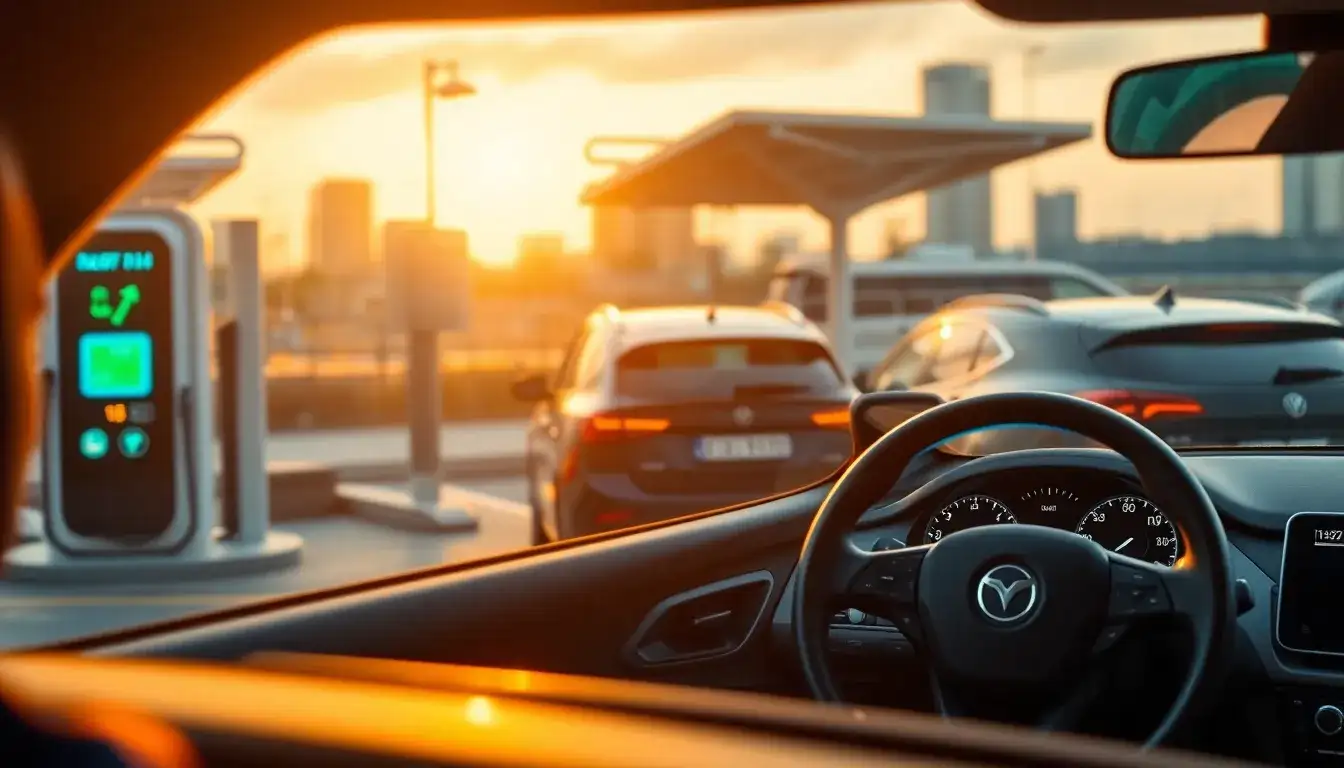
30 million new energy vehicle owners are perplexed: who will pay for “battery anxiety”? The power battery is the core of new energy vehicles and the source of anxiety for their owners. The development of new energy vehicles has surpassed a decade, and by the end of 2024, the number of new energy vehicle owners will exceed 30 million. However, the anxiety associated with power batteries has not diminished. From concerns about range to the inevitability of battery aging, from fears of spontaneous combustion to confusion over technical pathways, power batteries symbolize technological advancement while amplifying human anxiety. The “battery anxiety syndrome” has emerged as a unique phenomenon in the era of new energy vehicles. Once you purchase a new energy vehicle, these anxieties are inescapable.
Range Anxiety: When Numbers Become Psychological Constraints “Is a range of 600 kilometers sufficient?” This may be the existential question for every new energy vehicle owner at the time of purchase. Automotive companies continuously increase battery capacities, with ranges growing from an initial 200 kilometers to now 1000 kilometers. Yet, this numerical increase has not alleviated owners’ worries. Range is often overstated, and factors like weather can drastically reduce actual driving distance. One owner humorously remarked, “When the charge drops below 50%, I start to panic, as if my phone battery is low.” This anxiety stems from the vulnerable charging infrastructure. Although there are 4 million public charging stations nationwide, their uneven distribution and inconsistent charging speeds have rendered the seemingly reasonable vehicle-to-charging station ratio of 5.5:1 largely theoretical. This anxiety escalates exponentially during peak travel times, such as holidays. Some pin their hopes on battery swapping, while others are more optimistic about ultra-fast charging, seeking innovative solutions to ease range anxiety. However, the former lacks the scale to alter market dynamics, and the latter leaves users torn between concerns of “fast charging damaging the battery” and “the power grid being unable to support it.” Innovations in charging solutions resemble a never-ending marathon, with owners perpetually caught between “sufficient” and “excessive.”
Safety Anxiety: The Question of “Zero Spontaneous Combustion” Safety is not only a technological issue but also a test of human nature. When automakers tout “thermal runaway protection” in their brochures, owners lie awake at night while charging. Whenever news breaks of an electric vehicle fire, the discussion often links back to power batteries. As energy “warehouses,” their liquid electrolytes’ flammability hangs like a Damocles sword over consumers, rooted in a natural fear of chemical energy. Automakers may conduct rigorous tests, including punctures, immersion, and gunfire, to prove the safety of their batteries, showcasing “zero spontaneous combustion” alongside data from authoritative agencies. Yet, each incident of a new energy vehicle fire, regardless of the ultimate cause, erodes consumer trust. Professor Yang Xiaoguang from Beijing Institute of Technology has pointed out that traditional lithium batteries are nearing their safety limits, and the National Fire Rescue Administration has characterized the recent increase in electric vehicle fires as follows: first, thermal runaway in lithium batteries is unavoidable; second, effective firefighting and rescue solutions remain unresolved. This harsh reality challenges the automakers’ claims of “zero spontaneous combustion,” rendering even the most sophisticated thermal management systems inadequate. Consequently, eliminating battery safety anxiety becomes a daunting aspiration.
Longevity Anxiety: Time is the Curse for Saving Money on New Energy Vehicles “Replacing the battery costs more than the car itself” — this reality struck Shanghai owner Mr. Zhang when he received a quote of 220,000 yuan for a battery replacement for his Model S, while the vehicle’s second-hand value was only 160,000 yuan. These stark figures highlight the harsh truth that “the car is not old, but the battery is.” After experiencing the novelty of new energy vehicles, the pressing issues for 30 million owners arise as the 8-year warranty expires, leading to battery capacity and performance degradation. This results in potential replacement costs of tens of thousands of yuan, high maintenance expenses, and plummeting resale values, intensifying anxiety. Previous surveys indicated that among 59 sampled pure electric models, the average zero-to-wholesale ratio of power battery packs reached a staggering 50.96%, meaning that for a 200,000 yuan new energy vehicle, battery repair costs could exceed 100,000 yuan. Even with careful usage, power batteries inevitably undergo some degree of degradation after several years. When battery capacity drops to 60%-80%, the vehicle’s range significantly shrinks, potentially failing to meet daily needs. Particularly after the “8-year warranty” period ends, hidden costs associated with batteries become evident. With battery costs accounting for 30%-50% of the vehicle’s price, the dilemma of “replace the battery or the car” becomes a perplexing choice. The root of this anxiety lies in the misalignment between the battery and vehicle lifecycles. While manufacturers race to enhance energy density, advancements in cycle life development lag behind.
Choice Anxiety: The Technological Maze Increases the Risk of Disappointment As automotive companies increasingly communicate technology in simpler terms, they confirm the adage: “The more you know, the harder it becomes to choose.” Lithium iron phosphate, ternary lithium, sodium-ion, large cylindrical, semi-solid, all-solid… the disputes over power battery technologies, rapid iterations of range from 500km to 1000km, and increasingly high discharge rates of 3C, 4C, 10C, have ensnared users in a labyrinth of choices. Particularly in this current phase, on one hand, battery technology solutions are nearing developmental bottlenecks, with various new technologies stuck in a phase of potential yet unrealized; on the other hand, industry competition compels companies to sacrifice profits and existing customers to accelerate upgrades, increasing the likelihood of disappointing users. While the race for technological advancements and replacements among companies is commendable, users find themselves lost amid this technological bombardment.
Conclusion: At present, it appears that the various anxieties users experience regarding new energy vehicles largely stem from power batteries. Addressing these concerns requires a long journey ahead. Breakthroughs in battery technology, the restructuring of the charging ecosystem, controlling battery costs, and establishing health assessment and quality assurance systems are essential. However, deeper healing may lie in the industry’s honesty — acknowledging technological limitations, respecting user fears, and clarifying users’ understanding of new energy vehicles.
Original article by NenPower, If reposted, please credit the source: https://nenpower.com/blog/the-dilemma-of-30-million-electric-vehicle-owners-who-will-address-battery-anxiety/

