

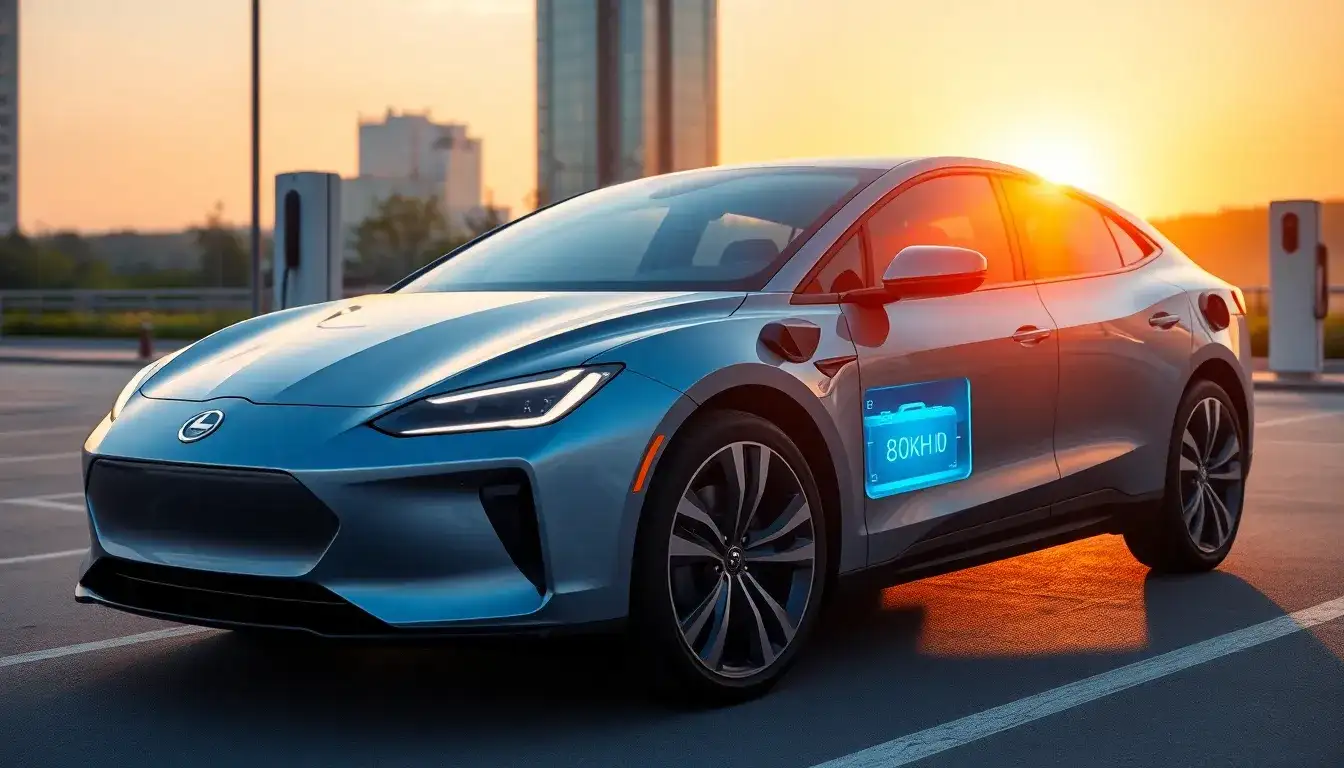
On January 13, at the sixth “Battery Day,” Honeycomb Energy unveiled the world’s largest plug-in hybrid battery pack, named “Fortress 2.0,” boasting a remarkable capacity of 80kWh, setting a new industry record. This product is expected to enter mass production in March 2026, with initial compatibility for D-class plug-in hybrid models, having already secured partnerships with various manufacturers. Driven by stricter carbon emission regulations and evolving consumer demands, this upcoming battery not only represents a breakthrough for Honeycomb Energy but also signals a new competitive landscape for the plug-in hybrid battery sector, emphasizing large capacity, high safety, and fast charging.
The “Fortress 2.0” showcases several advancements and product value propositions. It features a system-level highly integrated design that enhances both volume utilization and energy density by 6%. The battery cells incorporate supercharging graphite technology, enabling a 6C peak fast charge that can replenish energy from 10% to 80% in just 10 minutes, allowing D-class plug-in hybrid sedans to achieve over 400 km of pure electric range. Additionally, the battery pack boasts a cycle life exceeding 5000 charges and is compatible with 800V high-voltage platforms, ensuring sustained high-power output for vehicles.
In terms of safety, Honeycomb Energy has introduced nano-thermal ceramic insulation materials for the first time in a mass-produced battery pack, capable of maintaining insulation properties for 30 minutes at temperatures up to 1000°C. The outer casing is made from pultruded composite materials, providing a torsional stiffness of 30000 Nm/Deg, with a bottom impact resistance of 1000J. Its waterproof sealing is rated four times higher than industry standards, capable of withstanding 200 hours of immersion without leakage, and side collision resistance exceeds national standards by over two times.
According to Yang Hongxin, Chairman of Honeycomb Energy, the increasing demand for family and off-road vehicles with five or six seats has created a rigid requirement for “large capacity, high safety, and fast charging“. The “Fortress 2.0” utilizes a cell-to-pack (CTP) technology that eliminates the need for structural components, adopting a modular architecture that can flexibly cover the 60-80 kWh range, thereby helping automakers shorten development cycles and reduce platform costs.
On the same day, the company also introduced the “Honeycomb Short Blade 2.0” battery series, which continues to utilize ion oscillation charging technology, increasing fast charging speed by 20% while maintaining cost. The first generation supports 6C fast charging, achieving 80% charge in 10 minutes; the second generation aims for 12C, with an 8-minute charging time for 80%, and is currently in the pre-research phase.
The “large capacity plug-in hybrid” segment is projected to become the fastest-growing niche market. As countries implement stricter carbon emission regulations and consumer demand for long-distance commuting and outdoor camping rises, “large capacity plug-in hybrids” are expected to emerge as the fastest-growing segment from 2026 to 2028. By being the first to mass produce the 80 kWh battery pack, Honeycomb Energy aims to solidify its position in the high-end hybrid market, facilitating the accelerated adoption of high-power battery cells, thermal management materials, and 800V components across the industry.
Recent data from SNE Research indicates that in the first eight months of 2025, Honeycomb Energy’s overseas power battery installations reached 5.4 GWh, marking a substantial year-on-year increase of 593.4%, making it the fastest-growing mainstream battery manufacturer globally and ranking among the top ten in overseas market installations. The current plug-in hybrid battery market is characterized by competitive dynamics, with CATL and BYD holding leading positions, while companies like China Innovation Aviation and Ruipu Lanjun also focus on high-power, large-capacity products.
With the “Fortress 2.0,” Honeycomb Energy is building technological barriers while leveraging deep collaborations with manufacturers such as Stellantis, BMW MINI, and Geely, creating a dual advantage of technology and customer base. As more automakers introduce large-capacity plug-in hybrid models, the speed of technological iteration and cost control will become key competitive factors for battery companies. Honeycomb Energy’s proactive strategy positions it favorably to capture market share in the fastest-growing niche segment, driving the plug-in hybrid market towards a phase of high-quality development.
Original article by NenPower, If reposted, please credit the source: https://nenpower.com/blog/the-dawn-of-high-capacity-plug-in-hybrids-80kwh-battery-revolutionizes-the-market/

