

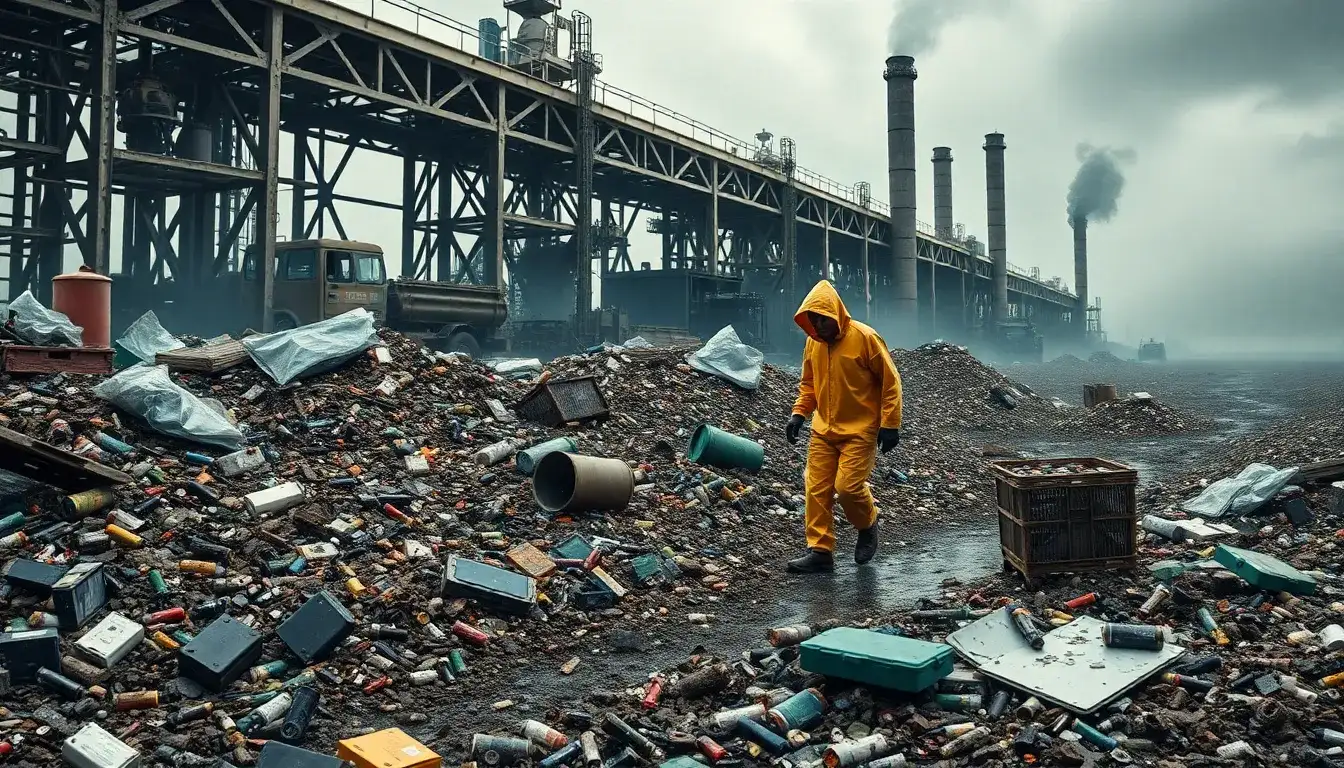
In the battery recycling sector, a stark contrast emerges between compliant companies and informal workshops, where the latter dominates the market. In a licensed recycling facility in Guangzhou, robotic arms meticulously dismantle retired batteries. Meanwhile, over 200 kilometers away in Dongguan, a factory is cluttered with scattered old batteries, where workers pry them open under dim lighting, some resorting to hammers for dismantling. These two scenarios reflect the ongoing surge in battery retirements. Projections suggest that by 2025, China’s retired power batteries will reach 820,000 tons, escalating to 2.6 million tons by 2028.
Approximately 70% of retired batteries are collected by small workshops that operate outside formal channels, often paying higher prices for these batteries. An insider from a listed power battery company informed that these workshops engage in rudimentary repairs and packaging or perform crude crushing before reintroducing them into the market. Lithium batteries contain several harmful substances, including nickel compounds in the cathode, classified as Group 1 carcinogens by the International Agency for Research on Cancer (IARC), with long-term exposure potentially leading to nasal and lung cancers. The anode material graphite can cause pneumoconiosis if inhaled over time, while lithium hexafluorophosphate in the electrolyte decomposes into hydrofluoric acid upon contact with moisture, which is highly corrosive and can cause severe skin and respiratory damage.
However, the small workshops absorbing these 70% of retired batteries often lack environmental assessment permits, safety production qualifications, and even basic business registrations. In contrast, the compliant companies, which only handle 30% of retired batteries, must adhere to stringent regulations set forth in the “2024 Guidelines for the Comprehensive Utilization of Retired Power Batteries from New Energy Vehicles”. Compliance includes everything from site planning and equipment configuration to process flow and resource recovery management.
Despite the lower costs of operations for small workshops, licensed companies struggle to acquire batteries proportional to their capacities, leading to a price imbalance in recycled metals and exacerbating environmental hazards, resource waste, and toxic leakages. In response to these issues, the government has initiated reforms. In February 2025, Premier Li Qiang chaired a State Council meeting that approved the “Action Plan for Improving the Recycling and Utilization System for Power Batteries of New Energy Vehicles,” emphasizing the need for digital technology to enhance monitoring throughout the battery lifecycle.
The typical profit model for underground battery recycling workshops involves high-priced acquisitions, brutal dismantling, and significant profits from resale, often at a 20% to 30% premium over regulated prices. Advertisements proclaiming, “Battery dismantling—nationwide service,” and “Purchasing 1000 tons of lithium iron batteries at competitive prices,” are common sights in the circles of battery recycling workshop owners.
When the capacity of a power battery declines to 80% of its original capacity, it qualifies for retirement and should enter a standardized recycling process. This process has two main pathways: either automakers transfer retired batteries through designated channels to licensed companies or specialized recycling institutions with the proper qualifications handle the batteries. Investigations reveal that battery recycling companies primarily source their materials through three channels: direct connections with vehicle manufacturers and battery producers, middleman purchases, and participation in industry tenders.
According to Zhang Lin, a representative from Shanghai Nonferrous Metals Network (SMM), leading battery companies typically post waste material handling tender information on their websites, while traders consolidate resources from small collectors and recycling points. A source from GreenMei elaborated on the two recycling paths. “When battery capacity dips to 60%, we dismantle and reconfigure them for use in energy storage stations and logistics vehicles, achieving tiered utilization. If the battery is unsuitable for secondary use, we extract critical metals like lithium, nickel, and cobalt through fine dismantling processes to regenerate battery materials, completing the resource loop,” they explained.
In an ideal scenario, retired batteries should flow into professional recycling channels for proper treatment. However, this is not the case; Hu Linlin, a senior executive at Jinsheng New Energy, noted that there are only 156 licensed companies, while the majority of retired lithium batteries end up in unregulated workshops. A report by the Development Research Center of the State Council revealed that as of the end of 2023, the standardized recycling rate for power batteries in China was less than 25%.
How do small workshops manage to capture such a significant portion of retired batteries? Hu Linlin pointed out a revealing incident at a tender meeting for a domestic vehicle brand, where a representative asked if there were any regulations mandating only licensed companies could participate. After extensive checking, the answer was “no.” As profit-driven entities, businesses tend to select the highest bidder, leading to many non-licensed companies winning tenders.
Currently, most retired batteries are being diverted through informal markets, preventing them from reaching compliant organizations. A battery industry insider lamented, “A significant amount of high-quality recycling capacity remains idle.” The battery recycling industry faces a supply-demand imbalance, with the “2024 White Paper on the Development of Lithium-ion Battery Recycling and Dismantling” indicating a theoretical annual capacity of 3.8 million tons versus an actual recycling volume of only 623,000 tons, resulting in a mere 16.4% utilization rate.
The phenomenon of “bad money driving out good” is evident, as many retired batteries flow to small workshops. The “price inversion” phenomenon—whereby retired battery “waste” is valued higher than new material—presents a critical challenge for compliant companies striving to compete with small workshops. Some of these workshops significantly inflate their purchase prices to capture market share, with discounts sometimes exceeding 100%.
Zhu Baoyi, chairman of Nandu Power, openly stated, “Our compliant companies cannot compete with small workshops as they have more flexible pricing mechanisms.” Hu Linlin noted that in competitive bidding, small workshops often outbid compliant firms by 10% to 20%.
Interviews reveal that prices for retired batteries in China are often determined through auctions or bidding, with discount coefficients (the price of waste materials relative to new goods) being a critical factor. In this context, the “price inversion” phenomenon reflects the unusual situation where the price of retired battery waste exceeds that of new materials. A senior executive from a tiered regeneration company in Tianjin reported that in 2022, the demand for power batteries led to significant price inversions, with some materials soaring to 130% and 140% of their original prices.
Typically, discount coefficients for retired batteries range from 30% to 50%, while the coefficients for higher-value batteries can reach 60% to 80%. This means that unpolluted batteries, which have not been contaminated by electrolytes, allow for a recovery rate of over 95%.
The lack of transparent pricing has resulted in a significant flow of retired batteries into the black market, with illegal dismantling accounting for over 30% in 2023. Cui Dongshu, secretary-general of the China Passenger Car Association, noted that the pricing mechanism is also a contributing factor to the “price inversion.” Recycling companies assess battery values based on the metal content of lithium, nickel, cobalt, and manganese, but there are no clear, feasible standards.
Leading recycling companies like GreenMei and BPP Cycle focus on regenerating retired lithium batteries and production waste. They employ specialized production lines to mechanically crush retired batteries and extract valuable metals and “black powder” components, which are then refined through complex processes to produce lithium carbonate and nickel sulfate, sold to manufacturers for new battery production, thus establishing a circular economy.
The complete circular economy chain for power batteries encompasses the stages of “recycling—tiered utilization—regeneration of materials.” The reality is that the initial recycling stage is severely starved, directly hindering the development of downstream industries. Tiered utilization companies face a shortage of battery sources, making it difficult for regeneration material manufacturers to achieve economies of scale. This structural imbalance places compliant companies in a precarious position, akin to “a skilled cook unable to make a meal without rice.”
Recycling and dismantling must be tailored to the types of batteries involved (such as ternary lithium or lithium iron phosphate) and the recycling objectives (tiered utilization or material regeneration). The typical process is divided into three main stages: pre-treatment, dismantling, and material recovery. During the pre-treatment stage, companies either immerse the batteries in conductive salt solutions for rapid discharge or place them in environments at -20°C for slow discharge. The dismantling stage involves crushing and sorting through rough and fine crushing machines, air flow separators, and magnetic separators.
The material recovery stage, being more technologically demanding, relies mainly on hydrometallurgy and pyrometallurgy. Hu Linlin detailed the financial commitment to environmental compliance, stating, “Our fixed asset investment in environmental facilities constitutes about 5% to 10% of total costs, averaging 8%. A single production line can cost as much as 20 million yuan.” This includes high-temperature cracking equipment, low-temperature extraction devices, electrolyte testing instruments, and high-temperature smelting facilities.
In the context of electrolyte management, the treatment of hazardous materials involves multiple processes: low-temperature baking for pre-treatment, followed by thorough inspections to ensure complete removal of residues. Any remaining parts undergo high-temperature cracking at over 800°C, and additional energy costs further raise our dismantling expenses by 10% to 20% compared to small workshops.
Investigations reveal that due to high dismantling costs, some licensed companies are operating at minimal profits or even losses, leading to declining utilization rates—prompting a vicious cycle within the dismantling industry. “The industry is experiencing a typical ‘bad money driving out good’ dilemma,” stated Yang Jian, an insider from a regeneration company. “With no profits in dismantling, some factories choose to halt production, while larger firms increasingly purchase from small workshops’ ‘black powder’.” The illegal products produced through manual dismantling are distorting market order due to their low costs.
In addition to soaring production line costs, licensed companies also face significant environmental expenditures. A representative from a licensed tiered utilization enterprise in Tianjin disclosed that compliant firms incur environmental treatment costs of 4,200 yuan per ton, while small workshops only spend 300 yuan per ton. “This is not just a case of bad money driving out good; it’s a scenario where illegal operations are undermining compliant production,” Yang Jian lamented.
In the dismantling process, using saline immersion for discharging is a standard practice among licensed companies, ensuring proper treatment of saline solutions and electrolytes. In contrast, small workshops often discharge wastewater directly into the environment to save costs.
Moreover, licensed companies face financial pressures due to research and innovation. “With the emergence of new battery structures like brick batteries and chocolate batteries, manufacturers are required to continually invest in research and development to adapt to evolving dismantling process demands,” one industry representative highlighted.
While the retired power battery business holds potential, challenges abound. In recent years, the price of lithium carbonate has significantly declined, squeezing profit margins for tiered regeneration companies. Zhang Lin observed, “The business of new energy batteries has become increasingly difficult.” The prices of key raw materials, like lithium, cobalt, and nickel, have remained low, affecting the overall operations of battery recycling companies.
For instance, in the case of lithium iron phosphate batteries, the economic viability of regeneration relies heavily on lithium carbonate prices. From 2020 to 2024, battery material prices experienced dramatic fluctuations. The surge in demand for new energy vehicles, which rose from 1.37 million units in 2020 to 3.52 million units, coupled with supply chain pressures, led to a “battery shortage” at the end of 2021, causing lithium carbonate prices to skyrocket from about 50,000 yuan per ton to 280,000 yuan, a fivefold increase.
In 2022, the sales of new energy vehicles jumped to 6.851 million units, exacerbating supply-demand imbalances and prompting battery manufacturers to scramble for stock. In response, lithium carbonate prices soared to 500,000 yuan per ton, with some periods seeing prices approach 600,000 yuan per ton.
However, this boom was short-lived, as by 2023, lithium carbonate prices plummeted dramatically from 480,000 yuan to around 100,000 yuan by year-end due to oversupply and the withdrawal of subsidies. As of 2024, lithium carbonate prices are expected to stabilize between 80,000 and 120,000 yuan per ton.
The steep drop in lithium prices has severely impacted tiered regeneration enterprises, with many struggling to maintain operations as the market realities have made it challenging to cover processing costs. A report by the China Electric Vehicle Hundred-Person Association indicated that the gross profit margin from wet recovery of 1 ton of lithium iron phosphate cathode material could be as low as 2.5% when lithium prices are around 70,000 to 80,000 yuan per ton, and could dip to -13.8% when prices fall to 50,000 yuan.
Hu Linlin expressed concerns over the “cost inversion” phenomenon, stating, “The current situation is causing many companies to lose motivation to operate.” The prices of regenerated lithium typically correlate with the futures prices of battery-grade lithium carbonate, but due to their nature, regenerated products are accepted at a lower value in the market. Hu Linlin explained, “Because they are recycled products, the market accepts them less favorably and has higher impurities than standard products, so we deliver at a discount rate of 94% to 98% based on real-time metal prices.”
Profitability for regeneration companies remains low, primarily reliant on processing fees, vulnerable to fluctuations in metal salt prices, discount rates, and recovery rates. Research analysts Li Tenghui and Li Yanan noted in their report that “the prices of metal salts are the main influencing factor.”
“Price inversion is a significant headache, as the price difference between buying recycled battery waste and selling regenerated materials only covers manufacturing costs, if at all, resulting in losses for companies,” remarked Yang Jian. He highlighted that few licensed companies are operating at full capacity, with some top firms only achieving 60% to 70% utilization rates, while others operate below 20%.
Violent dismantling practices create numerous risks. In a dimly lit workshop, dozens of swollen and deformed batteries lie haphazardly on a stained concrete floor. Two workers, lacking protective masks, engage in hazardous operations: one prying open a battery shell while the other strikes it with a hammer—an alarming scene shared by a workshop owner on social media. “When an industry holds commercial promise, unqualified businesses flood in, leading to environmental issues and industry chaos,” remarked Zhang Yongwei, vice-chairman and secretary-general of the China Electric Vehicle Hundred-Person Association.
A source from an automotive company revealed that “some unqualified workshops are looking to extract precious metals using fire or special solutions, selling them through obscure channels.” Open-air battery discharging, direct wastewater discharge, and leaks of electrolytes are prevalent in certain battery recycling enterprises, which prioritize collection over environmental safety, resulting in frequent environmental accidents.
Composed of cathodes, anodes, electrolytes, and separators, lithium batteries require the injection of electrolytes during production—a mixture of solvents, lithium salts, and additives. The pollution from electrolytes poses a hidden “time bomb” in the new energy industry. “During manual dismantling, electrolytes can easily evaporate or leak, releasing harmful substances that severely pollute the environment,” warned an industry source, noting that some small workshops operate outdoors, with pollution rates reaching 30%.
The electrolytes contain lithium hexafluorophosphate, a volatile organic liquid that reacts with moisture in the air, generating corrosive and irritating hydrogen fluoride fumes. “Hydrogen fluoride is not only highly irritating but also poses significant toxicity risks to humans and the environment,” emphasized Hu Linlin.
According to available data, mainstream processes (like high-temperature pyrolysis) prioritize metal recovery, typically incinerating or landfilling electrolytes for safe disposal. In contrast, small workshops often resort to dumping, burning, or landfilling methods. Properly dismantled retired batteries can transform into urban mines. However, small workshops, due to their crude dismantling methods, lack of equipment, and low technical standards, often fail to match the efficiency and precision of modern industrial production, leading to substantial losses during metal extraction.
During interviews, it was revealed that due to the absence of specialized equipment (like hydrometallurgy and vacuum pyrolysis), small workshops primarily use crude methods like burning and acid leaching to extract metals, yielding recovery rates of less than 50% for lithium, copper, and cobalt, while compliant companies achieve rates exceeding 90%. For instance, GreenMei’s 2023 annual report indicated a lithium recovery rate greater than 95%, with separator and electrode recovery rates also surpassing 90%.
“To ensure profitability for compliant companies, we must establish a favorable environment for them to thrive,” suggested Yang Jian, referencing the recent exposure of illegal workshops in Dongguan. “This cat-and-mouse game is far from over—many workshop owners are scheming to relocate to places like Guizhou and Henan, continuing their guerilla-style production. Mere exposure is insufficient to regulate industry chaos; we need legislative measures.”
While there are 156 licensed companies listed by the Ministry of Industry and Information Technology that meet industry standards, an app search reveals more than 40,000 registered battery recycling companies in China. An insider from a listed battery company lamented, “This indicates significant difficulties in managing the flow of batteries.” According to the “Interim Measures for the Management of Recycling and Utilization of Power Batteries from New Energy Vehicles,” battery manufacturers, automakers, and recycling companies are responsible for promptly uploading battery codes and vehicle-related information to trace the lifecycle of batteries from production to disposal.
Hu Linlin described the traceability system his company has established: “We have implemented a strict tracking system for the entire lifecycle of batteries, assigning dedicated personnel to oversee each step, ensuring ‘source traceability, destination tracking, and accountability.’” Yet, there are reports of collusion between small workshops and licensed companies, with the former paying “bridge fees” to utilize the latter’s qualifications for data uploading.
Yang Jian exposed the industry undercurrents: “During my visit to a workshop in Dongguan, I observed a warehouse filled with batteries valued in the hundreds of millions, lacking even basic fire safety facilities. When I questioned their qualifications, the owners casually responded that they were authorized by several licensed companies.” Notably, the recently approved “Action Plan for Improving the Recycling and Utilization System for Power Batteries of New Energy Vehicles” emphasizes the need for legal measures to standardize recycling practices.
Ouyang Minggao, an academician at the Chinese Academy of Sciences, emphasized the urgency of administrative and legal methods to enhance recycling management. He stated, “Currently, battery material prices are low, making it difficult to achieve significant profits purely from an economic perspective. When lithium carbonate prices reach 60,000 yuan per ton, it could encourage widespread recycling efforts, but at current prices, it’s challenging.”
Cui Dongshu argued, “It is inappropriate to emphasize civic responsibility without addressing fair pricing. The recycling of batteries should reflect resource prices, integrating real-time data from the London Metal Exchange for lithium, cobalt, and nickel futures.” He noted that since each new energy vehicle battery has an independent code, the metal content of each battery can be automatically calculated, allowing for reasonable residual value assessments based on real-time metal prices. This, in turn, could encourage consumers to recycle their vehicles through formal channels.
Finally, an industry insider suggested that the government should provide more tax incentives and policy support to larger, socially responsible licensed companies, fostering their growth and ensuring compliance within the industry.
Original article by NenPower, If reposted, please credit the source: https://nenpower.com/blog/the-dark-side-of-battery-recycling-toxic-hazards-and-informal-markets-dominating-70-of-the-industry/

