

Competitive Landscape of Solar Storage and Charging: Leading Companies Stranglehold and Cross-Industry Incursions
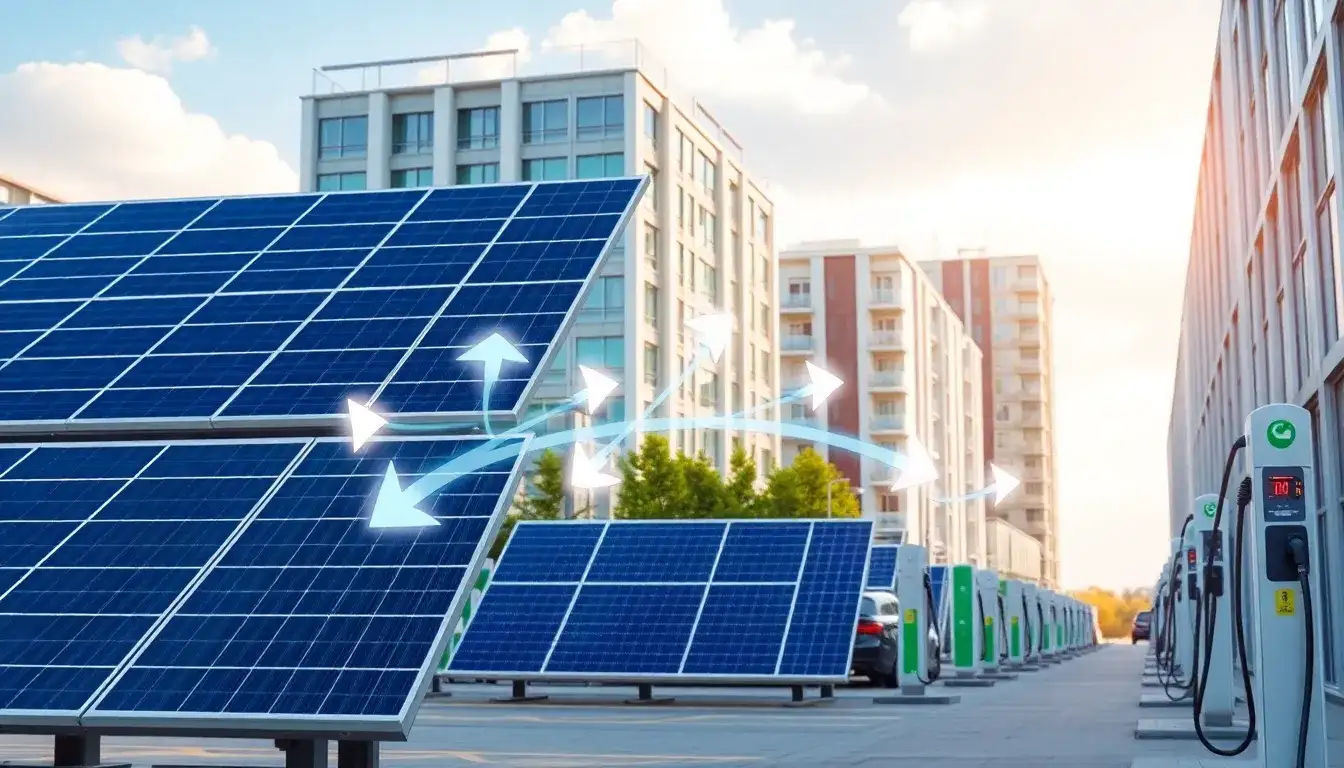
As the name implies, the integration of solar power generation, energy storage systems, and charging facilities transforms into a large-scale charging station. In recent years, the extensive development of photovoltaic and energy storage technologies, along with the rise of electric vehicles, has led to widespread discussion of this model, attracting a growing number of participants.
Why are companies optimistic about the solar storage and charging integration industry? The core logic behind this optimism lies in its deep alignment with the dual trends of energy and transportation revolutions. Through technological innovation and the restructuring of business models, this sector opens up a trillion-yuan market space.
Policy Incentives: China’s dual carbon goals clearly demand that by 2030, non-fossil energy consumption should account for 25% of total energy consumption. The solar storage and charging integration model is a crucial path to achieving this target. In fact, as early as 2020, the State Council issued the “New Energy Vehicle Industry Development Plan (2021-2035),” which called for coordinated dispatching of energy utilization for new energy vehicles alongside wind and solar power generation, promoting the construction of multifunctional integrated stations for solar storage and charging.
In recent years, the establishment of solar storage and charging integration stations has been supported by various local government subsidies. For example, Jiangsu and Guangdong have introduced “new energy + storage” subsidy policies, with Suzhou offering a subsidy of 0.15 yuan/kWh for user-side storage projects, with a maximum of 3 million yuan per project. Areas like Shanghai and Zhejiang have included solar storage and charging in their new infrastructure initiatives, benefiting from expedited land approval processes.
Market Demand: The explosive growth of electric vehicles is driving the construction of solar storage and charging integration stations. According to the latest statistics from the Ministry of Public Security, by the end of 2024, the number of new energy vehicles in the country is expected to reach 31.4 million, significantly increasing the demand for charging and placing immense pressure on the power grid’s peak load. Solar storage and charging integration can smooth out load fluctuations; for instance, the “solar storage charging inspection” super charging station built by Telda in Changzhou services over 500 vehicles daily while reducing distribution capacity demand by 30%. Moreover, 60% of China’s distribution networks face capacity shortages, particularly in rural areas. Solar storage and charging integration can establish microgrids near load centers to meet grid upgrade needs.
Technological Breakthroughs: Energy storage technology has achieved significant advancements, with lithium iron phosphate battery costs dropping to 0.6 yuan/Wh and cycle life exceeding 12,000 times. Huawei has developed a sodium-ion battery storage system that offers a cost per kilowatt-hour 15% lower than lithium batteries, successfully validated in Tibet’s weak power grid environment. AI predictions for photovoltaic power generation have achieved 95% accuracy, dynamically adjusting energy storage charging and discharging strategies, enhancing project profitability by 12%.
Economic Value: The profit sources for solar storage charging stations are diversified, including charging service fees, energy sales, grid interactions, and energy storage system operations. Solar storage charging stations can provide charging services to electric vehicle users for a fee while selling excess energy to nearby commercial and residential users. They can also interact bidirectionally with the grid, injecting surplus energy and participating in the electricity market; their energy storage systems can offer services like peak shaving and valley filling for energy dispatch.
Intense Market Competition: According to research from the QYResearch Institute, the global solar storage and charging market surpassed 65 billion yuan in 2023, with China maintaining a leading position with a 51.09% global market share. By 2025, the market size in China is projected to reach 113.424 billion yuan, indicating rapid growth. Consequently, more companies are entering this sector.
Overall, the competitive landscape of the domestic solar storage and charging integration market is characterized by a dominance of leading enterprises, the emergence of cross-industry players, and notable regional differentiation.
Leading Enterprises:
- Huawei Digital Energy: Focuses on “solar storage and charging integration + intelligent string network-type energy storage,” achieving 52.6 billion yuan in digital energy revenue in 2023, with a global market share exceeding 20%. A 400MW photovoltaic and 1.3GWh storage project deployed in Saudi Arabia’s Red Sea New City provides 100% green electricity.
- CATL: Concentrates on energy storage battery technology, expecting energy storage revenue of 57.3 billion yuan in 2024 and sales of 93GWh. They are collaborating with various local transportation groups to establish “solar storage and charging” projects at highway service areas with storage capacities of up to 30MW.
- Telda: A leading charging operator, with solar storage charging projects expected to make up 15% of its operations in 2024, has built integrated super charging stations in Changzhou and Wuhan that service over 500 vehicles daily.
- Sungrow Power Supply: Develops a full-stack technology covering “solar-storage-charging-discharging-inspection-swapping” to create intelligent microgrid systems for residential, commercial, and public charging scenarios.
Cross-Industry Players:
- BYD: Leveraging power battery and photovoltaic technology, BYD’s cumulative installed capacity of power and energy storage batteries reached 194.7GWh in 2024, with its energy storage business growing significantly faster than the industry average, promoting “solar + storage + charging” solutions in domestic parks.
- Tesla: Tesla has established a complete system of layout and technological innovation in solar storage and charging integration, focusing on building a sustainable energy ecosystem through the integration of photovoltaic generation, energy storage systems, and charging facilities.
- Xiaomi: Through investments in Keda Intelligent, Xiaomi is entering the energy storage sector, focusing on modular energy storage and microgrid control technologies, planning to launch integrated home solar storage and charging products.
Emerging Enterprises:
- Sig New Energy: Founded by former Huawei executives, focusing on a “five-in-one solar storage and charging machine.” Since its establishment in May 2022, it has shipped a total of 231MWh by the third quarter of 2024, capturing a market share of 24.3%, becoming the largest global supplier of stackable distributed solar storage solutions.
- Yuneng Technology: Specializes in micro-inverter technology and has been developing energy storage technologies since 2020. The company has established strategic partnerships with several well-known energy enterprises in China and executed multiple large-scale commercial energy storage projects.
Recent Developments:
On April 14, 2025, media reports indicated that the Xian City Investment Group’s project on Zhangba North Road successfully entered the integrated trial operation phase after preliminary preparations and adjustments. The project, which began construction in May 2024, features a 100.08kWp distributed photovoltaic system, a 125kW/500kWh vanadium flow battery energy storage system, and 20 dual-gun fast charging piles, with an average annual power generation of 97,000 kWh, equivalent to saving 29.1 tons of standard coal and reducing carbon dioxide emissions by 79.6 tons.
On the same day, the first fully DC integrated solar storage and charging system in Yunnan was put into operation. This project, co-built by Yunnan Electric Power Technology Co. and Southern Grid Yunnan Electric Vehicle Service Co., employs an all-DC energy architecture with a total distribution capacity of 700kW, covering multiple DC voltage levels from DC750V to DC48V, forming a closed-loop ecosystem of “photovoltaic generation-energy storage peak shaving-direct current electricity-flexible regulation.”
On April 12, 2025, the first integrated solar storage and charging demonstration station in Nanchang, Jiangxi, was inaugurated. This station combines photovoltaic generation, energy storage, fast charging piles, and services such as self-service car washing and driver assistance. It features a 205kW photovoltaic system, 200kWh energy storage, and 48 ultra-fast charging piles, aiming to create a microgrid through stored energy from photovoltaic generation.
Recently, NIO Energy signed a strategic cooperation agreement with Yunnan Transportation Group to build an integrated solar storage and charging station in Kunming, focusing on the construction of battery swap infrastructure for new energy vehicles.
At the recent Huawei China Digital Energy Partner Conference, Huawei emphasized that solar storage and charging integration is an inevitable trend, introducing its native solar storage and charging solutions and launching initiatives to capitalize on opportunities in the ultra-fast charging network.
Original article by NenPower, If reposted, please credit the source: https://nenpower.com/blog/the-competitive-landscape-of-integrated-solar-storage-and-charging-solutions-dominance-and-disruption-in-the-energy-market/

