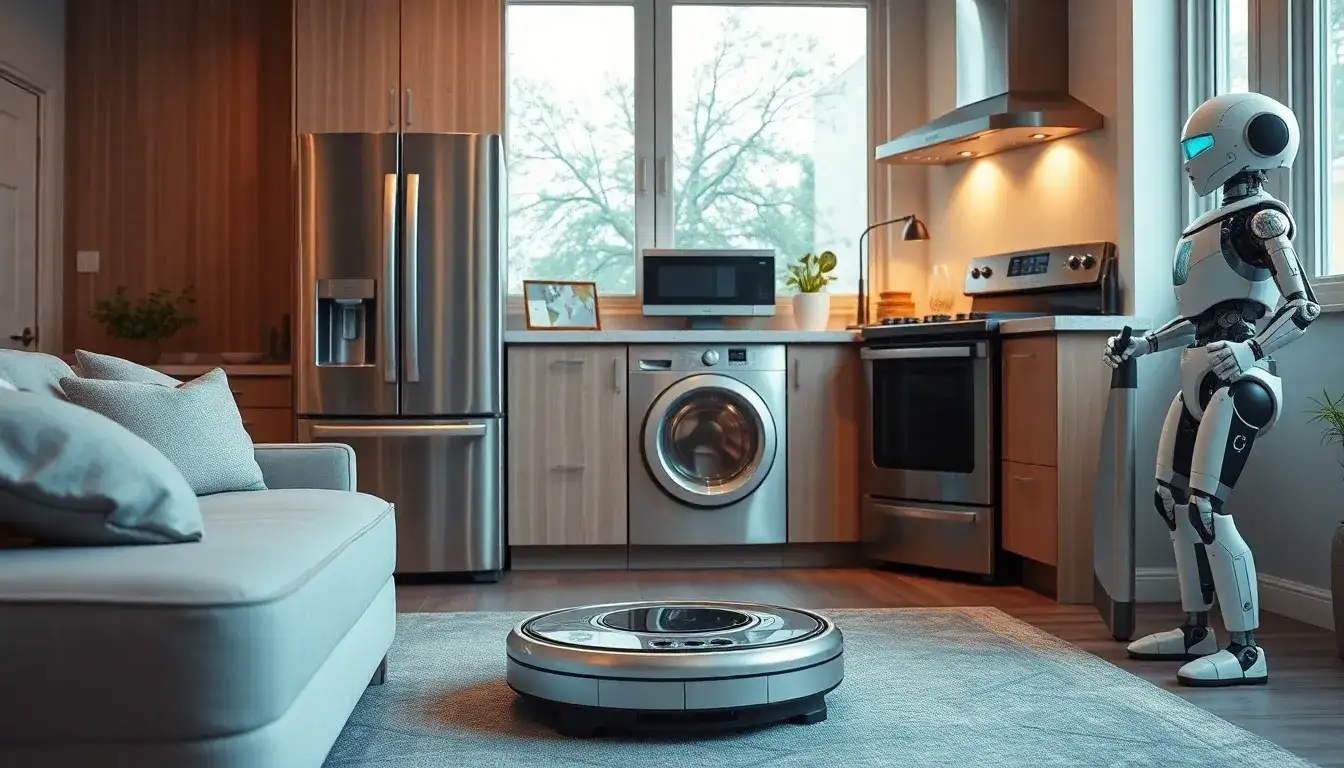
A Silent “Hunt”: The Battle Between Home Appliance Manufacturers and Robot Developers
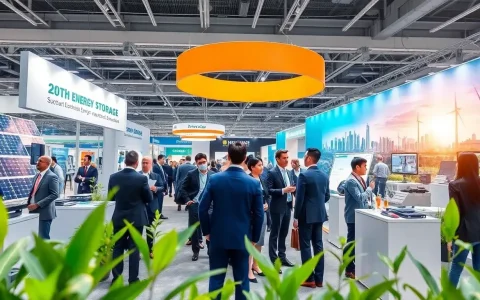
If you have attended AWE or CES in the past two years, you would have felt a strong sense of technological tension and fracture. On one side, traditional home appliance giants are striving to integrate complex AI chips, visual sensors, and even robotic arms into refrigerators, washing machines, and smart toilets. On the other side, robotics companies are attempting to train humanoid robots and robotic dogs to perform household tasks such as folding clothes, washing dishes, and frying eggs. We can summarize these two approaches as “home appliance robotization” and “robot appliance integration.”
Peeling back the flashy marketing façade reveals that this is not merely a contest of product forms. As we approach the crossroads of smart home technology in 2026, the question remains: who will ultimately “absorb” whom?
01. Divergent Moon Landing Plans: Specialized Geeks vs. Versatile Housekeepers
To understand the endgame, we first need to clarify the current battlefield. Both home appliance manufacturers and emerging robotics firms share a common goal: to eliminate the last remnants of physical labor in household settings. However, their approaches are fundamentally different. Appliance manufacturers aim for robotization, transforming appliances from “passive tools” into “embodied nodes.” Traditionally, appliances operated on a “command-execute” model—press a button, and they start working. Now, appliances are experiencing a “bodily awakening,” evolving from products responsible for cooling, heating, and cleaning into reliable “specialized robots.”
For instance, in the kitchen, Samsung’s AI refrigerator is no longer just a cold storage unit; it has transformed into a computational hub. Equipped with AI vision and vast data training, it can accurately identify ingredients, track expiration dates, and recommend recipes, effectively becoming a personal kitchen assistant that understands user dietary habits and optimizes energy consumption. Similarly, in the challenging bathroom domain, JOMOO has integrated self-cleaning robotic technology and smart sterilization features into its toilets, giving them new capabilities and “immune systems.”
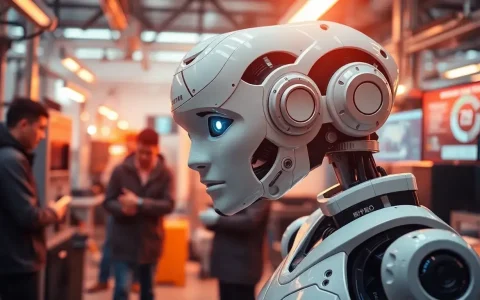
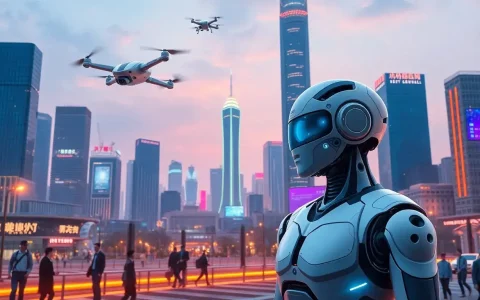
On a broader scale, JOMOO is collaborating with unicorn companies in the robotics industry to break down ecological barriers from the ground up. Conversely, robotics firms are pursuing “appliance integration,” using general intelligence to simplify appliances. Examples include humanoid robots from companies like Unitree, Figure, and Tesla’s Optimus, which follow an ambitious—perhaps overly ambitious—path. Their logic is that human living spaces (stair heights, door handle shapes, kitchen dimensions) are inherently designed for human use. Thus, the ultimate home terminal would be a humanoid robot, equipped with general AI capabilities. Instead of replacing all home appliances with expensive “smart” versions filled with complex sensors, one could simply invest in a “versatile housekeeper.”
If appliance companies are pursuing a “distributed expert system,” robotics companies are scheming for a “centralized general computing platform,” where the robot serves merely as a physical executor, relying on cloud-based models and edge computing to manage all household tasks.
02. Underlying Logic: Why “Who Replaces Whom” is a False Narrative
In public discourse, one often encounters a black-and-white argument: “Once general humanoid robots become affordable, smart appliances will become obsolete.” From a technical standpoint, this view is not only naive but also contradicts basic principles of physics and business. A bold assertion can even be made: the robotization of appliances and the appliance integration of robots will not be a replacement relationship for a long time.
First, there is the Moravec’s Paradox and the gap in “tolerance rates.” A well-known paradox in AI states that while it is easy for a computer to demonstrate adult-level logic in chess, enabling it to possess the perception and motor skills of a one-year-old child is incredibly difficult. Applying this paradox to household scenarios: while it is easy for a robot to understand a natural language command like “go wash the dishes,” having its dexterous hands pick up a slippery, oddly shaped ceramic bowl from a soiled sink and place it accurately in a dishwasher without breaking it requires massive visual-tactile multimodal integration and overcoming the challenging Sim2Real gap.
Moreover, the tolerance rates differ significantly. Appliances have a high tolerance; for example, if an AI-vision-equipped oven misidentifies an ingredient, the worst outcome might be slightly burnt bread, a manageable consequence. In contrast, a general robot has a low tolerance: a humanoid robot weighing dozens of kilograms could easily fall and break a TV due to a millisecond delay in its gait algorithm in a complex home environment. If its gripping mechanism fails, it could shatter a glass or even harm a human. Thus, relying on a general-purpose robot to perform all delicate and dangerous household chores has a long way to go in terms of technological maturity.
Secondly, the physical functionalities of appliances are irreplaceable. No matter how intelligent a robot is, it is still limited by the laws of thermodynamics and fluid mechanics. A robot can load clothes into a washing machine, but it cannot “become” a washing machine to spin-dry clothes rapidly. A robot can serve a steak but cannot transform into a -18°C freezer to preserve food. The fundamental physical and chemical processes of cooling, heating, and water circulation must be performed by specific physical devices (i.e., the appliances themselves). This means that the core value of traditional appliances (physical execution capability) cannot be stripped away by general robots.
03. Future Projection: The Struggle for Control and “Mutual Absorption”
Since neither side can eliminate the other, where does this battle lead? The answer lies in a “mutual absorption” regarding the household OS and API interfaces. The future home will be a distributed cooperative network where a “universal brain” controls a group of “powerful peripherals.”
Let’s first consider the fate of appliances: they may devolve into “robot-friendly peripherals.” When the integration of appliances into robotics matures and becomes widespread, the intelligent appliances currently striving to become “smart” may face brutal “value stripping.” Today’s smart appliances must install expensive touch screens, voice microphones, and processing chips to achieve autonomous interaction. If a highly capable multimodal household robot is already in the home, the UI and interaction modules of the appliances could become redundant.
Referencing the wave caused by the OpenClaw project, future smart appliances may evolve into “headless nodes.” For example, a washing machine might not even have buttons or screens; the only sign of intelligence would be a highly open and standardized API interface. It would only need to respond to network commands from the housekeeper robot, such as: “Activate heavy wash mode, set water temperature to 40°C, spin speed at 1200 RPM.” The greatest challenge for appliance companies will not be hardware manufacturing but rather establishing standards. Whoever leads the creation of the underlying communication protocols for “robot-friendly appliances,” ensuring that all brands’ robots must use this language to operate appliances, will secure influence in the future household ecosystem.
Next, consider the aspirations of robotics: to become the “router” of household computing power. For embodied intelligent robots, the ultimate form may not be a laborer endlessly cleaning and washing but a “router” and “master coordinator” of the physical household world. The value of general robots lies in their mobility across all scenarios and advanced logical reasoning abilities. They do not need to execute all household chores themselves; instead, they can issue commands through IoT protocols: detecting a dirty floor, they can send coordinates and cleaning instructions directly to a robotic vacuum, or anticipate the arrival of a homeowner by pre-setting the air conditioning and preheating the oven.
The robotization of appliances provides ultimate execution capabilities, while the appliance integration of robots offers advanced decision-making capabilities. The intersection of these two paths represents the true vision of a “household without chores.”
04. In Conclusion: Before Utopia Arrives
While the logical projections are perfect, numerous real-world barriers must be overcome by 2026.
First is the issue of privacy concerns: a walking, all-seeing surveillance system? To achieve complex navigation and interaction, humanoid robots will inevitably be equipped with high-resolution cameras, laser radars, and arrays of microphones, requiring real-time data exchange with cloud-based models. In an era where privacy data is increasingly sensitive, allowing a physically powerful “monitor” that records your private life to roam freely in bedrooms and living rooms poses more than just a technical challenge; it raises ethical, legal, and psychological acceptance issues. In contrast, fixed-position appliances with singular functions have a relatively controllable sense of privacy invasion. For embodied intelligent robots to cross this trust threshold may take longer than overcoming technical challenges.
Secondly, the harsh reality of ROI (Return on Investment) remains. Any technology that cannot demonstrate commercial viability remains confined to laboratories. Currently, a humanoid robot capable of executing simple household chores might cost tens of thousands of dollars, while a high-end dishwasher or floor cleaner costs only a few thousand. Expecting consumers to spend as much on a robot with lower efficiency than a specialized dishwasher, which might occasionally break dishes, is commercially absurd. Until the costs of computing power and mass production (especially for precision gears, dexterous hands, and high-density batteries) decrease exponentially, the notion of “buying a robot to handle household chores” will remain a luxury for tech enthusiasts rather than a necessity for the mass market.
Returning to our initial question: which approach—appliance robotization or robot appliance integration—is correct? In the long journey of technological development, this has never been a single-choice question. The “embodiment” of appliances continuously raises the baseline of household automation, reducing tedious physical labor, while the “appliance” aspect of general robots attempts to elevate the upper limit of household intelligence, covering scenarios that specialized devices cannot.
These paths are not a zero-sum game of mutual destruction but rather a “mutual journey” destined to intersect in the future. Appliance companies that refuse to open their foundational interfaces will ultimately be downgraded to mere hardware manufacturers. Conversely, if robotics companies fail to leverage the existing smart appliance ecosystem in a bid for total control, they may collapse under high R&D costs and low adoption rates. In the unpredictable landscape of 2026, the true winners will be those who can build robust “physical muscle” while being willing to open “neural interfaces” in their ecosystems.
Original article by NenPower, If reposted, please credit the source: https://nenpower.com/blog/the-battle-for-the-smart-home-appliance-manufacturers-embrace-robotics-while-robot-makers-eye-home-appliances/