

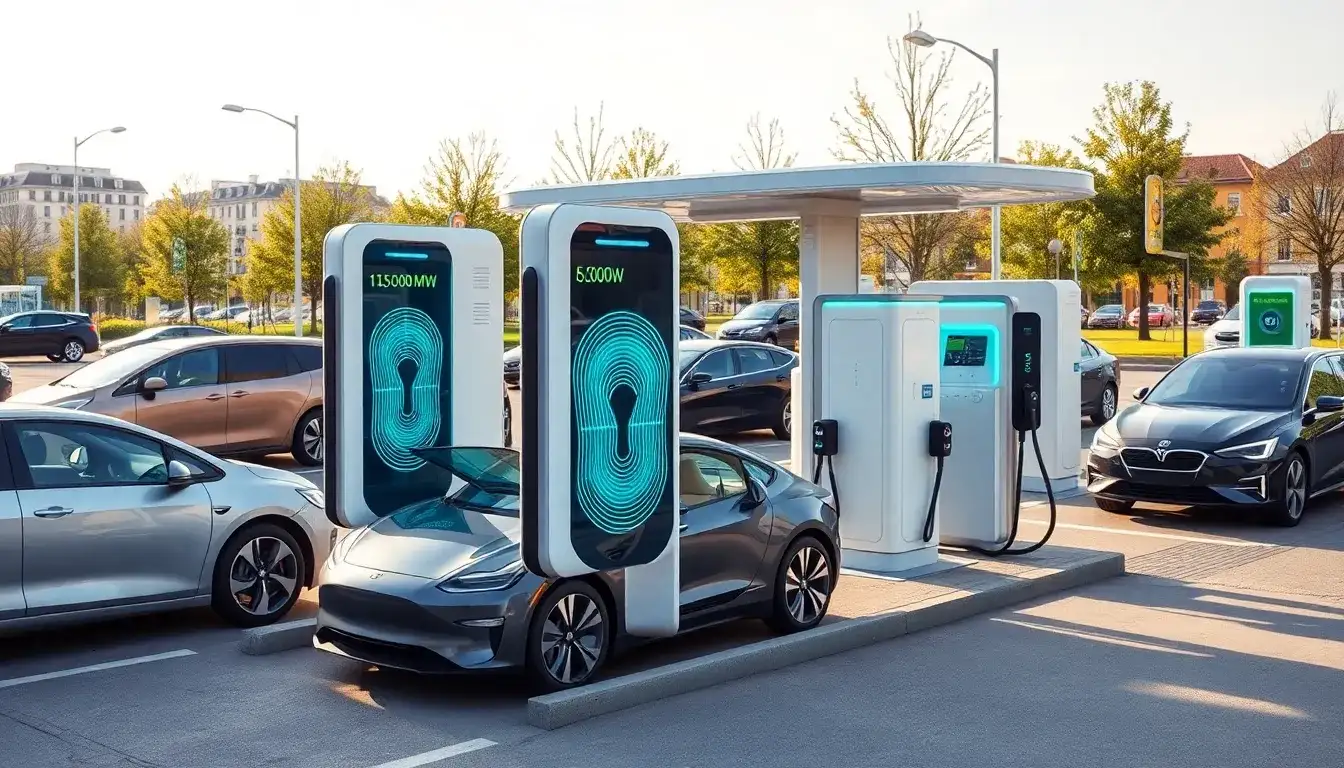
The issue of range anxiety has long been a significant barrier for consumers considering the purchase of electric vehicles (EVs). However, with the advent of the 800V platform and the inclusion of larger batteries, mainstream models now generally offer a range of 500-700 kilometers, alleviating some of these concerns. To truly achieve a level of convenience comparable to gasoline vehicles, NIO’s battery swap technology stands out, allowing users to fully recharge in just a few minutes. Yet, this method has its downsides, such as high capital costs, limited vehicle compatibility, and the frequent unavailability of charged batteries during peak times. Additionally, the rental model for battery usage can lead to costs that are similar to or even exceed those of traditional gasoline vehicles, diminishing its appeal. Therefore, I believe the future of new energy vehicles will likely involve a combination of large batteries and hybrid technology, or pure electric vehicles paired with ultra-fast charging systems. The former is already being realized by mainstream automakers with plug-in hybrid and range-extended products, while the latter is primarily feasible with BYD’s offerings.
In March, a groundbreaking announcement addressed the shortcomings of electric vehicles. BYD introduced its “Megawatt Flash Charging” technology, which has been implemented in the Han L and Tang L models, achieving the fastest mass production charging speeds globally—charging for just five minutes to enable a range of 400 kilometers. This innovation effectively resolves user concerns regarding charging times, ushering in a new era referred to as the “Megawatt Era.” Users have taken to social media to jokingly advise against charging alongside BYD vehicles, as they seem to “steal electricity.” This phenomenon arises from a combination of technological advancements and the charging station infrastructure, where BYD’s voltage and high current technologies allow for optimal utilization of charging stations. Under a fixed total power limit, efficient vehicles like BYD’s can absorb surplus power that lower-efficiency vehicles cannot use, making this occurrence more noticeable given BYD’s significant market presence.
The arrival of megawatt flash charging brings with it the advantage of full compatibility across various charging scenarios. For instance, BYD’s innovative “smart boost” technology allows vehicles to seamlessly connect with existing public fast charging stations, ensuring users have no specific charging station preferences. In common single-gun charging modes, charging times are up to 45% faster than industry standards, significantly enhancing charging speeds. The unique “dual-gun charging” technology can nearly double charging power, transforming public stations into ultra-fast charging points, with charging times 70% quicker than standard rates.
The Han L, equipped with megawatt flash charging technology, boasts an impressive 0-100 km/h acceleration in just 2.7 seconds for the pure electric all-wheel-drive version, comparable to high-end supercars, while the Tang L achieves this in 3.9 seconds. With a starting price of around 200,000, these vehicles outperform competitors like the Xiaomi SU7. Since their launch in April, both models have continued to see strong sales. Official data shows that the initial month sales reached 10,483 units for the Han L and 11,406 units for the Tang L, contributing to a total sales figure of over 40,000 units for the Han-Tang family in April alone. The introduction of megawatt flash charging technology fundamentally addresses user concerns regarding charging, and the market’s enthusiasm reflects consumer confidence and preference for this innovation.
Despite BYD’s rapid expansion of charging stations, the growth in user numbers has outpaced their progress. To maintain their commitment to widespread megawatt flash charging, they must seek new breakthroughs. On May 31, 2025, during the Guangdong-Hong Kong-Macao Auto Show, BYD launched the “Megawatt Flash Charging – 10,000 Stations Co-Building” initiative. They announced partnerships with Xiaoju Charging to construct 10,000 megawatt flash charging stations and with Xindian Road to build an additional 5,000 stations. Xiaoju Charging, a smart charging operator under Didi, has collaborated with over 8,400 merchants and served more than 34 million users, while Xindian Road connects with over 90% of public charging stations across more than 400 cities. This collaboration will accelerate the deployment of megawatt flash charging stations, helping to establish a nationwide network.
In addition to collaborative efforts, BYD has previously announced plans to build 4,000 megawatt flash charging stations, with over 500 already completed, covering more than 200 core cities nationwide. In the future, we can expect to see an increasing number of megawatt flash charging stations installed along highways and urban road networks, making charging as convenient as refueling, and allowing more users to experience the benefits of megawatt flash charging technology.
In conclusion, megawatt flash charging enhances the efficiency of electric vehicle charging to match that of refueling gasoline vehicles (with 5 minutes providing a range of 400 kilometers), effectively eliminating range anxiety and addressing the last significant hurdle for electrification. BYD, in partnership with Xiaoju Charging, Xindian Road, and others, aims to build over 15,000 flash charging stations, covering critical highway and urban areas, turning the concept of “charging like refueling” into reality. The scale of megawatt flash charging not only sets a new standard for charging infrastructure but also serves as a key driver in phasing out gasoline vehicles.
Original article by NenPower, If reposted, please credit the source: https://nenpower.com/blog/the-arrival-of-15000-mw-fast-charging-is-there-still-a-future-for-battery-swapping/

