

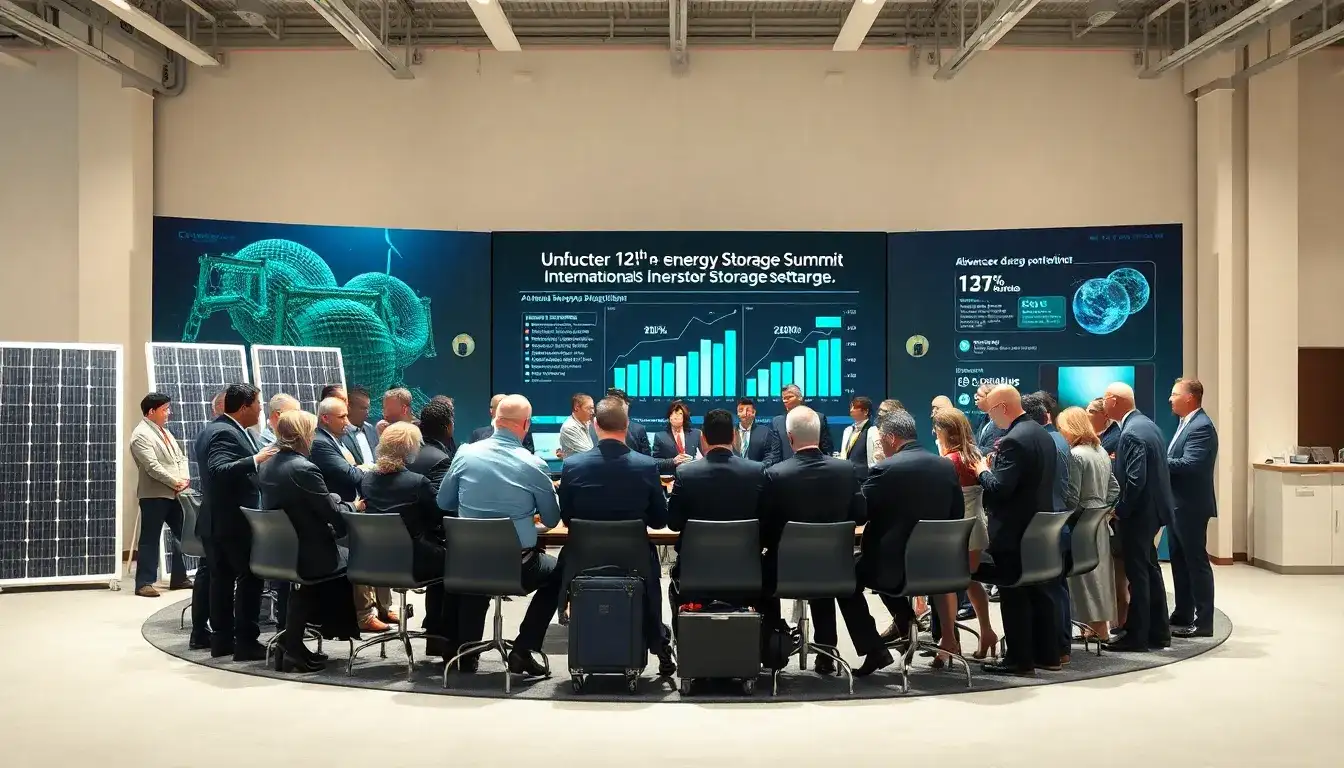
The 13th International Energy Storage Summit and Exhibition (ESIE2025) opened in Beijing on April 10. Numerous participating companies showcased their latest achievements and innovative applications in the energy storage technology sector. From advanced battery products to efficient flywheel energy storage technology, and from intelligent energy management systems to diverse energy storage applications, the exhibition highlighted the vibrant vitality and limitless potential of the energy storage industry.
“At ESIE2025, we released the ‘BM2T Battery Management Technology White Paper,’ introducing new ideas aimed at transforming traditional battery management practices,” said Zhou Jianjie, Chief Technology Expert at Sunshine Power Co., Ltd., in an interview with the Securities Daily. He emphasized that batteries should not be equated with energy storage systems; understanding, managing, and utilizing batteries effectively is essential for achieving safer, more efficient, and longer-lasting energy storage solutions.
Driven by the “dual carbon” goals, China’s energy storage industry is experiencing rapid growth. With its unique advantages and rapid advancements, energy storage technology is playing a crucial role in supporting the stable development of new power systems and making significant contributions to energy transition and green development in the country.
Intensive Policy Launches
As the construction of new power systems progresses vigorously, challenges to the stability and reliability of traditional power systems are intensifying due to the large-scale integration of renewable energy sources like solar and wind power, along with a continuous increase in power demand. In this critical juncture, energy storage technology is emerging as a key support system to address various issues within the power system.
“During periods of power surplus, energy storage technology acts like diligent bees, storing excess energy. Conversely, in times of power shortages, it swiftly releases energy to replenish the power system, effectively balancing supply and demand and significantly enhancing the stability and reliability of the power grid,” explained Chen Zhiyuan, Head of the Solutions Department at Xianwei Energy Technology Co., Ltd., during ESIE2025. He noted that the role of energy storage technology in new power systems is increasingly prominent, facilitating the absorption and utilization of renewable energy and significantly reducing instances of curtailment.
In recent years, significant advancements in energy storage technology have been made, and commercial applications have gradually matured. This year has also seen a surge in policy initiatives. In February, the Ministry of Industry and Information Technology, along with seven other departments, jointly issued the “Action Plan for High-Quality Development of New Energy Storage Manufacturing Industry,” providing direction for the future of China’s energy storage manufacturing sector.
In January, the National Development and Reform Commission and the National Energy Administration released a notice clarifying that energy storage is not a prerequisite for the approval and grid connection of new renewable energy projects. This announcement marked the end of the controversial “mandatory energy storage for new energy projects” policy.
During the exhibition, Han Jingtao, Vice President of Products at State Energy Rixin Technology Co., Ltd., stated, “The end of the mandatory energy storage requirement has broken the previous linkage between energy storage configuration and the approval of renewable energy projects, providing more flexibility for project development.” This policy adjustment allows renewable energy projects to independently choose whether to include energy storage based on their needs and circumstances, thereby reducing investment costs and improving economic benefits.
Under policy guidance, the new energy storage manufacturing industry is expected to accelerate technological innovation and industrial upgrading, improving product performance and reliability, reducing production costs, and enhancing market competitiveness. According to incomplete statistics from the Energy Storage Application Branch of the China Chemical and Physical Power Industry Association (CESA), 58 energy storage-related policies were issued in February 2025, covering various areas such as finance, electricity market participation, and energy storage facilities.
Despite the thriving energy storage industry, challenges remain, including rapid capacity expansion, intense price competition, and profitability issues. As the industry seeks to innovate and commercialize energy storage technologies, further self-regulation and comprehensive planning are necessary.
Si Peiyuan, Director of the Membership Department at the China Electric Power Equipment Management Association, noted that companies need to enhance their management and reasonably control the speed of capacity expansion to avoid vicious competition. While there have been achievements in energy storage technology research and development, key performance indicators such as energy density, cycle life, and safety require further improvement. In terms of market development, the demand for energy storage solutions has not yet been fully realized, necessitating further exploration and innovation.
Intensifying Market Competition
In recent years, significant changes have occurred in China’s energy supply and demand landscape, leading to profound adjustments in the power generation structure. The share of coal-fired power, which once dominated, has steadily declined over the years, while the total installed capacity of renewable energy has rapidly increased, now rivaling coal power.
Amid this energy transition, the energy storage industry faces unprecedented opportunities and challenges. Insights from financial reports of leading energy storage and battery companies reveal dynamic industry trends. Leading enterprises are actively investing in energy storage technology, aiming for qualitative leaps in key indicators such as battery energy density, charge and discharge efficiency, and cycle life. Concurrently, the expanding market share in the energy storage sector has attracted numerous companies to enter.
Notably, despite the record growth in energy storage capacity, many energy storage plants are underutilized. According to the “2024 Statistical Data of the Electrochemical Energy Storage Station Industry” released by the China Electricity Council, the average utilization rate of renewable energy storage in 2024 improved to 32% but still fell short of the 52% utilization rate for grid-side energy storage. This indicates that there is still room for improvement in the utilization of renewable energy storage stations.
Furthermore, competition within the energy storage industry is becoming increasingly fierce. As lithium carbonate prices continue to decline, the prices of energy storage cells are also dropping. To capture market share, some leading companies have begun pushing for extreme cost reductions in lithium battery production and further price cuts through better management of non-production materials.
In this competitive landscape, companies attending ESIE2025 presented their solutions to stand out. Zhou Jianjie emphasized the need for the energy storage industry to swiftly reverse the trend of disordered, low-price competition by focusing on value-driven competition centered on safety, efficiency, and user-friendliness. Sunshine Power is collaborating with relevant industry organizations to promote the standardization of product standards, testing protocols, project implementation, and grid acceptance processes.
Liu Zhi, Deputy Chief Engineer of Wind Power Technology (Group) Co., Ltd., stated, “The energy storage industry should actively respond to policy changes and fully support the integration of renewable energy into the electricity market. Leveraging our years of product and operational experience in the renewable energy sector, we are deeply exploring technology and product development in integrated wind and storage solutions to optimize joint scheduling and enhance trading returns. As we enter the era of autonomous energy storage configuration, we are actively exploring new energy storage batteries to better match grid demands and reduce the cost of energy storage per kilowatt-hour.”
Lu Li, Senior Director of Strategic Marketing at Shenzhen Yingfei Yuan Technology Co., Ltd., shared that the company invests over 10% of its annual revenue in research and development, focusing on core technologies and applications in digital energy, while continuously enhancing its core technology system to build a solid technological “moat.”
During the series of exhibitions and forums at ESIE2025, many industry professionals expressed the need to deepen the marketization process of energy storage. Strategies such as leveraging integrated hardware and software solutions, increasing research investment, and broadening the price fluctuation range in the spot market are essential to unlock profitability in energy storage projects and enhance the core competitive advantages of enterprises in the era of autonomous energy storage configuration.
Original article by NenPower, If reposted, please credit the source: https://nenpower.com/blog/the-13th-international-energy-storage-summit-highlights-dual-challenges-of-policy-benefits-and-market-competition-in-the-growing-energy-storage-industry/

