

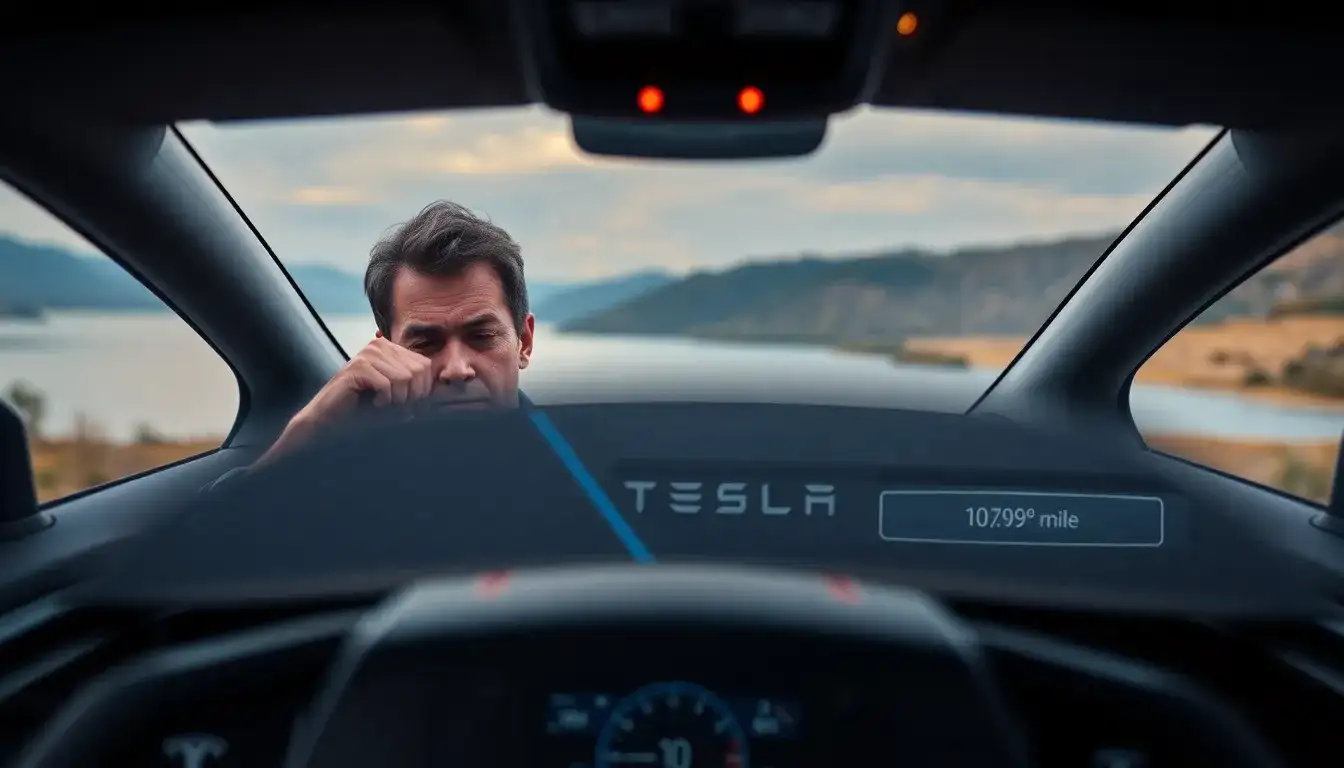
Many experienced drivers are likely familiar with the concept of a “happy meter.” This term refers to the readings displayed on a vehicle’s dashboard that indicate fuel or energy consumption, which are often lower than the actual amounts used. This can create a false sense of efficiency for the owner, thus earning it the name “happy meter.” In recent years, with the rise of electric vehicles (EVs), the term has taken on a new meaning, specifically related to the estimated range of these vehicles. Some electric models display a range that significantly exceeds the actual distance they can travel.
Such an issue has come to light with Tesla vehicles. Reports indicate that a owner of a 2020 Tesla Model Y has filed a lawsuit against the company, alleging that Tesla does not calculate mileage through traditional methods but rather relies on algorithms, energy consumption metrics, and driving behavior software, leading to inflated mileage readings. The owner noted that as the vehicle approached the end of its warranty period, the mileage data began to show an unusual increase. Despite no change in daily driving habits, the average daily mileage surged from 55.5 miles to 72.5 miles, representing a 30% increase. Over a six-month period, while other vehicles recorded an average of 6,086 miles, the Tesla Model Y reported a mileage of 13,228 miles.

The owner argues that such inflated readings not only risk exhausting the warranty coverage prematurely, resulting in higher repair costs, but also lead owners to purchase extended warranty services. It's important to note that this issue of inflated mileage is not isolated to just this one Tesla owner; many users on Tesla forums have expressed concerns about discrepancies between their vehicle's recorded mileage and their actual driving patterns, reporting significant differences compared to other vehicles in their households.

The "traditional methods" of calculating mileage referenced by the Tesla owner likely refer to the conventional method of measuring distance based on tire rotations. In the era of traditional gasoline vehicles, this was the standard practice for obtaining mileage data. However, with the advent of new energy vehicles, cars have become increasingly sophisticated with advanced algorithms, leading to a host of issues that can frustrate owners. In essence, modern electric vehicles are not purely mechanical products but are more akin to electronic devices. Notably, Xiaomi's automotive chairman, Lei Jun, once remarked that intelligent cars are essentially large smartphones equipped with four wheels.

Finally, we would like to ask Tesla owners in the domestic market: Have you experienced any instances of a "happy meter" with your vehicle?
Original article by NenPower, If reposted, please credit the source: https://nenpower.com/blog/tesla-owners-warn-of-inflated-mileage-readings-beware-of-the-joy-meter/

