

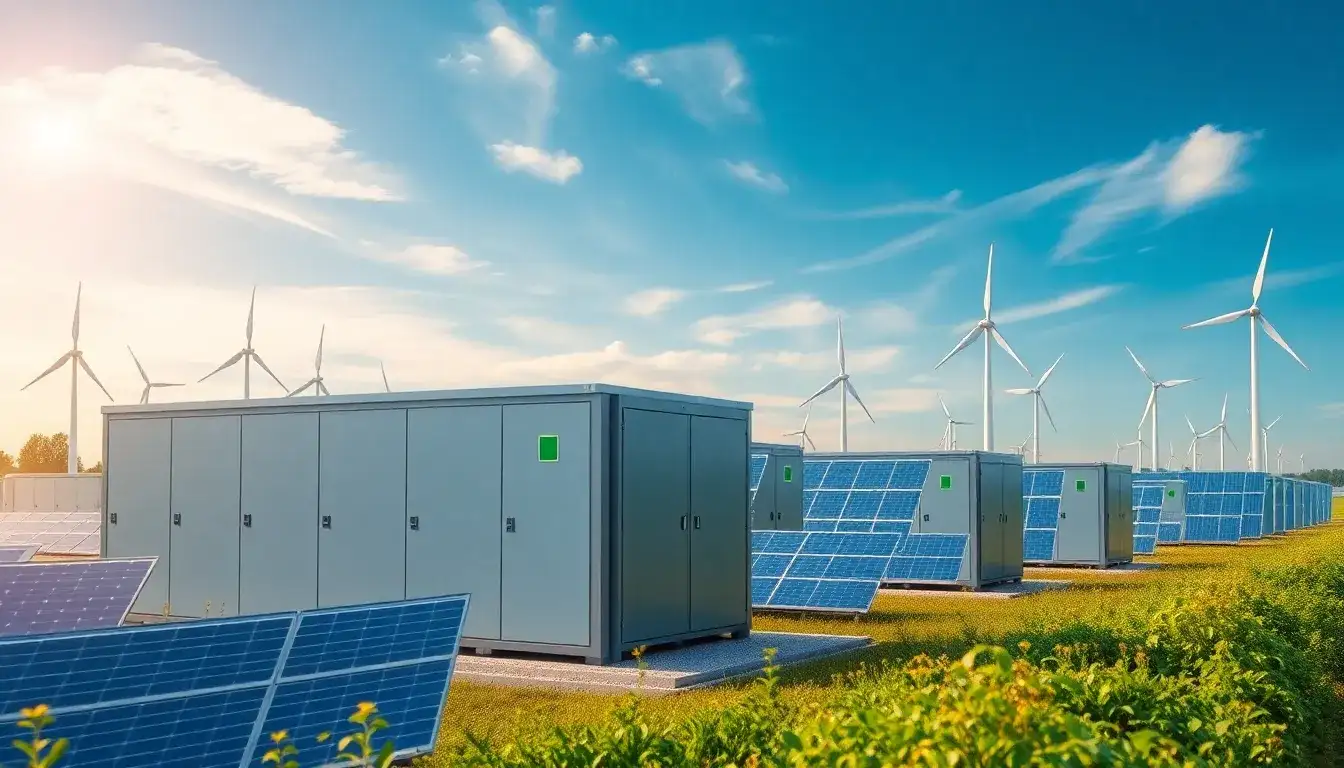
Terralayr has recently garnered attention with its battery energy storage system (BESS) aggregation tolling platform, having secured long-term toll agreements in Germany with major energy companies RWE and Vattenfall. However, how unique are these agreements? We spoke with Terralayr’s Chief Commercial Officer, Mikko Preuss, during the Energy Storage Summit Germany 2025 held in Stuttgart.
Preuss noted, “While tolling deals are not new to the industry, we believe these agreements represent a unique setup.” The summit, which took place from June 3 to 5, was co-located with The Battery Show Europe 2025, organized by Informa, the parent company of Solar Media.
Tolling arrangements are increasingly common in the BESS sector, both in Germany and globally, as owner-operators seek to secure financing from banks and risk-averse investors, such as pension and infrastructure funds. Terralayr’s recent toll agreements with RWE and Vattenfall encompass capacity from multiple projects across Germany, which is a distinctive feature. However, this concept is not entirely new; for instance, last year, Octopus and Gresham House executed a significant deal that involved 14 projects in the UK.
So, what sets Terralayr apart? Preuss explained, “We consolidate a fleet of underlying assets into one capacity total—55MW, in the case of Vattenfall—and we provide both the assets and the technological platform to manage them. We are effectively separating the roles of asset owner, platform provider, and offtaker.” The primary distinction lies in Terralayr’s provision of both the assets and the technology, unlike Octopus Energy, which already had a robust tech platform, Kraken, prior to Terralayr’s announcements.
Preuss elaborated, “The toll is not based on individual assets. Our overall strategy is to contract out 50% of the capacity, creating a clear segment for the offtaker. We have built trust with our partners, which is invaluable and will carry forward into future tolling agreements.”
Terralayr’s platform allows offtakers to connect via an API, enabling them to manage the contracted BESS capacity across various markets. The firm offers its solution as a service for third-party BESS owners, though the existing deals currently involve its own projects.
Another unique aspect of these toll agreements is that they are linked to BESS capacity through the platform rather than specific projects. This structure theoretically enhances availability; if one site experiences downtime, its capacity can be replaced with that from another site, provided there is sufficient capacity across the platform. Preuss stated, “The toll structure ensures that if a 10MW asset fails, it can be substituted with another, which is a benefit for the offtaker. While there are contractual obligations regarding megawatts and performance specifications, the specific physical asset used is inconsequential.”
When it comes to project owners, Preuss was asked about Terralayr’s long-term objective of becoming a bankable offtaker counterparty for project owners seeking financing. He responded, “We are working towards that goal, but it may take some time.” He explained that Terralayr currently provides solutions to third-party developers and investors. For example, if Developer A constructs a 100MW asset with a target of 70% tolling, they could enter into a 70% toll agreement with a bankable counterparty through our platform while utilizing merchant optimizers for the remaining 30%. This approach allows for the combination of both strategies effectively.
The Energy Storage Summit 2026 is scheduled for February 24, 2026, at the InterContinental London – The O2, promising to be an exciting event with immersive workshops, industry working groups, and ample networking opportunities.
Original article by NenPower, If reposted, please credit the source: https://nenpower.com/blog/terralayr-secures-innovative-tolling-agreements-with-vattenfall-and-rwe-in-germanys-bess-market/

