

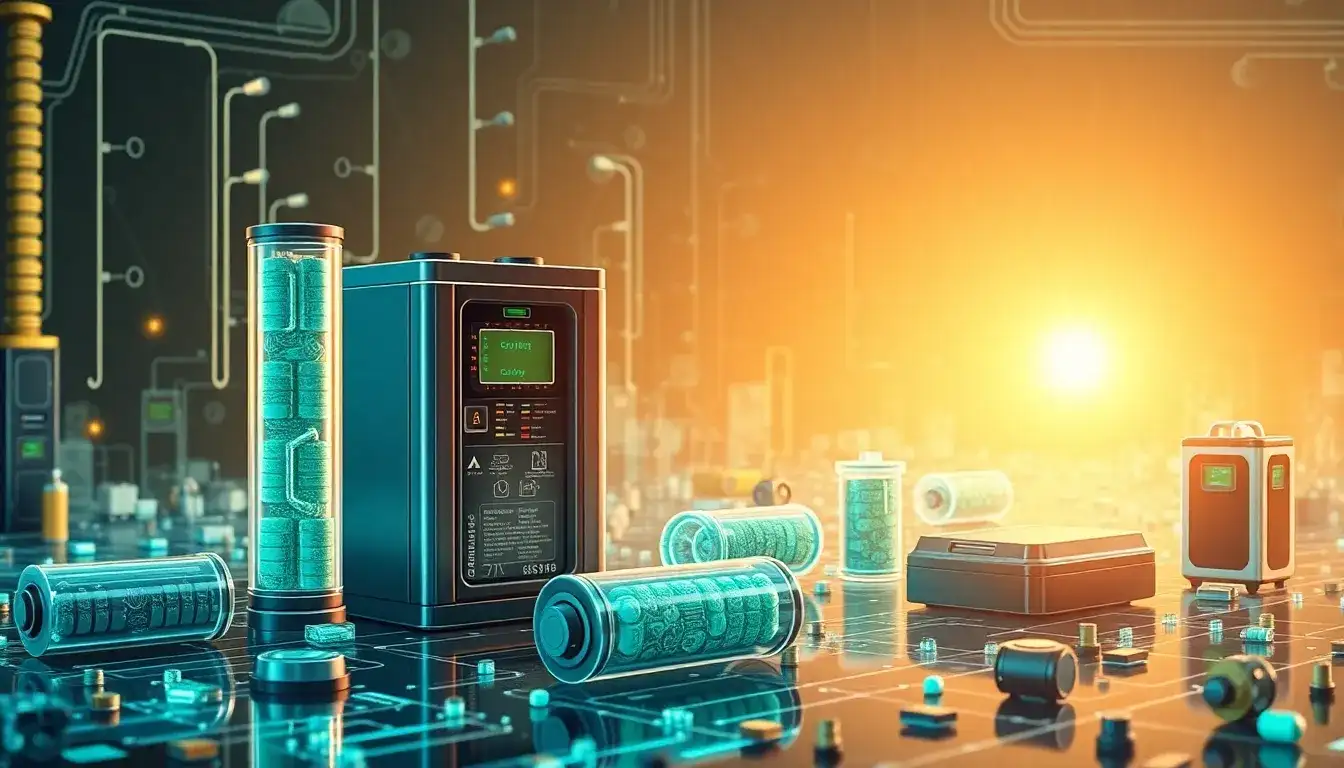
The lithium battery industry is poised for a significant transformation in the latter half of the year, with ten key technologies expected to drive the rapid evolution of the sector and lead to the elimination of many companies. By 2025, it is anticipated that this year will mark the emergence of various technological products. Among these, solid-state batteries, silicon-carbon anodes, high-density lithium iron phosphate, ultra-high nickel materials, lithium manganese phosphate, large cylindrical batteries without terminal tabs, megawatt-level charging, lithium extraction from salt lakes, new sodium batteries, and safer lithium battery systems will play crucial roles in the advancement of the new energy sector.
1. Solid-State Batteries
Solid-state battery technology is expected to transition from semi-solid to fully solid by 2025. Small-scale production of solid polymer lithium batteries is anticipated to begin, with significant improvements in energy density, safety, and cycle life. The global market for solid-state batteries is projected to reach 43.9 billion yuan, with megawatt-level applications becoming feasible. Companies like Weilan New Energy predict that the period from 2025 to 2030 will be golden for semi-solid battery development, achieving an energy density of 360Wh/kg. Others, such as CATL and BYD, are also expected to begin small-scale production of solid-state batteries in 2025.
2. Silicon-Carbon Anodes
Silicon-carbon anodes are emerging as the next generation of high-performance lithium battery anode materials, offering high energy density and excellent fast-charging capabilities. With a theoretical specific capacity of 4200mAh/g, they far exceed traditional graphite materials. By 2025, several automakers are set to adopt silicon anode technology in their high-end electric vehicles. Major players like BTR and Ningbo are ramping up production capacity to meet this growing demand.
3. High-Density Lithium Iron Phosphate
High-density lithium iron phosphate (LFP) is achieved by enhancing the production processes and material formulations, increasing the compact density from 2.4-2.55 g/cm³ to over 2.6 g/cm³. This advancement significantly enhances the energy density and fast-charging capabilities of LFP batteries. By 2025, CATL’s new battery line is expected to dominate LFP shipments, while BYD plans to introduce the second generation of blade batteries, improving energy density and charging rates.
4. Lithium Manganese Phosphate
Lithium manganese phosphate (LMFP) combines high energy density with cost-effectiveness, making it a favorable choice for electric vehicles. It raises the voltage from 3.4V to 4.1V, with anticipated shipments in China exceeding 200,000 tons by 2025, translating to a market worth over 10 billion yuan. Companies like Rongbai Technology are leading the charge in LMFP production.
5. Ultra-High Nickel Materials
Ultra-high nickel materials, such as the NCM9 and NCA9 series, are projected to dominate the battery market by 2025, with a market size of 20 billion yuan and production expected to reach 70,000 tons. Despite the challenges in mass production, companies like Rongbai Technology and CATL are making strides in ultra-high nickel technology.
6. Large Cylindrical Batteries without Terminal Tabs
These batteries eliminate traditional terminal tabs, connecting the positive and negative current collectors directly to the battery case, which reduces internal resistance and enhances safety and energy density. The global demand for large cylindrical batteries is projected to reach between 144.2GWh and 235GWh by 2025.
7. Megawatt Charging
In March 2025, BYD unveiled its megawatt “flash charging” technology, capable of delivering up to 1 megawatt of power, which allows for a rapid charging time of just five minutes for a range of 100 kilometers. This technology is set to become a trend in the electrification of passenger and commercial vehicles.
8. Lithium Extraction from Salt Lakes
With rising lithium prices and stable downstream demand, lithium extraction from salt lakes is becoming increasingly cost-effective. Companies like Salt Lake Lithium are enhancing their extraction techniques, positioning themselves to meet the growing demand for lithium.
9. New Sodium Batteries
New sodium batteries are poised to challenge lithium batteries, with expected energy densities improving and mass production commencing by 2025. Companies like CATL are leading the way in sodium battery technology.
10. Zero Self-ignition Lithium Battery Safety Systems
The introduction of stringent safety standards will push lithium battery systems towards proactive defense strategies. Major manufacturers are adopting multi-layer safety systems and advanced battery management systems to enhance overall safety.
As these technologies unfold, the lithium battery industry is expected to undergo a significant reshaping, with many companies potentially facing challenges in keeping up with the rapid advancements.
Original article by NenPower, If reposted, please credit the source: https://nenpower.com/blog/ten-emerging-lithium-battery-technologies-set-to-transform-the-industry-in-2025/

