

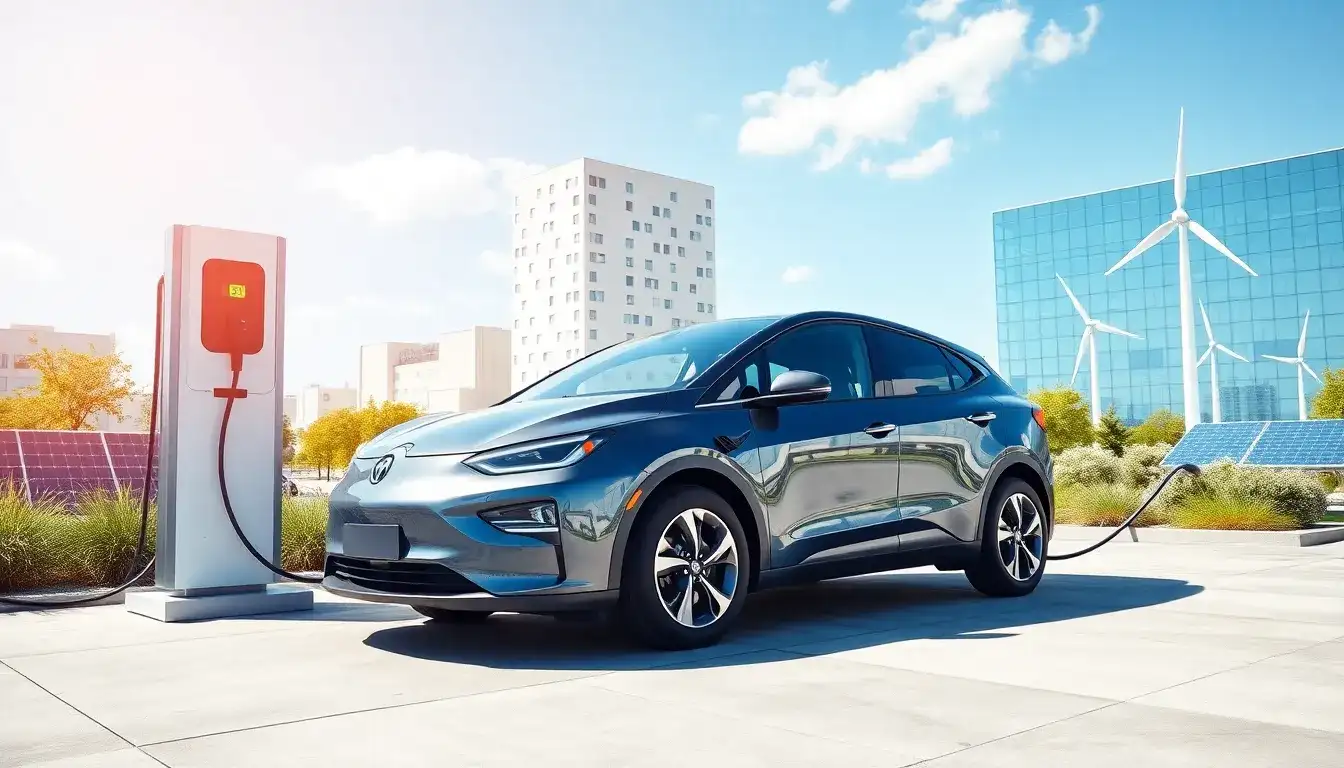
Telepower: Leading the Way in Vehicle-Grid Interaction
Imagine plugging an electric vehicle into a charging station and selling the stored electricity back to the grid, earning between 30 to 40 yuan per hour. This vision for the electric vehicle and charging industry, long discussed, is now becoming a reality at Telepower charging stations across the country.
Recently, the National Development and Reform Commission, the National Energy Administration, the Ministry of Industry and Information Technology, and the State Administration for Market Regulation jointly announced the first batch of pilot projects for vehicle-grid interaction at scale. Nine cities and 30 projects were selected nationwide. Among them, Telepower, based in Laoshan District, is leading or participating in nine of these projects, making it one of the most proactive companies in promoting vehicle-grid interaction.
According to Gong Chengming, Vice President of Telepower, “With the rapid development of electric vehicles and their charging infrastructure, along with the transformation of a new power system featuring a high proportion of renewable energy, vehicle-grid synergy will support the larger-scale development of electric vehicles in the future. It will also become a flexible adjustment system for low-cost power resources, with charging infrastructure serving as the crucial bridge between electric vehicles and the grid.”
Telepower has established itself as a leading player in the charging industry. The latest performance data indicates that in 2024, Telepower achieved a revenue of 4.89 billion yuan, marking an increase of 18.41% year-on-year, with a net profit of 208 million yuan, a remarkable growth of 71.93%. With over ten years of experience in the electric vehicle charging sector, Telepower continues to innovate its charging network technology and accelerate its entry into new industry tracks like vehicle-grid interaction to foster new development.
Vehicle-Grid Interaction: A Reality
Vehicle-grid interaction, as the name suggests, involves the energy exchange between electric vehicles and the grid. This includes smart and orderly charging, as well as reverse discharge (V2G – Vehicle-to-Grid), allowing for a two-way flow of energy between electric vehicles and the grid. Through vehicle-grid interaction, electric vehicles can not only charge in an orderly manner but also supply electricity back to the grid during peak load times, effectively becoming a “power bank” for the large grid.
Since the early days of electric vehicle development, the energy sector has been contemplating and discussing vehicle-grid interaction. “Unlike traditional vehicles, electric vehicles serve as both a mode of transportation and a significant carrier of electric energy. As their numbers continue to grow, they will undoubtedly become one of the most important adjustable loads in the grid, playing a key role in peak shaving and valley filling,” Gong Chengming stated, highlighting this as one of Telepower’s foundational business predictions.
Data shows that by the end of 2024, the number of electric vehicles in China is expected to reach 31.4 million, accounting for 8.9% of the total number of vehicles. In 2024 alone, 11.25 million new electric vehicles were registered, making up 41.83% of all new vehicle registrations. As the electric vehicle market rapidly expands, the significance of vehicle-grid interaction becomes increasingly apparent.
Since 2023, various national ministries have issued multiple documents to promote the large-scale development of vehicle-grid interaction. The selection of pilot projects is conducted against this background. The aim is to drive vehicle-grid interaction towards large-scale, standardized, and commercially sustainable development, creating relevant policies and standards that will provide valuable experience for large-scale electric vehicle participation in grid interactions.
Industry assessments suggest that by 2040, if the number of electric vehicles in China reaches 300 million, with passenger vehicles using 15kW bi-directional charging stations, the overall power support capacity for the grid could reach between 2.9 billion to 3.5 billion kW, which would be about 50% of the non-fossil fuel energy installed capacity of the national grid at that time.
From an industry perspective, charging companies are poised to benefit from a new wave of development. Previously, charging operators primarily relied on charging service fees for revenue. However, with the large-scale development of vehicle-grid interaction, new business models such as virtual power plants and aggregated trading are emerging, allowing operators to profit from electricity trading while electric vehicle owners can also earn income by selling electricity back to the grid.
The Charging Network as a Fundamental Support
What makes Telepower a pioneer in vehicle-grid interaction? Gong Chengming succinctly summarized, “Our nationwide charging network, the largest in scale, is the key foundational support.” As of the end of 2024, Telepower operates 709,000 public charging terminals, maintaining its position as the industry leader. In the same year, the company’s charging volume exceeded 13 billion kWh, a 40% year-on-year increase, with a cumulative charging volume surpassing 39 billion kWh, further solidifying its scale advantage.
Importantly, Telepower’s charging network is not merely a collection of isolated charging devices but rather a comprehensive network where devices can interconnect and communicate. Over the years, Telepower has undertaken and participated in more than ten major national research projects, overcoming 20 key technologies related to the charging network, thus enhancing the construction and layout of its charging infrastructure.
Leveraging its charging network, Telepower can link multiple vehicles’ charging within a region into a local network, enabling real-time interaction with vehicles, batteries, energy sources, and users, while fostering friendly interactions with the grid.
According to Gong Chengming, Telepower began its vehicle-grid interaction practices as early as 2018. In that year, the company implemented staggered charging for public transport, significantly reducing charging costs through smart scheduling. In 2019, Telepower participated as one of the first pilot entities in the North China Peak Shaving Auxiliary Service Market, achieving a closed-loop application for charging resources in electricity auxiliary services. Following this, Telepower extensively engaged in power demand response and participated in both the electricity spot market and auxiliary service market as a new type of virtual power plant entity, conducting various practical applications of vehicle-grid interaction in cities like Qingdao, Chengdu, and Shanghai.
Seizing Opportunities in Vehicle-Grid Interaction
In the recently announced pilot projects by the national government, Telepower’s large-scale vehicle-grid interaction application project in Qingdao was included. “The project plans to deploy 623 V2G charging piles in Qingdao, with a total discharge power of 3310 kW and an estimated total discharge capacity of 112,700 kWh,” explained Cui Huaili, head of energy operations at Telepower. This means that once the project is operational, if over 1,000 vehicles discharge simultaneously, the peak power could exceed 3000 kW, sufficient to meet the electricity needs of a medium-sized community with thousands of residents.
Specifically, Telepower will establish a five-network charging and discharging system covering various scenarios including industrial parks, residential communities, public charging stations, bus charging stations, and dedicated charging stations. Telepower recognizes that the timing, space, user needs, vehicle characteristics, and power requirements differ significantly across various scenarios, necessitating distinct charging and discharging strategies.
In the future, only by organically linking these five charging networks can large-scale vehicle-grid interaction be supported. Currently, the industrial park charging network is expected to be the first scenario to achieve breakthroughs and promotion. Industrial parks not only host a large number of electric vehicles parked for extended periods but also exhibit relatively stable energy usage patterns, often operating under time-of-use pricing.
By promoting vehicle-grid interaction and incorporating distributed solar energy and energy storage solutions, it can help flatten the load on the large grid while also reducing energy costs and carbon emissions in industrial parks, contributing to the construction of zero-carbon parks. At its headquarters park in Laoshan District, Telepower has already initiated preliminary practices. According to Gong Chengming, the park has innovatively adopted integrated microgrid box transformers, orderly charging through group management, V2G discharge technology, distributed solar power generation, and the utilization of used battery storage technologies, creating an intelligent low-carbon park centered around charging-type microgrids.
Original article by NenPower, If reposted, please credit the source: https://nenpower.com/blog/telai-electric-leading-the-charge-in-vehicle-grid-interaction-and-new-energy-solutions/

