

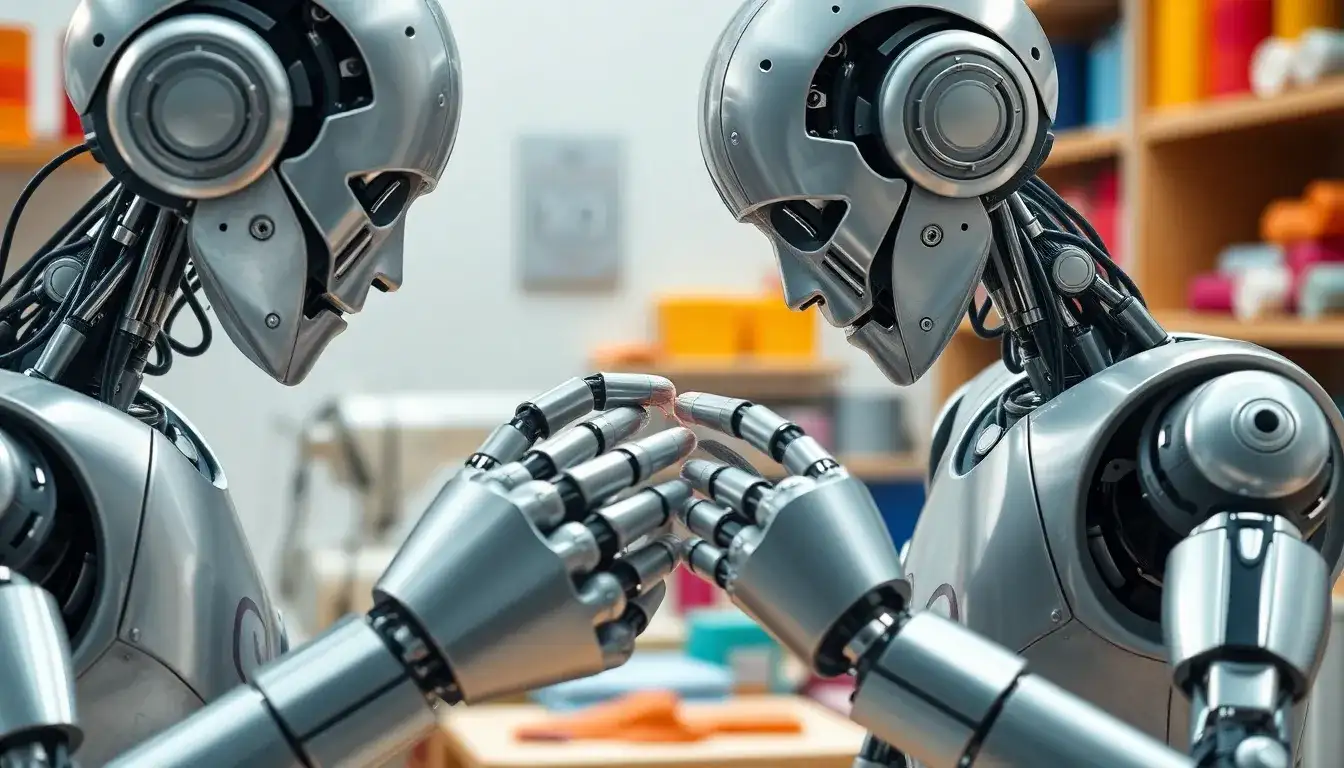
Recently, our team developed a dexterous robotic hand that successfully completed a highly challenging task—“threading a needle”. The mechanical fingertips securely held a fine thread, carefully aligned it, and ultimately threaded it through the needle’s eye. While this is a simple everyday action for humans, achieving it with a robot is no easy feat.
As a company focused on embodied intelligent dexterous manipulation solutions, we began researching dexterous hands about six or seven years ago. At that time, we realized that many daily activities, whether household chores or office work, heavily rely on the use of human hands. Almost all complex tasks ultimately depend on manual dexterity. Thus, we aimed to create a platform that would enable robots to possess similar operational capabilities to humans, allowing them to carry out a wide variety of tasks.
“Threading a needle” serves as a typical scenario to test this ability. This action can be broken down into two key processes: “pinching” and “threading”. The pinching action is continuous and requires stability; the robot must grasp the fine thread without applying too much pressure. The threading action requires precision, needing alignment within a very small space. Each of these processes presents its own challenges, especially since the thread is soft and lightweight, making it prone to deviation or slipping during movement, which demands a high level of perception and control from the robot.
To enable the dexterous hand to perform actions like a human, teaching it to “be gentle” is significantly more challenging than teaching it to “apply force.” We often joked that teaching a robot to “be gentle” is akin to learning to drive a manual car and mastering the clutch—finding that delicate balance. To achieve this, we spent months repeatedly fine-tuning the system, adjusting everything from sensor feedback to control algorithms, gradually honing in on this “tactile feel”.
Technically, we explored various avenues. First, we designed the fingers with high degrees of freedom, allowing them to move in multiple directions to grip the fine thread. Next, we ensured that both the arm and fingers could operate with sub-millimeter precision, guaranteeing that the dexterous hand could stably and accurately manipulate the thread and needle. Additionally, we integrated tactile sensors and a visual system, using fusion algorithms to make real-time adjustments to position, orientation, and force to achieve the delicate task of threading.
This achievement is more than just a demonstration. The dexterous hand, as the most crucial end effector, determines whether a robot can operate with human-like capabilities. In the realm of embodied intelligence, it empowers robots to solve practical problems; in industrial settings, it can be employed for flexible manufacturing and precise assembly, replacing repetitive or hazardous manual labor; in research, it provides an important platform for force control algorithms and the study of new materials.
Perhaps in the near future, robots will not only be able to “thread a needle” but also perform many more tasks that require a “tactile feel”. For us, this ever-evolving mechanical hand is also a key to the future.
Original article by NenPower, If reposted, please credit the source: https://nenpower.com/blog/teaching-robots-the-art-of-threading-a-needle/

