

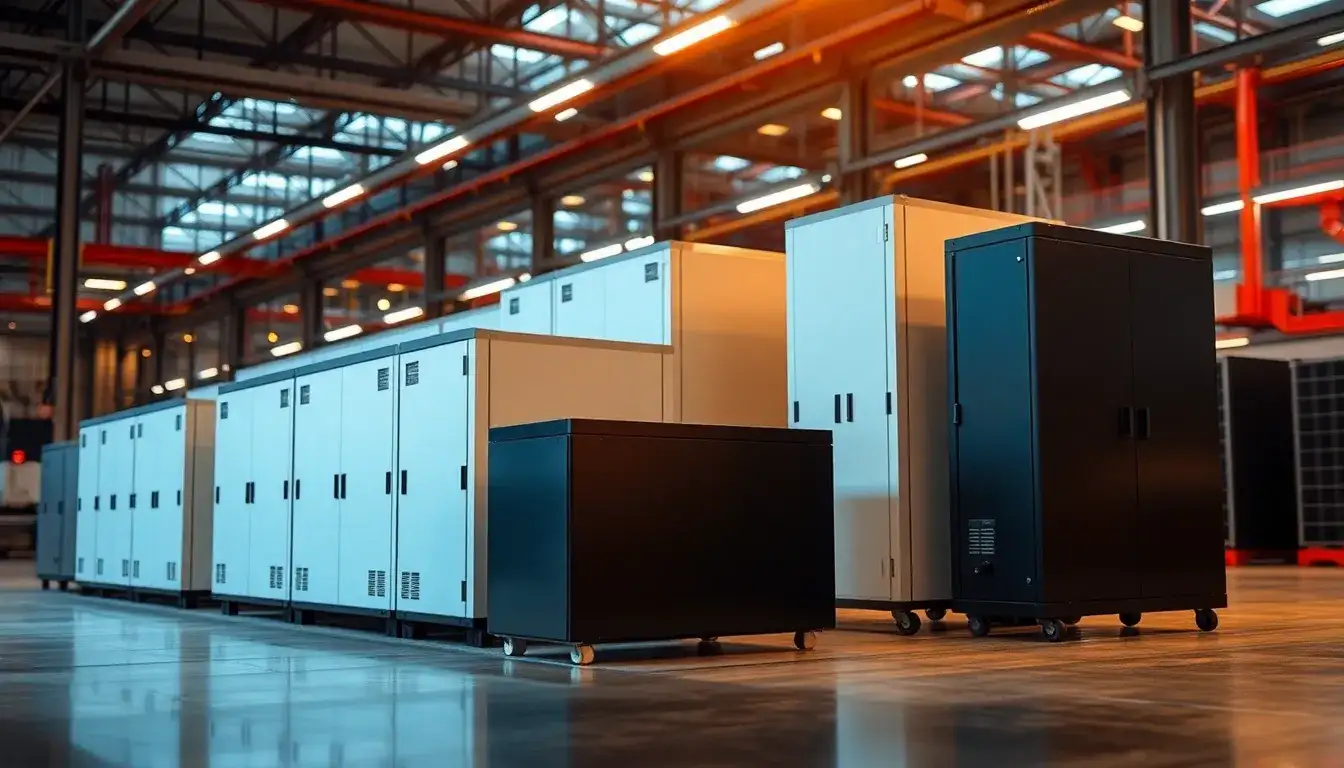
Explosion of Orders for Energy Storage Battery Companies such as CATL, EVE Energy, and BYD
Amid the rapid transformation of the global energy landscape, the energy storage industry is at the forefront, showcasing unprecedented development prospects. The implementation of the “Document No. 136,” which is set to lead the market-oriented reform of the energy storage industry, has sparked a surge in installations.
According to Ye Jun, Vice General Manager and Chief Engineer of Shanghai Electric Power Design Institute Co., Ltd, the energy storage sector is currently experiencing a “rush to install” phenomenon. “All power generation groups are racing to complete their projects, with a requirement to connect to the grid by May 31. Our company is busy with engineering contracting and design planning,” he stated.
This increase in demand is reflected in the upstream energy storage battery sector, where a wave of procurement is underway. Industry insiders have reported that since the beginning of the first quarter, the energy storage battery industry has been operating at full capacity, with leading battery manufacturers experiencing robust production and sales. In fact, some downstream customers are now required to make advance payments for battery purchases.
On April 14, CATL announced its first-quarter report for 2025, revealing that battery sales exceeded 120 GWh, representing a year-on-year increase of over 30%, with energy storage sales accounting for nearly 20% of that total. The company also indicated that its capacity utilization has been full this year, and it anticipates continued high growth in the future.
At the recent ESIE 2025 event, several energy storage battery companies secured significant orders, further confirming the market’s heat. For example, EVE Energy signed a strategic cooperation agreement with Wotai Energy, aiming for strategic procurement of battery cells amounting to a total scale of 10 GWh from 2025 to 2028. This partnership will enhance both companies’ collaborative advantages within the new energy industry and promote the global transition to clean energy.
EVE Energy also signed a 1 GWh strategic cooperation framework with Weisheng Energy Technology Co., Ltd., and earlier this year, it had already entered into a 50 GWh battery cell procurement agreement with Haibos Innovation, bringing EVE Energy’s total signed orders to 61 GWh.
On April 11, Xiamen Hechu and Penghui Energy signed a strategic cooperation agreement for GWh-level battery cell orders. Under the agreement, Xiamen Hechu will use Penghui Energy’s self-developed high-safety, long-cycle, and high-efficiency battery cells, which will be applied in critical projects such as high-voltage direct-connected flexible energy storage systems and centralized flexible energy storage systems.
Additionally, Lishen (Qingdao) has signed cooperation agreements with five leading industry companies, including Weiteng Electric Group Co., Ltd., Anhui Tongsheng Energy Technology Co., Ltd., and others, totaling over 3 GWh in orders. Earlier reports indicated that on February 5, Lishen (Qingdao) secured a 2 GWh order with a major European energy group.
The robust demand for energy storage batteries can be attributed not only to the “rush to install” driven by the domestic “Document No. 136” but also to the uncertainty surrounding the battery tariff laws, which is stimulating overseas demand for energy storage. In the U.S. market, the tariffs on Chinese products will impact some energy storage demand; however, as the implementation of the 301 tariffs on energy storage batteries will not take effect until early 2026, the U.S. saw 2.42 GWh of installations in January and February 2025, representing a 433% year-on-year increase, and the rush to install is expected to continue.
In Europe, some household storage inverter companies have reported improved production schedules since the beginning of 2025, with rapid recovery in commercial storage demand and continuous deployment of large storage projects, indicating a turning point in European storage demand. On March 3, the Greenvolt Group announced a partnership with BYD Energy to provide a 400 MW/1.6 GWh energy storage system for two projects in Poland.
In emerging markets, major storage project constructions are in full swing in the Middle East, India is enforcing mandatory energy storage requirements, and countries like South Africa are seeing a resurgence in household storage demand. CATL has also revealed that alongside the development of renewable energy and the rise of AI data centers, the demand for energy storage is rapidly expanding, particularly in regions like the Middle East and Australia, where they have secured several large projects.
On January 20, CATL was selected as the preferred battery storage system supplier for the RTC (Round the Clock) project in the UAE, totaling 19 GWh, making it the largest solar and battery combined storage project globally to date. On March 6, Quinbrook, a global investor in sustainable energy infrastructure, announced a collaboration with CATL to deploy 3 GW/24 GWh of energy storage systems across Australia.
However, industry experts have indicated that despite the rush to install leading up to May 31, product prices remain relatively low. In March, both large-scale and commercial storage projects have entered the 0.4 yuan/Wh era. In a recent tender for a new energy storage project, the overall price range for ten shortlisted companies was between 0.369 yuan and 0.430 yuan per Wh, with an average system price of 0.393 yuan per Wh, where seven companies priced below 0.4 yuan per Wh. For another segment, nine companies, excluding abnormal prices, had a price range from 0.26 yuan to 0.34 yuan per Wh, with an average battery cell price of 0.279 yuan per Wh.
Recently, it has been reported that CATL, EVE Energy, Envision, and Sungrow Power are participating in a “closed-door meeting” aimed at curbing “involutionary” competition within the industry. Furthermore, several industry insiders predict that after the issuance of Document No. 136, many capacities that were previously mandated under storage requirements will remain idle. While companies are racing to meet storage requirements by May 31, many may face underutilization in the latter half of the year.
From an industry perspective, large orders are primarily concentrated among leading enterprises, indicating that there is still an oversupply in the energy storage battery segment. As the energy storage sector transitions into a new phase of marketization, the industry is expected to shift from “price competition” to “value competition,” with market share consolidating around leading companies and increasing pressure on less efficient capacities.
Original article by NenPower, If reposted, please credit the source: https://nenpower.com/blog/surge-in-orders-for-energy-storage-batteries-from-leading-companies-like-catl-and-byd/

