

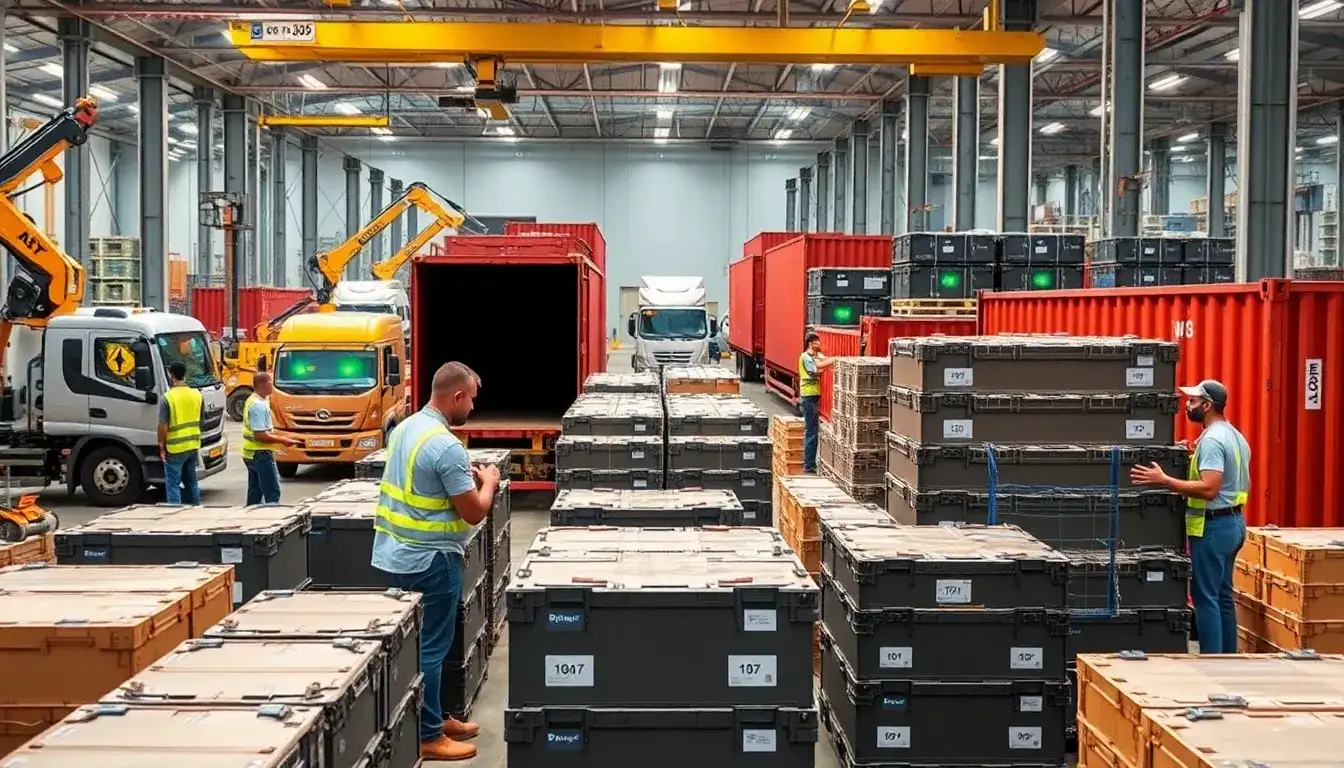
Export Volume of Energy Storage Batteries Soars by 170%
The export volume of energy storage batteries has experienced a remarkable increase of 170%. This surge is attributed to several factors including trade policies, market demand, and advancements in battery technology. Understanding these elements is crucial for domestic companies aiming to lead global development and maintain a competitive edge.
Data from January to June of this year indicates that the domestic sales of non-power batteries, primarily in the energy storage sector, reached 173.5 GWh, marking a 108.5% increase year-on-year. However, this only accounts for 35.7% of the sales of power batteries. In contrast, energy storage batteries have become the main driver of exports, with 45.6 GWh exported during the same period, reflecting a staggering 174.6% year-on-year growth. Meanwhile, power battery exports stood at 81.6 GWh, with a year-on-year growth of 26.5%.
1. Energy Crisis Fuels Energy Storage Opportunities
Global energy transition is a significant trend, but the energy crisis, particularly in sparsely populated regions of Europe and North America, has directly stimulated the development of energy storage technologies. Outside of China, countries can be broadly categorized into two markets:
Firstly, the markets represented by Europe, North America, and Australia face aging power grids and low-density distribution, resulting in poor stability and inability to meet electricity demand. The energy crisis has been exacerbated by events such as the Russia-Ukraine conflict, leading to soaring electricity prices.
Secondly, in regions like Africa and Asia, high population density and low economic development have resulted in weak power infrastructure, with many areas experiencing frequent power outages. The duration of stable power supply in some regions averages less than 8 hours per day.
2. Identifying Opportunities in Niche Markets
As countries advance their energy transition goals and implement subsidy policies, the overseas energy storage market is witnessing a new round of “rush to install.” However, due to regional differences in climate and economic conditions, the product demands vary significantly. The global commercial and industrial energy storage market is expected to reach 25.4 GWh in 2024, showing a 107% increase year-on-year.
In the residential storage market, global shipments are projected at 27.8 GWh, representing a 19% increase in the same year. The leading countries in residential storage consumption include Europe, the United States, Ukraine, Japan, and Australia.
3. Battery Technology and Market Positioning
Currently, most energy storage products utilize lithium iron phosphate (LFP) batteries, where Chinese companies are at the forefront. By 2025, global energy storage battery shipments are expected to exceed 240 GWh, with Chinese companies dominating the top rankings and achieving over 91% market share.
In contrast, major battery manufacturers in Japan and South Korea have lagged in LFP technology development. Companies like Panasonic and LG are gradually shifting production lines to meet the growing energy storage demand in the U.S. market.
4. Price Reductions and Market Demand
Price reductions in battery manufacturing costs are a significant factor driving the current surge in energy storage installations. The price of lithium carbonate, a key raw material for LFP batteries, has dramatically decreased by 87% from 600,000 yuan per ton in October 2022 to approximately 80,000 yuan per ton now. Some manufacturers are achieving production costs below 0.4 yuan/Wh, making them competitive in overseas markets.
5. Navigating Risks in Overseas Markets
Despite the booming market, Chinese companies face several challenges in overseas expansion. The instability of partner companies and the increasing competition within the energy storage sector can pose significant risks. Recent cases, like the bankruptcy of Powin, highlight the financial pressures that can arise from such partnerships.
Moreover, the evolving policies and trade environments in foreign markets require companies to adapt their strategies to avoid additional costs and barriers. Companies are encouraged to optimize their global supply chain and consider localized production to mitigate risks associated with tariffs and trade barriers.
In conclusion, while the export of energy storage products from China is poised for significant growth, companies must navigate a complex landscape of competitive pressures and regulatory challenges to succeed in the global market.
Original article by NenPower, If reposted, please credit the source: https://nenpower.com/blog/surge-in-energy-storage-battery-exports-a-170-increase-driven-by-market-demand-and-technology-advancements/

