

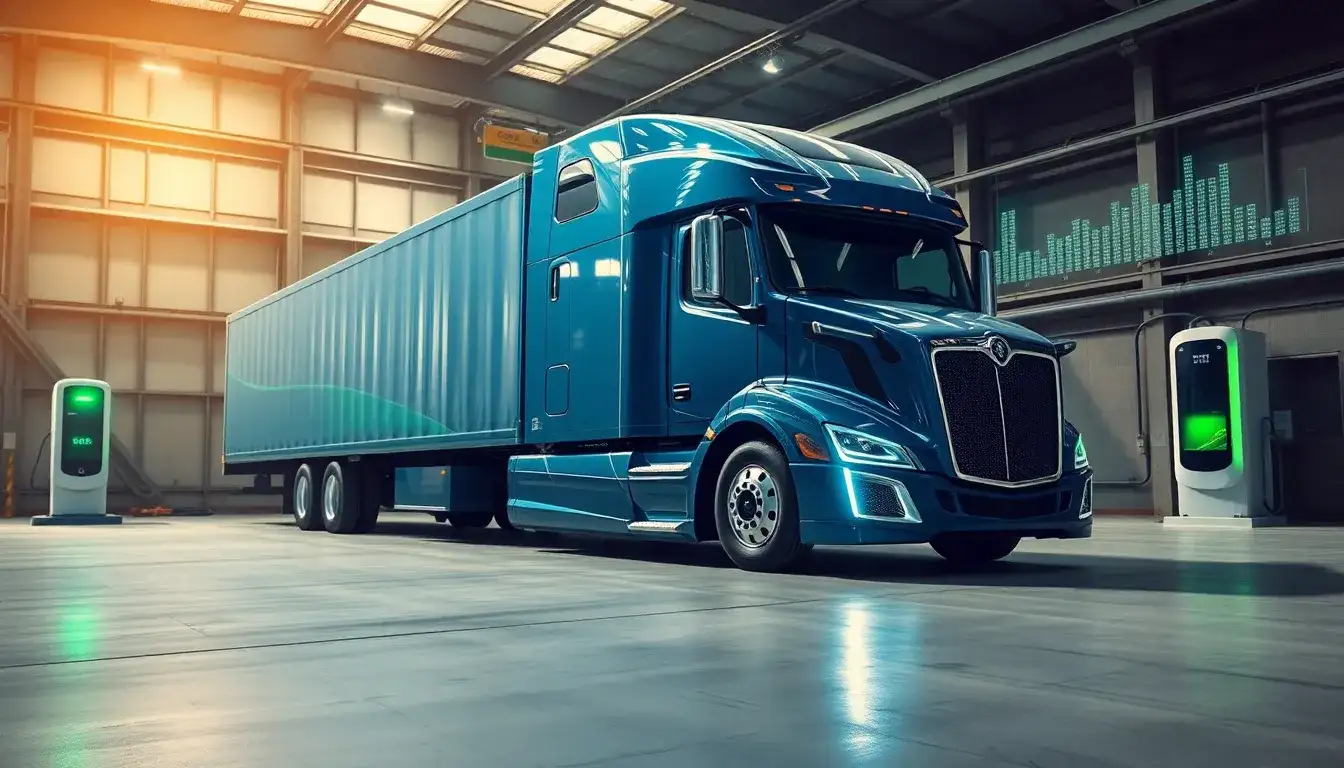
Electric heavy trucks now make up 70% of the market! Could ultra-fast charging be the decisive factor for new energy heavy trucks?
Electric heavy trucks are transitioning from short-distance operations to overcoming range limitations and enhancing their presence in long-haul routes. The development of charging infrastructure is accelerating the shift of electric heavy trucks towards becoming viable alternatives to traditional trucks. Current data shows there are approximately 60,000 electric heavy trucks in operation, primarily used in ports, mines, and steel mills. However, the electrification penetration rate for heavy trucks with a range of 200-1,000 km is less than 10%. This indicates that as large-capacity electric trucks become more widespread, the establishment and improvement of charging systems will be crucial for their replacement of conventional heavy trucks. In this context, mastering the charging ecosystem has become a key indicator of competitiveness in the electric heavy truck market.
Recently, Qingling partnered with Huawei to launch a new generation of electric heavy trucks named Lingjie. Will ultra-fast charging become the optimal solution for electric heavy trucks on long-haul routes? What does Lingjie represent in Qingling’s strategy in the era of new energy? Let’s analyze these questions.
Ultra-fast charging solutions for electric heavy trucks may become mainstream
In May, during the Western China International Investment and Trade Fair in Chongqing, Qingling and Huawei Digital Energy unveiled the world’s first megawatt-level ultra-fast charging heavy truck, the Lingjie. This vehicle utilizes Huawei’s megawatt-level ultra-fast charging and full liquid cooling core technology, allowing it to recharge 20 kWh every minute. This means that the Lingjie model with a 352 kWh battery can be fully charged in just 15 minutes, significantly enhancing charging efficiency.
Over the past two years, electric heavy trucks have developed rapidly due to cost reductions in the supply chain and a combination of national and local policies. This has led to a revolution in the charging ecosystem for new energy heavy trucks, accelerating the electrification of long-haul routes. For instance, the monthly sales of electric heavy trucks rose from less than 4,000 units in January 2024 to over 15,000 units by April this year. The proportion of charging heavy trucks has surged to 70% due to a two-tier reversal in charging and battery swapping models. In the future, as battery capacity approaches total cost of ownership limits, the competition for charging efficiency, aiming for “fuel and electricity to run at the same speed,” could become a focal point for the next phase of electric heavy trucks.
The advantages of ultra-fast charging extend beyond just quicker charging times. Compared to battery swapping, ultra-fast charging stations require a lower initial investment, are simpler to operate, and are compatible with fast charging. Furthermore, compared to traditional fast charging, ultra-fast charging systems have lower losses. The integrated rectifier module within ultra-fast charging reduces cable installation and losses, resulting in improved efficiency, stability, and lower maintenance costs.
As a key state-owned enterprise in Chongqing, Qingling’s adoption of Huawei’s megawatt-level ultra-fast charging technology will not only drive the intelligent transformation of traditional automakers and parts manufacturers but also foster an innovative ecosystem combining state-owned enterprises, technology firms, and small to medium suppliers, promoting high-quality development within Chongqing’s automotive industry. Qingling has indicated that it will use the ultra-fast charging heavy truck as a starting point to transition its entire vehicle lineup towards ultra-fast charging solutions. This could serve as a catalyst for the widespread adoption of electric heavy trucks.
A global high-end heavy truck maximizing efficiency
At the launch event, Qingling stated that the Lingjie represents a groundbreaking technological revolution characterized by boundary-breaking innovation, ecological integration, and value enhancement, developed in collaboration with Huawei. Qingling and Huawei have adopted a complementary technology and co-creation model. Qingling, leveraging its 40 years of experience in commercial vehicle manufacturing, will lead the overall vehicle development, manufacturing, and innovative application in specific scenarios. Meanwhile, Huawei will focus on providing intelligent solutions and core technologies such as megawatt-level liquid cooling ultra-fast charging and comprehensive thermal management.
In summary, both parties will collaboratively develop a “vehicle-charging network” synergy charging platform to dynamically match charging networks with logistics scenarios, jointly advancing the era of electric heavy trucks. As the only authorized manufacturer of the Isuzu brand of commercial vehicles in China, Qingling has established a complete digital manufacturing chain, from blanking, parts, and assembly to vehicle integration, making it one of the few commercial vehicle companies capable of exporting core components to developed countries.
Qingling’s impressive research and manufacturing capabilities equip the Lingjie with the competitive edge needed to succeed globally. The Lingjie heavy truck is designed to consume 1.2 kWh/km under typical working conditions. By employing a four-dimensional lightweight system—material lightweighting, structural lightweighting, integrated electric drive axle lightweighting, and battery system lightweighting—it achieves an increase in effective payload by 1.2 tons. For instance, the 352 kWh version of the Lingjie weighs 8.97 tons and features dual motors with a maximum power output of 510 kW, offering a 15% increase in range compared to existing products. Additionally, with Isuzu’s manufacturing expertise, the Lingjie ensures enhanced performance in noise, vibration, and harshness (NVH), chassis performance, and reliability.
Qingling has revealed plans to develop 4×2 box-type short-haul, large-capacity trailer, and specialized modified vehicles based on the ultra-fast charging and connectivity innovation platform. The emergence of the Lingjie signifies not only the inevitable transformation of traditional automotive powerhouses in the face of the new energy wave but also an exploratory practice in leveraging electric power and technology to challenge the traditional energy industry. The promise of “15-minute rapid recharging” and the future construction of charging ecosystem demonstration zones will not only accelerate Chongqing’s efforts to build a trillion-yuan-level new energy vehicle industry but also help break down barriers to the full electrification of heavy trucks. The era of electrified logistics may not be far off.
Original article by NenPower, If reposted, please credit the source: https://nenpower.com/blog/supercharging-the-key-to-dominating-the-electric-heavy-duty-truck-market-with-70-market-share/

