

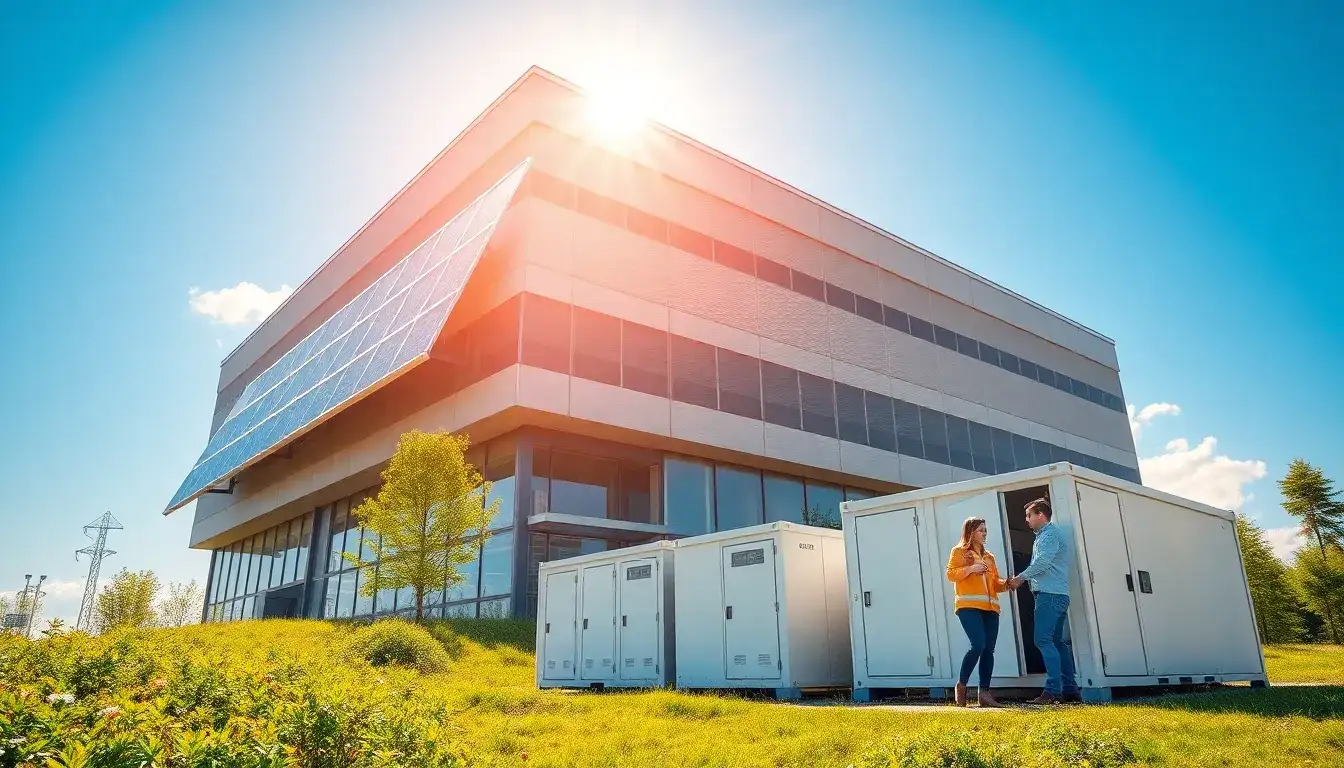
Energy storage has emerged as a crucial player in the commercial and industrial sectors, especially with the implementation of Document No. 136, which has rapidly elevated its role in the electricity reform agenda. Distributed energy storage and commercial energy storage are becoming key support mechanisms in this transformation. The rising costs and volatility of energy usage in industrial sectors have led to a rapid deployment of energy storage systems, which have evolved from a “mandatory provision” role to becoming a central value component in energy management. Energy storage is no longer merely a product of policy direction; it is now a core operational tool in the market.
Simultaneously, international green regulations, such as the Carbon Border Adjustment Mechanism (CBAM) and the battery legislation, along with domestic energy consumption control measures, are compelling high-energy-consuming enterprises to adopt zero-carbon practices. The integration of generation, grid, load, and storage, along with pilot projects connecting green electricity directly to consumers, has turned zero-carbon parks into valuable testing grounds for energy storage. Here, environmental credits and carbon credits are deeply linked with the benefits of renewable energy projects, making the management of green value crucial and potentially impacting companies' competitive strategies.

In light of these transformations and challenges, the energy storage industry is evolving beyond standalone batteries and simple equipment supply to a more ecological and systematic approach. Technologies such as electrochemical systems, power electronics, energy management systems (EMS), digital twins, and carbon asset management must converge to help enterprises effectively implement zero-carbon solutions. In other words, future energy storage companies need to possess not only battery expertise but also a deep understanding of grid logic, energy-carbon systems, and industrial chain coordination to thrive in the value-driven zero-carbon wave.

The government work report presented by Premier Li Qiang on March 5, 2025, emphasized the importance of establishing zero-carbon parks and factories. This directive clarifies the policy framework for constructing zero-carbon emission systems in industrial parks as the carbon peak approaches. The essence of a zero-carbon park lies in creating an efficient energy network based on clean energy and achieving synergy and circularity among different industrial forms regarding carbon emissions. The success of this initiative hinges on the ability to continuously and cost-effectively procure green electricity. Distributed photovoltaics and commercial energy storage are seen as the backbone of energy consumption in these parks.

Different regions in China have varying resource endowments, and the energy consumption structures and operational models of factories differ significantly. For instance, in resource-rich areas like Inner Mongolia, centralized wind farms and solar-storage systems can supply a large portion of green electricity directly within the park. Conversely, coastal regions, while seeming to have offshore wind potential, often face challenges due to pricing and grid connection rules.

As noted by Cao Wei, General Manager of the commercial energy storage product line at <b>Sunshine Power</b>, during the International Energy Storage Conference in Beijing, the three key factors for the sustainable development of commercial energy storage are safety, efficiency, and long-termism. He stressed that Sunshine Power always prioritizes customer value and returns to scene demands, proposing tailored energy storage solutions for diverse commercial applications. For instance, this year, Sunshine Power launched the 255CS series products designed for solar-storage integration, featuring both "AC coupling" and "DC coupling" modes. They also introduced the 835CS series products specifically for large industrial applications and developed complete systems for energy-intensive parks.

As zero-carbon parks are planned and implemented, industry characteristics (such as process industries vs. discrete manufacturing) and regional differences are often overlooked. The ways energy is utilized and the characteristics of carbon emissions vary, necessitating targeted adjustments in grid architecture and operational strategies for solar-storage systems and charging networks. A "one-size-fits-all" approach with a single "commercial energy storage cabinet" is insufficient.

Sunshine Power's integrated solar-storage-charging solution precisely matches grid architecture and operational strategies for various application scenarios, including parks, microgrids, and large industries, optimizing the full lifecycle management of multiple energy forms. This solution not only enhances energy efficiency but also balances customers' economic and green development needs through deep integration of digital technologies.

According to Zhou Wenwen, General Manager of Sunshine Huican, the standard configuration for future zero-carbon parks will involve deep synergy among "generation, grid, load, storage, and carbon." Enterprises must actively engage in carbon management and promote low-carbon digital transformation to leverage the "value leverage" of the carbon market for optimizing power scheduling and gaining a competitive edge in the integration of carbon and electricity markets.

For example, the Sunshine Industrial Park utilizes the iCarbon energy-carbon platform for real-time monitoring and intelligent scheduling of photovoltaics, energy storage, and charging stations. Leveraging a highly integrated renewable energy network, it generates over 6 million kilowatt-hours of solar power annually, with plans to achieve all park electricity from green energy by 2028. This practical experience is also being extended to international markets. As a leading global energy storage enterprise, Sunshine Power has implemented numerous "solar + storage" projects in regions like Europe and North America, understanding the operational rules of different electricity markets and forming unique business loops through "overseas market mechanisms + local scenario coupling."

In Southeast Asia and Africa, where the electricity systems are weaker, integrated solutions that combine solar, storage, and emergency power supply are essential for mitigating the impacts of natural disasters on production safety and power stability. Cao Wei pointed out that the global electricity landscape is highly unbalanced, and only targeted combinations of solar, storage, integration, and grid scheduling can ensure effective customization and implementation of solutions across various scenarios.

Focusing on the front lines of the industry, incentives for commercial energy storage are becoming increasingly substantial. Subsidy standards in areas like Chongqing, Shenzhen, and Tianjin have reached 0.5 yuan/kWh, with certain regions in Jiangsu and Zhejiang exceeding 0.8 yuan/kWh. Additionally, the weighted electricity price differences in provinces like Shandong, Zhejiang (large industry), and Guangdong also surpass 0.7 yuan/kWh, providing a real boost for the commercial energy storage sector.

However, achieving healthy industry development remains a significant challenge. The commercial energy storage sector lacks a unified standard system, with low-quality products and services engaging in price competition and poor product compatibility. Recently, Wenzhou in Zhejiang has mandated fire safety rectifications for 50% of projects, while Hangzhou has issued fire inspection notices. Without passing fire safety regulations, commercial energy storage projects cannot even be filed.

As the complexity of the electricity market rises exponentially, the competitive landscape for energy storage companies is changing. In the past, it seemed sufficient to compete solely on low-cost batteries, but now, digitization and intelligence have become the key engines for enhancing profitability. Equipment improvements are merely entry tickets; true success will depend on companies' comprehensive strategies in real-time data, revenue models, and cloud-based operations.

For instance, Sunshine Power's Power Bidder, an auxiliary decision-making system for spot electricity trading, boasts an annual electricity price prediction accuracy of about 90%. This exemplifies the empowerment of AI technology within energy storage systems—when data, algorithms, and platforms work in tandem, the profit logic and competitive dynamics of the energy storage industry will enter a new chapter. AI is rapidly evolving from an optional feature to a survival necessity in the electricity market.

Cao Wei believes that electricity trading is fundamentally about seizing predictable profit opportunities in a highly uncertain environment, where traditional reliance on human experience is no longer adequate. The integration of AI has enabled energy storage systems to shift from "experience-based pricing" to "algorithm-based pricing." Boldly predicting that in the next three years, companies lacking AI trading capabilities may be eliminated from the mainstream market. It is clear that commercial energy storage is transitioning from the past single-point profit model of "selling electricity" or "peak shaving" to a collaborative ecosystem of "shared success" among multiple stakeholders.

The large-scale implementation of third-party aggregation operations (ESOPs) and virtual power plants (VPPs) is providing more possibilities for financing and profitability in energy storage projects, transforming energy storage from mere hardware deployment into a sustainable, systemic value network. As a global leader in the new energy sector, Sunshine Power's core competitiveness in commercial energy storage arises from its technological innovation, deep engagement with various scenarios, and a commitment to safety, creating differentiated barriers through comprehensive self-research and global strategic deployment. Their product solutions have been successfully applied in over 1,000 projects worldwide, aiding in the low-carbon transition of commercial enterprises.
Original article by NenPower, If reposted, please credit the source: https://nenpower.com/blog/sunshine-powers-versatile-role-in-the-commercial-energy-storage-battle-adapting-to-the-zero-carbon-landscape/

