

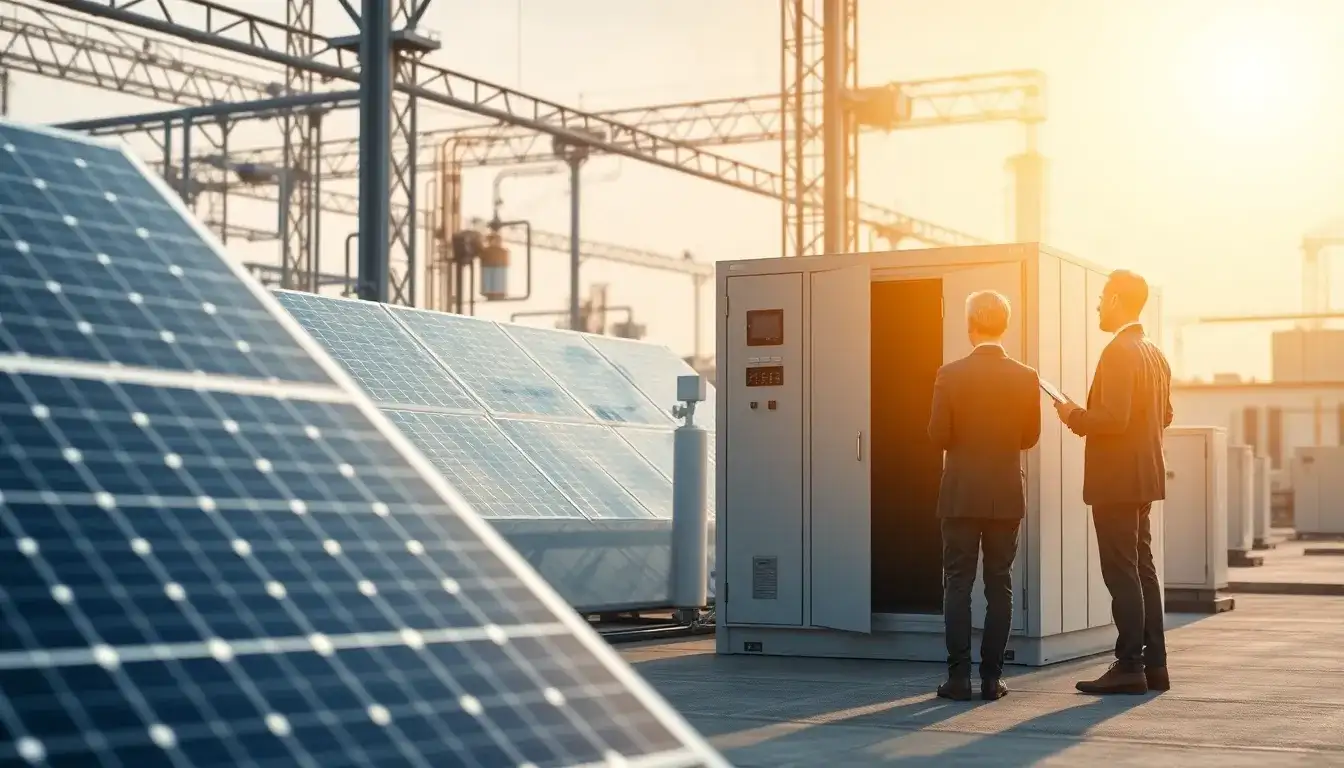
In the midst of a major industry shake-up, how is Sungrow Power seeking the optimal solution for the development of commercial and industrial energy storage?
Sungrow Power has maintained its position as the top provider in China’s energy storage system integration market for eight consecutive years. Now, the company is leveraging its strengths in large-scale energy storage to penetrate the commercial and industrial storage sector. In 2023, after years of fluctuating trends, the commercial and industrial energy storage market showed signs of explosive growth, with domestic shipments surpassing 3 GWh, marking it as the inaugural year for commercial and industrial energy storage.
Simultaneously, promotional campaigns for Sungrow’s commercial and industrial energy storage solutions appeared on high-speed trains in Shanghai and Guangzhou, targeting key customer segments in the bustling Yangtze River Delta and Guangdong-Hong Kong-Macao Greater Bay Area. Over the past year, Sungrow has achieved remarkable results in this sector. According to statistics from Gaogong Industry Research, Sungrow’s commercial and industrial energy storage shipments will top the charts in 2024. However, this market remains highly competitive, with hundreds of companies engaged in the commercial and industrial energy storage business, leading to fierce competition. The gap between the first and tenth ranked companies is minimal.
Amidst intense price wars and a nationwide fire safety rectification campaign, the rapidly growing commercial and industrial energy storage segment has plunged into a challenging phase. With the introduction of new regulations under Document No. 136 at the beginning of 2025, the development logic for energy storage, including commercial and industrial sectors, will undergo a significant transformation. As electricity reforms continue and technologies such as AI make significant strides, these changes are profoundly impacting the development trajectory of the energy storage industry.
On April 11, under the guidance of Dr. Kou Nannan from Bloomberg New Energy Finance, Dr. Cao Wei, General Manager of Sungrow’s commercial and industrial energy storage product line; Dr. Song Jing, a researcher at WRI’s Beijing Sustainable Transition Center; and Dr. Zhou Wenwen, General Manager of Sungrow Huikan, engaged in an in-depth dialogue on the theme “Deepening Scenarios x Smart Empowerment—Finding Optimal Solutions for Commercial and Industrial Energy Storage Development.”
The Era of Scenario Dominance
Unlike large-scale energy storage, the commercial and industrial market is distinct, characterized by a large and dispersed customer base. Application scenarios range from the picturesque water towns of Jiangnan to the arid oil fields of the Gobi Desert, and from urban centers to rural areas. In theory, all electricity-consuming enterprises have the potential to connect with energy storage systems.
According to EESA statistics, from January to September 2024, over 90% of newly installed energy storage applications in the commercial and industrial sectors involved direct integration by commercial users. New application scenarios accounted for approximately 5%, while integrated solar storage-charging scenarios represented about 2%. The boundaries of commercial and industrial energy storage applications are dynamically expanding, driven by decreasing costs per kilowatt-hour and the restructuring of the electricity market. As the cost of distributed solar energy continues to decline and it becomes eligible for market transactions, the combination of distributed solar and energy storage can enhance overall operational efficiency and yield investment returns.
Dr. Cao Wei of Sungrow asserts that energy storage is transitioning from being “policy-driven” to “value-driven,” and that scenario-based innovation is key to breaking new ground. All customer value must be realized within these scenarios, which are inherently complex. For instance, commercial buildings, due to their high occupancy density, have stringent safety requirements for energy storage systems; charging stations need energy storage to balance grid loads, ensuring they can meet the demand of numerous electric vehicles during peak charging times; data centers require exceptional power stability, as any disruption can result in data loss or equipment damage; and energy storage systems in industrial microgrids must effectively manage the output of distributed power sources, provide emergency power, and offer ancillary services such as load balancing and frequency modulation.
Starting from customer value and returning to scenario demands, Sungrow has developed various scenario-based product solutions through its product line. In March of this year, Sungrow launched the 255CS series product, which features both “AC coupling” and “DC coupling” modes for solar storage integration. This product supports direct connection to existing photovoltaic inverters in pre-installed scenarios and is paired with Sungrow’s hybrid photovoltaic inverter for new installations.
China’s commercial and industrial energy consumption is substantial, with high electricity prices and significant fluctuations. In the past five years, energy consumption in the secondary and tertiary industries has consistently risen. With the full implementation of carbon peak plans in key industrial sectors and the need to mitigate the impact of carbon border adjustment mechanisms in Europe and the U.S. on high-energy-consuming industries, there is a pressing need for energy savings and green energy transformations in China’s secondary and tertiary sectors. In response, Sungrow has developed products tailored to large industrial scenarios, including a 420 kW/835 kWh energy storage solution that emphasizes “multiple discharge modes, stable power supply, and extremely simple maintenance,” aimed at assisting high-energy-consuming enterprises in reducing costs, increasing efficiency, and achieving low-carbon transformations.
The Deepening of Commercial and Industrial Energy Storage Scenarios
As the market evolves, a single product can no longer dominate; industry consensus is shifting towards the necessity of customized solutions for different scenarios. To date, Sungrow has leveraged its 28 years of experience in power electronics to create a “product matrix” tailored to commercial and industrial energy storage. This includes solutions across voltage levels of 400V, 10/20KV, 35KV, featuring products like 100 kWh, 125 kW/257 kWh, 420 kW/835 kWh, and 5 MWh series to comprehensively meet commercial and industrial energy storage demands.
AI Empowering Commercial and Industrial Energy Storage
Following nearly two years of rapid development, commercial and industrial energy storage system solutions are evolving from mere hardware integration towards a focus on software algorithms and refined, intelligent operational capabilities. The future of AI will encompass both new energy and energy storage; the next step for energy storage is AI. The sector must learn to think critically, utilizing big data and AI algorithms to enhance the intelligence of energy storage systems. This is one of Sungrow’s core advantages.
Sungrow currently holds the top global position in installed energy storage capacity, and its extensive data accumulation and engineering practices provide a robust foundation for future AI algorithm training. Sungrow believes that AI technology will reshape the value chain of the energy storage industry across three dimensions: precise energy management, real-time scheduling decision-making, and optimization of electricity trading strategies. For example, in a GWh-level energy storage station, which may contain millions of battery cells, the varying states of these cells over time necessitate precise management and early warning systems, which would be difficult to achieve with traditional methods. Sungrow integrates data from various components of the energy storage system and employs AI calculations based on big data to manage thousands of battery cells with over 99% accuracy, allowing them to operate as if they were a single cell.
AI applications in network configuration are also increasingly prevalent. Sungrow utilizes its leading simulation modeling capabilities, including a fully digital simulation platform and field testing, to model the operational status of network-type systems under various scenarios. With AI-enhanced network algorithms, solutions can be tailored to specific networks, ensuring reliable configuration for GWh-level stations.
In 2024, Sungrow will introduce the concept of “industrial and commercial storage network configuration” within the industry. In the complex landscape of commercial and industrial storage networks, energy storage can better adapt to the grid and even enhance its performance. Sungrow’s commercial and industrial energy storage products incorporate unique technologies from large-scale energy storage, such as AC storage and battery cell lifespan diagnostics, as well as DC arc detection. They also feature advanced grid technology, enabling user-side energy storage to integrate seamlessly with the electrical environment of the facility, supporting grid configuration and black start capabilities to improve voltage frequency and harmonics issues.
Sungrow believes that the operational model of commercial and industrial energy storage is undergoing a profound transformation—from a unidirectional control system to a bidirectional interactive model, transitioning from merely following the grid to actively supporting it. The ability to proactively configure networks will become the “market entry certificate” and “premium moat” for commercial and industrial energy storage, shifting the industry focus from price competition to value competition.
The essence of energy storage lies in trading, with electricity trading fundamentally about “capturing certain returns amidst uncertainty.” Some experts argue that as the complexity of electricity markets increases exponentially, AI will transition from being an “optional tool” to a “survival necessity.” It can be argued that within the next three years, companies lacking AI trading capabilities will be pushed out of the mainstream market. In the electricity spot market, the volatility of new energy output and sudden load changes require millisecond-level responses, while manual strategy adjustments typically take minutes. Real-time grid scheduling must manage thousands of variables, including weather, electricity prices, loads, and equipment status, with manual rules covering only about 20% of scenarios.
Sungrow has developed the Power Bidder, a decision-support system for electricity spot trading, which leverages vast amounts of data from power stations and various AI algorithms to provide intelligent scheduling decisions and accurate predictions, achieving around 90% accuracy in annual average electricity price forecasts. AI is becoming the “intelligent brain” of energy storage systems, evolving from an “efficiency-enhancing tool” to the underlying engine for restructuring business models. Sungrow aims to lead the intelligent energy storage revolution through a three-pronged strategy of vertically integrating AI technology, horizontally connecting energy data ecosystems, and deeply aligning with electricity market regulations.
Long-Termism in Navigating Cycles
Despite the explosive growth of new energy generation pushing commercial and industrial energy storage to the forefront, the landscape is not a blue ocean; instead, it is characterized by fierce internal competition and brutal price wars. Almost all energy storage companies are establishing commercial and industrial energy storage operations, with participant numbers soaring to over 600 at peak times. Coupled with the sharp decline in lithium battery costs, price competition among integrated system providers has intensified, raising the stakes for technological iteration, cost control, and business model innovation.
As fierce competition emerges, some companies resort to bidding below cost to secure contracts and market share, but later attempt to reduce costs through covert means to achieve minimal profitability or break even, often resulting in failure to meet critical performance metrics. As a system integration company that bridges various sectors, the ability to sustain profits is essential for the sustainable and healthy development of the industry and for ensuring the continued operation of energy storage investors and asset operators.
Industry insiders have outlined the BOM costs for commercial and industrial energy storage, noting that the tax-inclusive integrated cost of a 125 kW/261 kWh energy storage cabinet ranges between 0.51 and 0.53 yuan. As a leading enterprise, Sungrow is calling for a shift away from price competition towards technological innovation and service quality. Dr. Cao Wei emphasizes that commercial and industrial energy storage is essentially a financial asset for clients; the lifecycle of a power station spans more than just a couple of years, often exceeding a decade. Many low-bid products may not guarantee safe and stable operation over such a long period, as the true value of commercial and industrial energy storage is created during its usage, resulting in higher efficiency and lower operational costs.
Currently, commercial and industrial energy storage models primarily focus on establishing investment returns based on peak and valley price differences, while the ultimate form of commercial and industrial energy storage is the virtual power plant (VPP). “Peak-valley arbitrage is only a superficial profit; ultimately, commercial and industrial energy storage must evolve towards virtual power plants, aggregating participants for electricity trading to achieve load balancing and addressing users’ needs for green energy,” asserts Dr. Cao Wei.
Recently, two ministries jointly issued a document stating that by 2030, national virtual power plant regulation capacity will reach 50 million kilowatts. It also outlines a clear roadmap for the development of virtual power plants, addressing aspects such as operational mechanisms, market participation, safety management, and technological innovation. This significant policy signals the transition of virtual power plants from pilot exploration to large-scale, market-oriented development, clarifying the direction for all industry stakeholders.
The competition within commercial and industrial energy storage is evolving from simple peak-valley arbitrage to the complexities of virtual power plants, marking a critical stage in the industry’s maturation from its nascent state. Only those who adhere to long-termism in technology, products, and market strategies will navigate through the challenges and emerge into a remarkably bright future.
We welcome your comments and look forward to your sincere insights. For inquiries, please contact via WeChat: 13911315123. Please indicate your identity when adding. Content will also be published on platforms like Toutiao, Xueqiu, NetEase, and Sohu. Reproduction requires authorization, and violations will be pursued.
Original article by NenPower, If reposted, please credit the source: https://nenpower.com/blog/sunshine-powers-quest-for-optimal-solutions-in-commercial-and-industrial-energy-storage-amidst-market-shake-up/

