

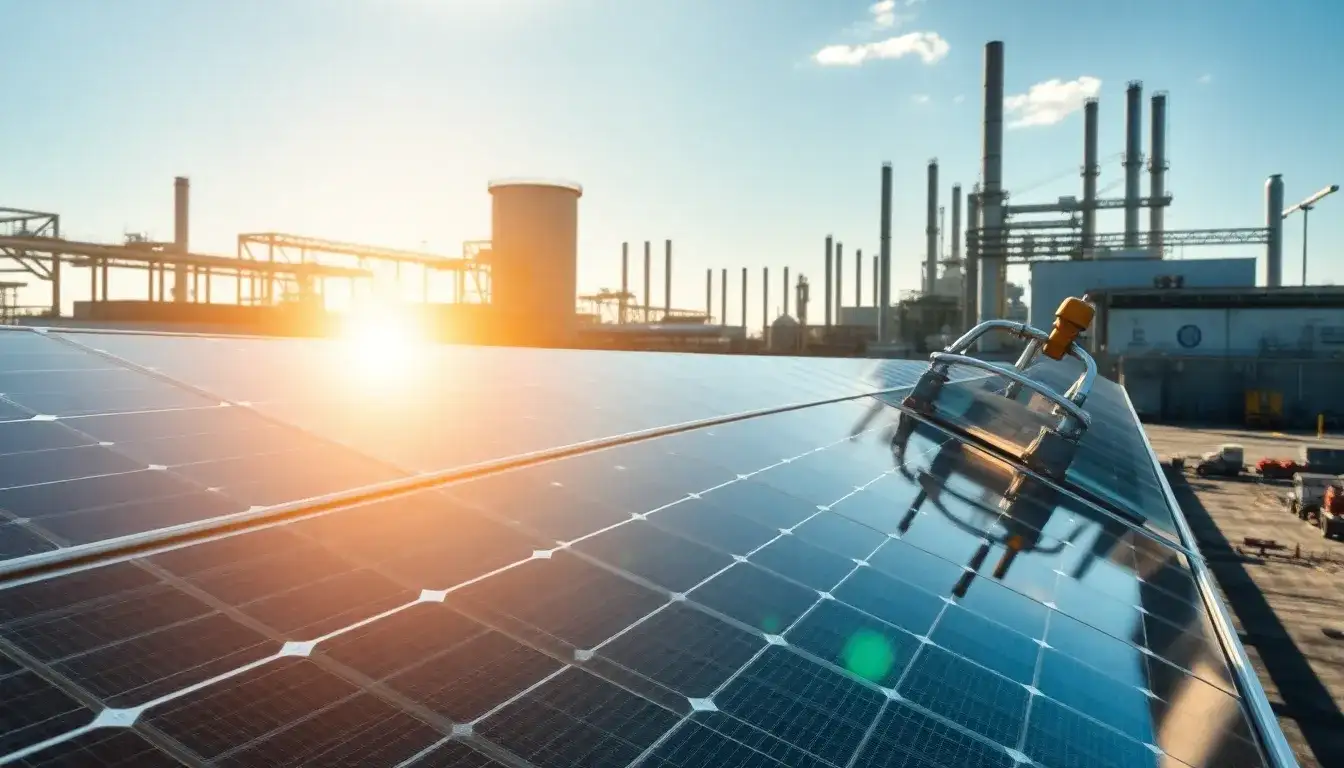
Energy storage has emerged as a key player in the commercial and industrial sector, and SunPower has positioned itself as a versatile contender in this arena.
As the implementation of Document No. 136 takes effect, energy storage is rapidly gaining traction amidst the complexities of power reform. Distributed energy storage and commercial energy storage are becoming pivotal points in driving these reforms. The high and volatile energy costs faced by commercial enterprises have allowed for the swift deployment of park-based energy storage systems. Initially regarded as a mandatory auxiliary role, energy storage has evolved into a self-sufficient value contributor. It is no longer just a policy-driven initiative but a central pillar of market-oriented operations.
With the combined pressure of international green regulations (like the CBAM and the Battery Act) and domestic energy consumption controls, high-energy-consuming enterprises must quickly adapt to zero-carbon parks. The integration of sources, grids, loads, and storage, along with the advancement of green electricity direct connections, has made zero-carbon parks the most viable testing grounds for energy storage. In these parks, environmental rights such as green certificates and CCER are deeply intertwined with the benefits of corporate renewable energy projects. The ability to manage green values collectively can even influence a company’s bidding strategies.
In light of these shifts and challenges, the energy storage industry is now expanding beyond individual batteries or basic equipment provision to a more ecological and systemic approach. The convergence of electrochemical systems, power electronics, EMS, digital twins, and carbon asset management is essential for companies to effectively implement zero-carbon solutions. In other words, future energy storage companies must not only understand batteries but also grasp grid logic, energy-carbon systems, and industrial chain coordination to navigate the value-driven zero-carbon tide successfully.
“A single battery cabinet cannot solve the problem.” On March 5, 2025, during Premier Li Qiang’s government work report, the directive to “solidly carry out the second batch of national carbon peak pilot projects and establish a number of zero-carbon parks and factories” stood out prominently. This indicates that as the carbon peak deadline approaches, the policy framework for constructing zero-emission systems in industrial parks has become clear.
A zero-carbon park primarily focuses on creating an efficient energy network based on clean energy, facilitating collaboration and recycling of carbon emissions across various industrial forms. The success of such parks hinges on the ability to continuously, stably, and cost-effectively procure green electricity. Distributed photovoltaic systems and commercial energy storage are seen as the backbone of energy use in these parks.
Given the varied resource endowments across different regions in China, the energy consumption structures and operational models of different factories differ significantly. For instance, in wind-rich regions like Inner Mongolia, centralized wind farms and solar storage systems can supply a large proportion of green electricity directly to parks. In contrast, coastal areas, despite their potential for offshore wind power, often face challenges related to electricity pricing and grid integration.
As pointed out by SunPower’s General Manager of Commercial Energy Storage, Cao Wei, during the PhD Talk at the Beijing International Energy Storage Summit on April 11, safety, efficiency, and long-term commitment are the three critical factors for the sustainable development of commercial energy storage. He emphasized that SunPower always prioritizes customer value, returning to scene-specific needs, and advocates for multi-scenario solutions in commercial energy storage. For example, this year, SunPower launched its latest Commercial 255CS series, which features both “AC coupling” and “DC coupling” modes for integrated solar and storage scenarios. Additionally, the 835CS series was specifically designed for large industrial applications, and a “solar-storage charging integration” system was developed for high-energy-consuming parks. For areas with frequent power restrictions, a backup power scheme based around energy storage was implemented to ensure stable electricity supply. Furthermore, there are product solutions designed for small businesses and large user-side scenarios.
When planning and implementing zero-carbon parks, industry attributes (such as process industries versus discrete manufacturing) and regional differentiation are often overlooked. The methods of energy use and carbon emission characteristics differ, necessitating targeted adjustments of grid architecture and operational strategies for solar-storage systems and charging networks. A one-size-fits-all approach with a single “commercial energy storage cabinet” is ineffective.
SunPower’s integrated solar-storage charging solutions are tailored for diverse application scenarios, including parks, microgrids, and large industries, accurately aligning with grid architecture and operational strategies to optimize the full lifecycle management of various energy forms. This solution not only enhances energy use efficiency but also integrates digital technologies to balance customers’ economic and green development needs.
According to Zhou Wenwen, General Manager of SunPower Hui Carbon, “the standard configuration for future zero-carbon parks will be a deep collaboration of ‘sources, grids, loads, storage, and carbon.’ Companies need to proactively invest in carbon management and promote low-carbon digital transformation, utilizing the ‘value leverage’ of carbon markets to optimize power dispatch and seize opportunities in the synergy between carbon and electricity markets.”
For instance, the SunPower Industrial Park relies on the iCarbon energy-carbon platform to monitor and intelligently dispatch aspects such as photovoltaics, energy storage, and charging stations in real-time. With a highly integrated renewable energy network, the park can generate over 6 million kilowatt-hours of photovoltaic power annually and aims to achieve 100% green energy consumption by 2028. This practical experience is also being extended to international markets. As a leading global energy storage enterprise, SunPower has implemented various “solar + storage” projects in regions like Europe and North America. By understanding the operational rules of different electricity markets, they have created distinctive business loops through the combination of “overseas market mechanisms and local scene integration.” In regions like Southeast Asia and Africa, where electricity systems are underdeveloped, a comprehensive solution of “solar + storage + emergency power supply” is crucial to minimize the impact of natural disasters on production safety and power stability.
Cao Wei noted, “The global electricity supply is extremely unbalanced; only by strategically combining solar, storage, integration, and grid dispatch can we effectively customize and implement solutions across various scenarios.”
Restructuring the Profit Path of Energy Storage
Focusing on the frontline of the industry, the subsidy policies for commercial energy storage in various regions have become increasingly substantial. The subsidy standards in areas like Chongqing’s Tongliang District, Shenzhen’s Futian District in Guangdong, and Tianjin’s Binhai New Area have reached 0.5 yuan per kWh. Some regions in Jiangsu and Zhejiang have even exceeded 0.8 yuan per kWh. Moreover, the weighted electricity price differences in provinces such as Shandong, Zhejiang (large industries), Shanghai (large industries), Guangdong, and Hainan also surpass 0.7 yuan per kWh, providing tangible support for the growth of commercial energy storage.
However, the industry still faces significant challenges in achieving healthy development. A unified standard system for commercial energy storage has yet to be established, and low-quality products and services are engaged in price competition, leading to poor product compatibility. Recently, Wenzhou in Zhejiang implemented “fire safety rectifications” on 50% of projects, and Hangzhou issued the “Hangzhou Energy Storage Fire Safety Review Notice.” Without passing fire safety inspections, commercial energy storage projects may not even be registered.
As the complexity of the electricity market escalates at an exponential rate, the competitive strategies of energy storage companies are also changing. In the past, relying on low-cost batteries appeared to be a viable strategy for gaining market share. However, now, digitalization and intelligence have become the key engines for enhancing profitability. Improvements at the equipment level are merely entry tickets; the real determinants of success in the future will be how manufacturers deeply engage with real-time data, revenue models, and cloud-based operations.
For example, SunPower’s Power Bidder system, which assists in electricity spot trading decision-making, boasts an annual electricity price prediction accuracy of around 90%. This exemplifies how AI technology empowers energy storage systems—when data, algorithms, and platforms work together, the profitability logic and competitive landscape of the energy storage industry enter a new chapter.
This indicates that AI’s role in the electricity market is rapidly evolving from an “optional” tool to a “survival necessity.” Cao Wei believes that electricity trading essentially involves capturing predictable profit opportunities in a highly uncertain environment, and traditional reliance on manual experience is no longer sufficient to balance issues such as “inaccurate predictions, suboptimal decisions, and risk control.” The introduction of AI allows energy storage systems to transition from “experience-based pricing” to “algorithm-based pricing.” He boldly predicts that within the next three years, companies lacking AI trading capabilities may be eliminated from mainstream markets.
It is evident that commercial energy storage is shifting from previous singular profit strategies of “selling electricity” or “peak shaving” to a collaborative and synergistic “ecological win-win” model. The large-scale implementation of third-party aggregation operations (ESOP) and virtual power plants (VPP) offers more possibilities for financing and revenue realization of energy storage projects, elevating energy storage from mere hardware deployment to a sustainable systemic value network.
As a global leader in the new energy sector, SunPower’s core competitive advantage in commercial energy storage stems from its technological innovation, deep engagement with application scenarios, and commitment to safety. Through comprehensive in-house development and global expansion, it has established a differentiated barrier. Its product solutions are currently successfully applied in over 1,000 projects worldwide, aiding the low-carbon transformation of commercial enterprises.
Original article by NenPower, If reposted, please credit the source: https://nenpower.com/blog/sunlight-powers-versatile-role-in-the-emerging-energy-storage-landscape-for-commercial-and-industrial-sectors/

