Successful Conclusion of the 2026 Annual Work Meeting and Inaugural Conference of the CAST-UN-CCAI
Date: April 1, 2026
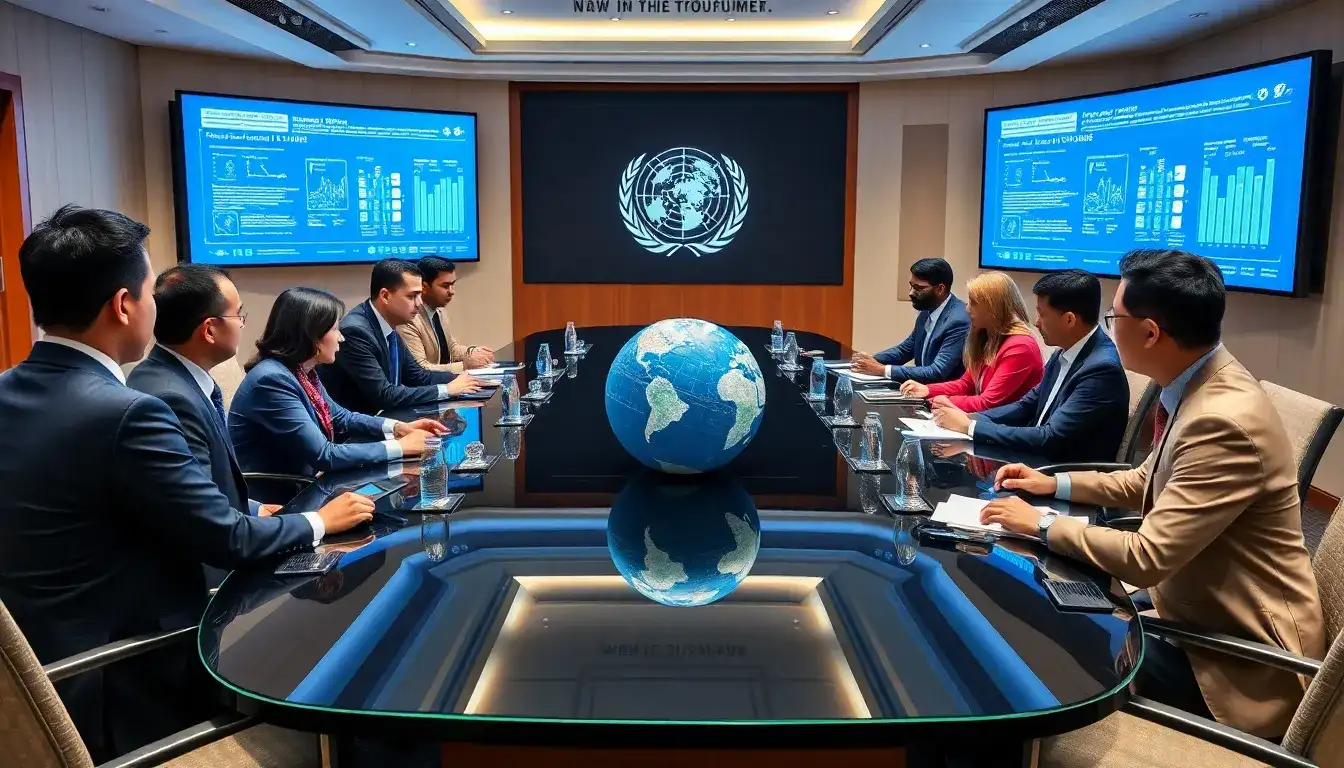
To fully leverage the advisory role of the Chinese Association for Science and Technology (CAST) in supporting Chinese scientists’ deep involvement in global technology governance under the United Nations framework, and to implement the General Assembly’s resolution on enhancing international cooperation in artificial intelligence capacity building (A/RES/78/311), the CAST-UN-CCAI (United Nations Advisory Committee on Artificial Intelligence Capacity Building) successfully held its 2026 Annual Work Meeting and Inaugural Conference on the afternoon of March 27, 2026, in Guangzhou, combining both online and offline formats, with nearly 30 committee members and experts in attendance.
Meeting Overview
The meeting was chaired by Professor Liu He, Vice Chairman of CAST-UN-CCAI and a professor at the China Petroleum Exploration and Development Research Institute. Chairman Yang Mengfei delivered a keynote address, stating that the first four-year term of the committee represents a crucial period of transition from initial steps to maturity, moving from “localized exploration” to “systematic efforts.” Over the next four years, the committee plans to focus on five key areas:
- Enhancing agenda-setting capabilities for global governance.
- Deepening inclusive technology to empower development in the Global South.
- Strengthening educational support to build a talent cultivation system.
- Building a knowledge base to develop a professional resource platform.
- Establishing bridges for collaborative innovation domestically.
Keynote Report
Professor Wang Qinglin, former first-level inspector of the International Cooperation Department of CAST and Chairman of the Permanent Committee on Emerging Technologies and Professional Development of the Asia-Pacific Engineering Organization, noted in his report that in July 2004, CAST officially received special consultative status from the United Nations Economic and Social Council (ECOSOC), becoming the first organization in the field of science and technology in China to achieve this qualification. Over the years, CAST has actively engaged in advisory work, achieving significant results in agenda leadership, multilateral collaboration, outcome transformation, talent support, and internal-external coordination. He emphasized that advisory work at the United Nations should adhere to five principles:
- Serve national interests and protect core national interests.
- Focus on global governance and align with cutting-edge topics.
- Maintain a results-oriented approach to enhance outcomes presented on the UN platform.
- Build international networks to lead topic design and advancement.
- Ensure effective domestic communication to widely build consensus and secure resource support.
Work Summary
Secretary Zhang Nan, Secretary-General of CAST-UN-CCAI and member of the Chinese Association for Automation, provided a work summary highlighting that the committee closely adhered to its core mission of enhancing artificial intelligence capacity. It organized four international exchange activities and three thematic research studies, resulting in three research reports, with significant progress achieved in various initiatives. Looking ahead to 2026, the committee will prioritize five key areas of work:
- Advance the application for hosting United Nations side events.
- Promote the inclusive development of artificial intelligence technologies.
- Establish a platform for sharing intellectual resources.
- Develop a talent cultivation system for artificial intelligence.
- Facilitate coordinated innovation between domestic and international players.
Expert Discussions
Experts attending the meeting discussed the opportunities and challenges faced in advisory work, the development direction of the first committee, and the 2026 work plan and key tasks. They provided valuable insights on the committee’s working model, member responsibilities and participation mechanisms, the scope of artificial intelligence capacity building, industry-university-research collaboration pathways, and international cooperation participation models. There was a consensus that the committee should further clarify the connotations and standards of artificial intelligence capacity building, enhance its agenda-setting capabilities on international high-end platforms, and actively involve diverse forces to translate Chinese technological practices into global governance solutions, thereby effectively promoting technology inclusiveness and capacity building, and contributing Chinese wisdom to global artificial intelligence development.
Original article by NenPower, If reposted, please credit the source: https://nenpower.com/blog/successful-inaugural-meeting-of-the-cast-un-ccai-for-2026-advancing-ai-capacity-building-and-global-governance/