

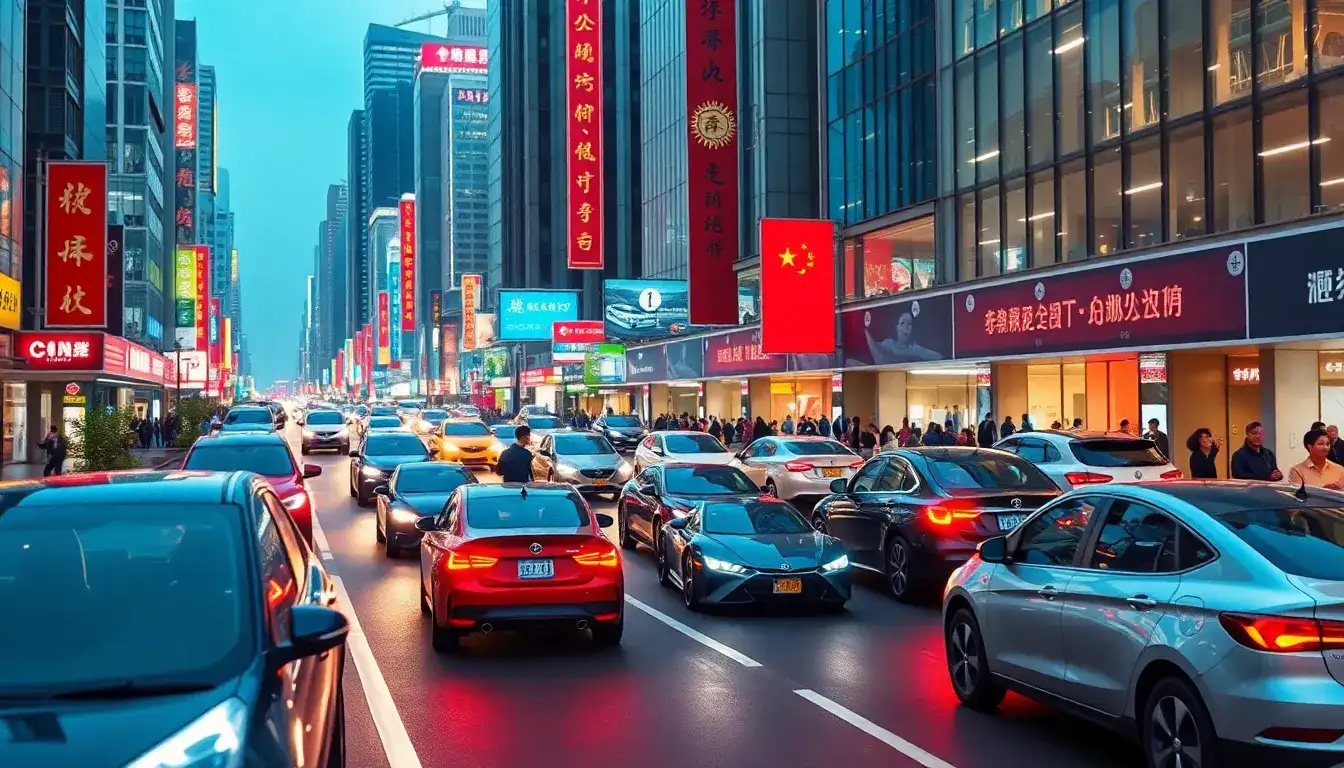
In the first quarter, the automobile market experienced double-digit growth in both production and sales. This strong start raises the question: what does this booming market mean?
1. Double-Digit Growth in Q1 Automobile Production and Sales
According to a report from the China Securities Journal, on April 11, the China Association of Automobile Manufacturers (CAAM) released data indicating that in the first quarter of this year, the domestic automobile production and sales reached 7.561 million and 7.47 million units, representing year-on-year increases of 14.5% and 11.2%, respectively. Among these, the production and sales of passenger vehicles were 6.513 million and 6.419 million units, with increases of 16.1% and 12.9% year-on-year; commercial vehicle production and sales reached 1.048 million and 1.051 million units, marking year-on-year growth of 5.1% and 1.8%.
The commercial vehicle market is showing signs of recovery, with both buses and trucks experiencing varying degrees of growth. In terms of new energy vehicles (NEVs), production and sales in the first quarter reached 3.182 million and 3.075 million units, representing year-on-year increases of 50.4% and 47.1%. NEVs accounted for 41.2% of total new car sales. Specifically, the sales of pure electric vehicles grew by 47.7% year-on-year, while plug-in hybrid vehicle sales increased by 46.1%.
Notably, the sales of domestic brand passenger vehicles also saw a significant improvement, with sales totaling 4.369 million units, a year-on-year increase of 28.8%, leading to a market share of 68.1%, an increase of 8.4 percentage points compared to the previous year.
Chen Shihua, Deputy Secretary-General of the China Automobile Industry Association, stated, “In the first quarter, the measures to stimulate automobile consumption continued and accelerated, leading to an improved consumer market. With a plethora of new products being launched and increased consumer confidence, the automobile industry has enjoyed a strong start with double-digit growth.”
The strong performance of the automobile market in Q1 is further evidenced by the impressive sales figures reported by various car manufacturers. BYD, Geely, Xpeng, and Leap Motor all achieved record sales in the first quarter. BYD’s sales reached 1 million units, with pure electric vehicle sales at 416,400 units, surpassing Tesla and solidifying its position as a leading global NEV manufacturer. As a result of this surge in sales, both Geely and BYD are expected to see significant increases in profitability, with BYD projecting a profit of 8.5 billion to 10 billion yuan, representing a year-on-year growth of 86.04% to 118.88%.
Furthermore, the market share of domestic brand passenger vehicles has continued to rise, with Q1 sales showing a year-on-year increase of 28.8% and a market share of 68.1%, up by 8.4 percentage points. Among major foreign brands, Korean and French brands also showed varying degrees of growth compared to the same period in 2024, while German, Japanese, and American brands experienced double-digit declines in sales.
2. What Does this Strong Start Mean for the Market?
Currently, the Chinese automobile market is witnessing a robust “opening red” with both production and sales flourishing. This achievement is not only impressive but also merits careful analysis to understand the trends and characteristics behind this success.
Firstly, the strong start is a testament to the long-term stability of the Chinese market. There were earlier concerns that policies encouraging the replacement of old vehicles might only provide temporary boosts to consumption, potentially draining future market demand. However, the strong performance of the automobile market in Q1 robustly counters this perspective. The vast population base and the continuously improving living standards in China provide a solid foundation for automobile demand. As urbanization accelerates, the expansion of cities increases the commuting radius for residents, leading to a sustained rise in the stringent need for automobiles. Additionally, the trend of upgrading consumption has raised consumer expectations for vehicle quality, performance, and intelligence, prompting them to frequently update their vehicles, thus further driving market demand.
Furthermore, economic development levels and vehicle ownership vary across different regions. Areas in Central and Western China, as well as lower-tier cities, still have significant room for growth in automobile ownership, making these regions new engines for market growth. Thus, the dual growth in production and sales in the first quarter further confirms the presence of long-term stable demand in the Chinese market, indicating the sustainability of its development.
Secondly, the comprehensive rise of domestic brands has become an undeniable trend. The increasing share of domestically produced vehicles is a significant indicator behind the market’s strong start. Domestic passenger car brands now account for nearly 70% of the market, an impressive achievement. In the past, the domestic automobile market was largely dominated by joint ventures and imported brands. However, in recent years, domestic brands have gradually won consumer favor through continuous technological innovation, improved product quality, and enhanced brand image. On the technology front, domestic brands have significantly increased investment, notably advancing in core areas such as engines, transmissions, and chassis technologies, resulting in improved product performance and reliability.
In the realm of NEVs, domestic brands are leading globally, mastering key technologies in batteries, electric motors, and electronic controls, and launching a series of competitive products. Notable upstream enterprises like CATL and well-known manufacturers such as BYD, Aito, and Li Auto have emerged. On the design front, domestic brands are focusing more on consumer preferences and aesthetic trends, introducing stylish, well-appointed models that meet daily use needs and enhance consumer quality of life.
Moreover, domestic brands are innovating in marketing and service by establishing comprehensive sales networks and after-sales service systems, significantly enhancing the consumer experience. An increasing number of consumers are considering domestic brands as their first choice, reflecting both an improvement in product quality and a growing national brand consciousness among domestic consumers.
Thirdly, the rapid growth of pure electric vehicles surpassing plug-in hybrids signals a subtle shift in market dynamics. In the NEV sector, Q1 saw a new trend where the sales growth of pure electric vehicles outpaced that of plug-in hybrid vehicles. Historically, plug-in hybrids have enjoyed sales growth due to their extended range capabilities, alleviating consumer range anxiety. However, the landscape for pure electric vehicles is changing. The development of fast-charging and battery-swapping infrastructure is providing strong support for their growth. Previously, long charging times and a lack of charging station availability hindered the adoption of pure electric vehicles. Yet, major cities have accelerated the establishment of fast-charging networks, with service areas along highways gradually incorporating fast-charging facilities and battery-swapping models being piloted in some regions. For instance, NIO is vigorously developing battery-swapping services, allowing users to replace their batteries quickly, significantly enhancing energy replenishment efficiency. This has greatly improved the convenience of using pure electric vehicles, leading to higher consumer acceptance.
Additionally, continuous innovations in battery technology have resulted in increased energy density and significant improvements in range. Many mainstream pure electric models now have ranges exceeding 500 kilometers, while some high-end models even surpass 700 kilometers, adequately meeting daily commuting and short-distance travel needs. These factors contribute to the rising competitiveness of pure electric vehicles, enabling them to outpace plug-in hybrids in sales growth, suggesting a subtle shift in the technical landscape of the NEV market, with pure electric vehicles poised to play a more prominent role in the future.
Fourthly, the cooling of price wars is steering market competition towards diversification. Recently, the intense price wars in the automobile market have begun to subside. This change indicates a shift from a purely aggressive price competition to a focus on overall experience, innovation, and service. With the automobile market gradually maturing and consumer awareness of brands increasing, choices are no longer solely based on price. Consumers are placing greater emphasis on quality, performance, safety, and technological sophistication. This shift in consumer behavior compels manufacturers to focus more on product quality and service rather than merely competing on price.
Moreover, intensified competition among manufacturers is driving the market towards transformation and upgrade. In a fiercely competitive environment, companies must continuously innovate and enhance their service levels to stand out. This includes launching new models, improving product quality, and optimizing after-sales services to attract consumers. Such a shift in competition fosters a market that prioritizes experience, innovation, and service. The cooling of price wars holds significant meaning for the automobile market, indicating a gradual transition towards maturity and rationality. Automakers are increasingly emphasizing product quality and service rather than relying solely on price competition for market share. This change will further promote the transformation and high-quality development of the automobile industry.
In the long term, the strong start of the automobile market in Q1 signifies a comprehensive improvement in the industry. This achievement not only highlights the strong demand and potential within the Chinese automobile market but also indicates that the industry is entering a positive cycle. A thriving automobile industry will positively impact the Chinese economy, as it serves as a crucial pillar of the national economy. The ongoing growth of the automobile sector will contribute more significantly to economic growth, while also stimulating the development of related industries such as parts manufacturing, automobile sales, and after-sales services. This will create more employment opportunities and economic benefits, promoting sustained healthy economic development in China. Therefore, we can reasonably believe that, driven by continuous innovation, the Chinese automobile industry will occupy a more important position in the global market and become a significant force in advancing the global automobile industry, which undoubtedly represents the most noteworthy aspect of this strong start.
Original article by NenPower, If reposted, please credit the source: https://nenpower.com/blog/strong-start-to-2025-chinas-automotive-market-sees-double-digit-growth-in-q1/

