

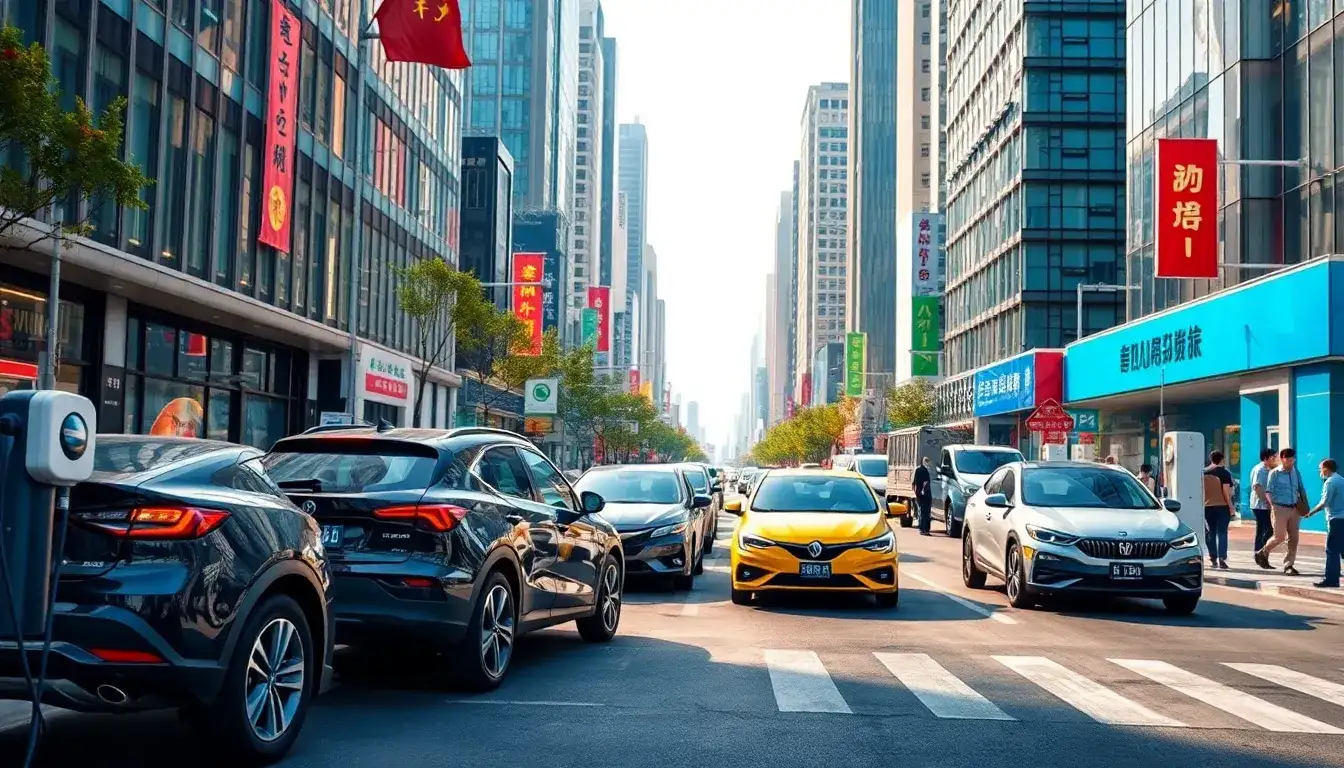
The Chinese automotive market is showing a strong recovery, with new energy vehicles (NEVs) achieving record penetration rates. According to the recent “2025 First Half of China’s Automotive Circulation Industry Report” released by the China Automobile Circulation Association, the domestic automotive market has steadily improved this year, driven by ongoing support from the “Two New” policies. While traditional fuel vehicles continue to face significant pressure, NEVs have become the core engine of industry growth.
The report indicates that in the first half of the year, the cumulative retail sales of passenger vehicles in China reached 10.901 million, marking a year-on-year increase of 10.8%. The market has shown a robust recovery trend, with retail sales in the first quarter reaching 5.12 million units (up 6.3% year-on-year) and increasing to 5.687 million units in the second quarter (up 13.6% year-on-year).
Notably, during the “May Day” Golden Week, manufacturers collaborated with dealers to host auto shows and promotional events that significantly boosted consumer demand. Following the holiday, order fulfillment accelerated, further enhancing sales. The strong market momentum continued into June, with increased discounts—expanding to 25.2%—and a notable rise in foot traffic that contributed to sales growth.
Data from the Ministry of Commerce indicates that by May 31, the number of applications for the national vehicle trade-in subsidy surpassed 4.12 million, serving as a key driver for market growth. However, this has somewhat exhausted consumer demand for the third quarter. Due to a high sales base in the third quarter of 2024, a slowdown in growth is anticipated. Nonetheless, sales in the fourth quarter are expected to rebound, with an annual growth forecast of around 5%, leading to total sales of 24 million units.
The first half of the year saw NEVs account for 36.7% of total vehicle sales, with impressive retail figures for NEVs reaching 5.468 million units, a year-on-year increase of 138.9% and a growth rate of 33.2%. The penetration rate of NEVs climbed to 50.2%, with domestic brands capturing over 60% of the NEV retail market, reflecting a 9% year-on-year growth.
According to Lang Xuehong, Deputy Secretary General of the China Automobile Circulation Association, the rise of domestic brands has not only enhanced the competitiveness of the local automotive industry but has also provided consumers with diverse, high-quality choices.
In the used car market, the transaction volume reached 9.5701 million units in the first half of the year, with a total transaction value of 623.238 billion yuan, showing a year-on-year increase of 1.99%. However, the average transaction price dropped from 61,180 yuan in 2024 to 53,673 yuan, a decline of 12.3%. The implementation of new policies has simplified the transaction processes and significantly reduced costs, particularly with cross-province services and the removal of restrictions on older vehicles, improving transaction efficiency and market activity.
Despite NEVs making up 5.3% of the used car transactions, the low proportion is attributed to the relatively small ownership base compared to fuel vehicles and the fact that many of the owned NEVs are less than a year old, thus not yet entering the used car market. Additionally, the depreciation rate for used NEVs is typically lower than that for fuel vehicles, with a three-year retention rate averaging only 43%, compared to 62% for fuel vehicles.
The report highlights a growing challenge for used car dealerships, with the proportion of dealers reporting losses rising to 73.6%. Continuous price wars in the new car market have severely impacted the operations of used car enterprises and led to lower retail volumes and satisfaction levels. The lack of differentiation among mainstream used car platforms has resulted in increased competition primarily based on pricing.
The survey conducted by the China Automobile Circulation Association among the top 100 dealers revealed that while the trade-in policy has stimulated the turnover of used cars, the overall decline in new car prices has negatively affected both the total volume and per vehicle gross margins of used car trades. This instability not only impacts the profitability of used car sales but also adversely affects the profitability of related services such as financing, extended warranties, and maintenance.
Moving forward, the overall automotive dealer network is shifting towards NEV brands. This year, the inventory warning index for domestic automotive dealers has consistently remained above 50%, indicating a challenging market environment. The proportion of dealers reporting operational losses has reached 52.6%, while 29.9% have reported profits.
The report indicates that 74.4% of dealers are experiencing varying degrees of pricing pressure, with 43.6% facing price discrepancies exceeding 15%. This significant pricing pressure not only strains liquidity but also leads to substantial financial burdens, particularly for dealers of traditional fuel vehicles, while NEV independent brand dealers encounter challenges related to low after-sales value and long investment return cycles.
Despite these challenges, the report emphasizes that the market’s growth potential remains solid. The overall transaction volume for used cars is projected to reach approximately 20.5 million units this year, with an expected year-on-year increase of around 4%.
In summary, the automotive industry is undergoing significant transformations, with NEVs leading the growth trajectory. As the market evolves, both challenges and opportunities continue to emerge, reflecting the dynamic nature of the automotive landscape in China.
Original article by NenPower, If reposted, please credit the source: https://nenpower.com/blog/strong-market-recovery-drives-record-high-penetration-of-new-energy-vehicles-in-china/

